As The Champagne Guy, I've spent many hours at home trying to understand the subtle differences between champagnes from various terroirs. What always fascinates me: How can one and the same grape variety develop such completely different flavors depending on the soil? The answer lies literally beneath our feet – in the terroir.
What is Terroir and why is it so important?
Terroir is far more than just a French buzzword. It describes the complex interplay of soil, climate, topography and human winemaking artistry that gives each champagne its unmistakable character. The soil plays a key role in this, as it determines not only how the vines grow, but also which minerals and nutrients make their way into the grapes.
In Champagne we find four main soil types, each producing characteristic aromatic signatures. Let me take you on a journey through this fascinating diversity.
Chalk: The Queen of Minerality
Côte des Blancs – The Realm of Chardonnay
The famous chalk slopes of the Côte des Blancs are the heartland of Champagne. This pure, white chalk from the Campanian era stores water like a sponge and slowly releases it to the vines. The result? Champagnes of extraordinary finesse and minerality.
Characteristic aromas:
- Intense minerality (chalk, wet stones)
- Citrus fruits (lime, grapefruit, lemon zest)
- White flowers (acacia, linden blossoms)
- Salty notes on the palate
My recommendations:
Pol Roger Winston Churchill: This legendary champagne from the Grand Cru sites of Ay and Épernay shows chalk minerality to perfection. The nose reveals precise citrus notes, underlaid with an almost stony minerality.
Pierre Péters Cuvée de Réserve: A pure Chardonnay from Le Mesnil-sur-Oger that reads the chalk terroirs like an open book. Here you literally taste the chalk – elegant, yet powerful.
Salon Le Mesnil: The Rolls-Royce among Blanc de Blancs shows what chalk terroir means in perfection. The salty minerality is so pronounced that you think you're tasting sea air.
Marl: Richness meets Fruit
Côte des Bar – The Land of Pinot Noir
In the southern area of Champagne, the Côte des Bar, marl soils dominate. This mixture of limestone and clay gives the champagnes more body and intense fruit aromas. Here Pinot Noir thrives particularly well and develops its full personality.
Characteristic aromas:
- Red fruits (strawberries, raspberries, red currants)
- Fuller texture and more body
- Spicy notes (black pepper, cinnamon)
- Slightly earthy undertones
My recommendations:
Drappier Carte d'Or: This cuvée from Urville shows marl typicity perfectly. The red fruits literally dance on the tongue, underlaid with wonderful spice.
Champagne Fleury: A pioneer of biodynamic cultivation in the Côte des Bar. Here you literally taste the earth – in the most positive way. The marl provides an unmistakable depth.
Cedric Bouchard: His champagnes from individual parcels impressively show how differently marl terroirs can be interpreted. Each cuvée is a terroir portrait.
Sand: The Poetry of Elegance
Vallée de la Marne – Finesse and Floral
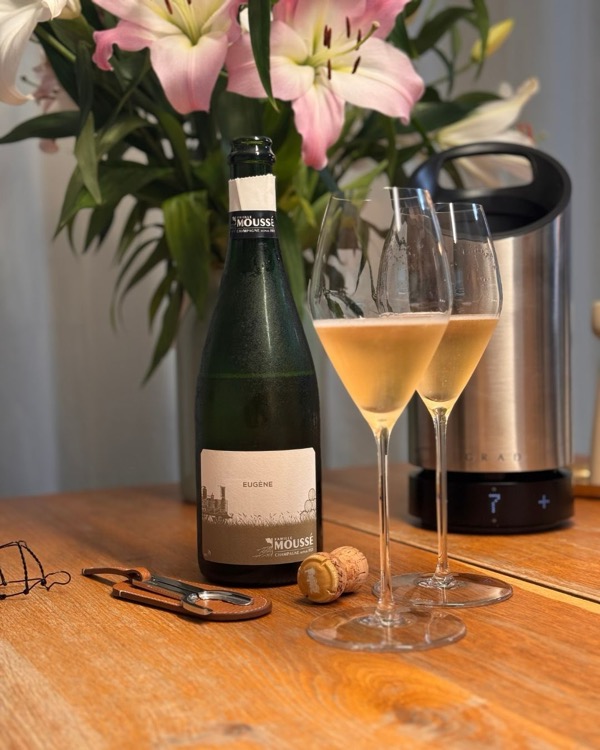
Erinnert ihr euch noch an den L’Orage den ich Anfang November gepostet hatte? Heute blicke ich tiefer in das Repertoire von @champagne_mousse und…
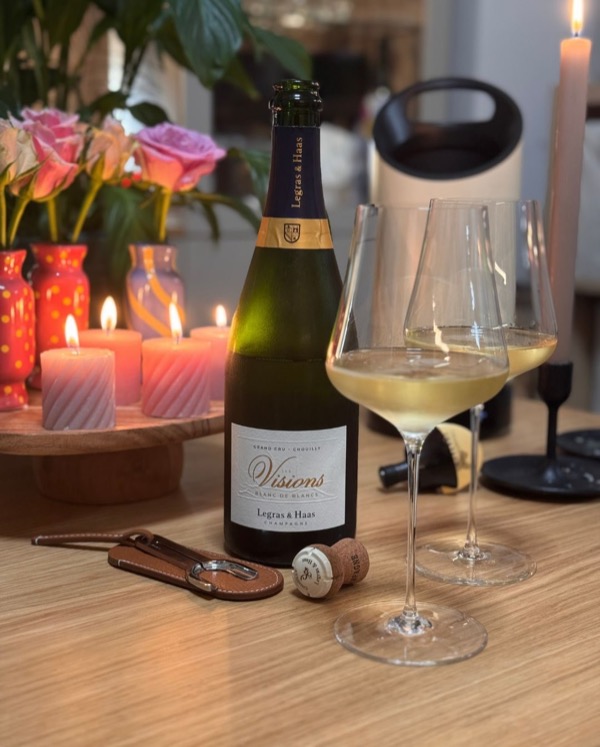
Chouilly ist in der Côte des Blancs oft für seine etwas „großzügigeren“ und cremigeren Chardonnays bekannt. Aber @legras_haas zeigt mit dem „Les…
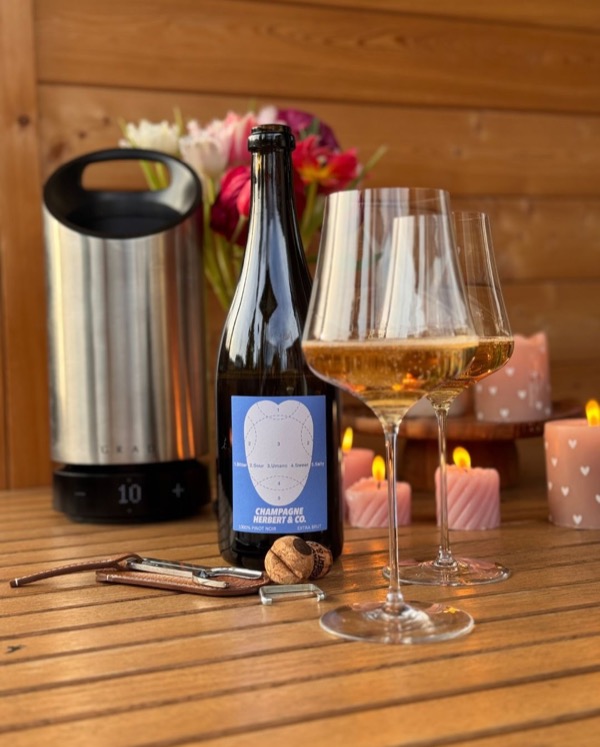
Heute gibts den 1000% Pinot Noir von @champagne_herbertandco . Von diesem kleinen, feinen Haus (geführt von @thomas___herbert und @charlottehbrt_ in…
The sandy soils of the Vallée de la Marne are home to Meunier, but Chardonnay and Pinot Noir also thrive here magnificently. Sand stores less water than chalk, leading to more concentrated yet simultaneously more elegant aromas.
Characteristic aromas:
- Delicate floral aromas (violets, roses, lily of the valley)
- Elegant fruit (white peaches, pears)
- Silky texture
- Subtle spice notes
My recommendations:
Dom Pérignon: Although an assemblage, this champagne clearly shows in its elegance the influence of the sandy terroirs of Hautvillers.
Krug Clos du Mesnil: A pure Chardonnay from a single, walled parcel. The sandy components of the soil give this champagne incomparable elegance.
Champagne Mumm Cordon Rouge: A classic that beautifully showcases the floral finesse of the Vallée de la Marne.
Clay: Power and Spice
Montagne de Reims – The Power Center
The clay-rich soils of the Montagne de Reims are home to powerful champagnes. Clay stores not only water but also minerals particularly well. The result is champagnes with pronounced structure and spicy notes.
Characteristic aromas:
- Intense spice (cloves, nutmeg, white pepper)
- Powerful structure
- Dark fruits (blackcurrants, plums)
- Smoky, sometimes earthy notes
My recommendations:
Louis Roederer Cristal: This prestige champagne from the clay terroirs of Ay shows power and elegance in perfect balance.
Bollinger Grande Année: The clay soils of Ay and Verzenay give this champagne its characteristic power and spice.
Veuve Clicquot La Grande Dame: A powerful champagne that carries the spice of the Montagne de Reims in its DNA.
The Art of Assemblage
What makes champagne so unique is the art of assemblage – blending different base wines from different terroirs. A cellar master can combine the minerality of chalk with the richness of marl and the elegance of sand. This creates champagnes of incredible complexity.
Food-Pairing: Terroir meets Plate
The different terroir characteristics suit different foods:
Chalk champagnes harmonize perfectly with oysters, sushi or goat cheese. The minerality enhances the salty notes of the dishes.
Marl champagnes are ideal companions to game, aged cheese or lamb. The fruit and richness complement robust flavors.
Sand champagnes pair wonderfully with fish, white meat or desserts with white fruits. The elegance underscores subtle tastes.
Clay champagnes are perfect with hearty appetizers, truffle dishes or aged cheeses. The spice complements intense flavors.
My posts about this
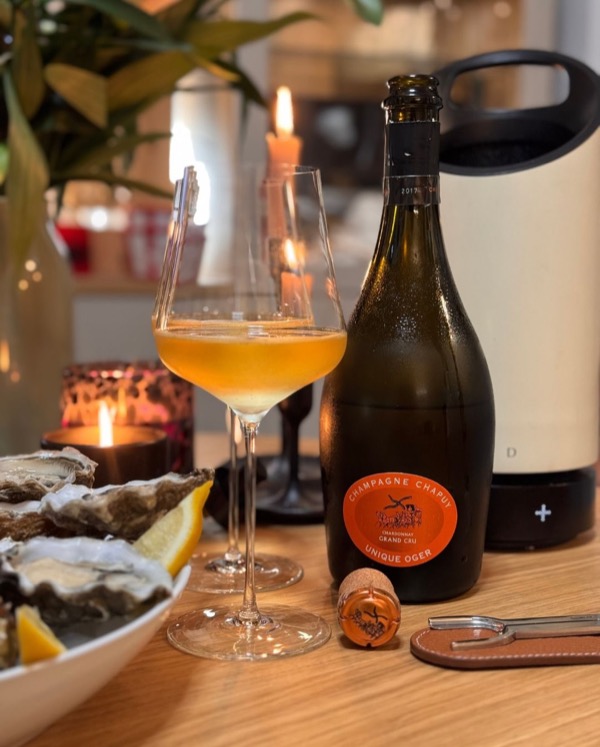
Wenn es um die Kombination mit frischen Austern geht, ist Reinheit für mich mittlerweile das oberste Gebot. Heute im Glas: Der…
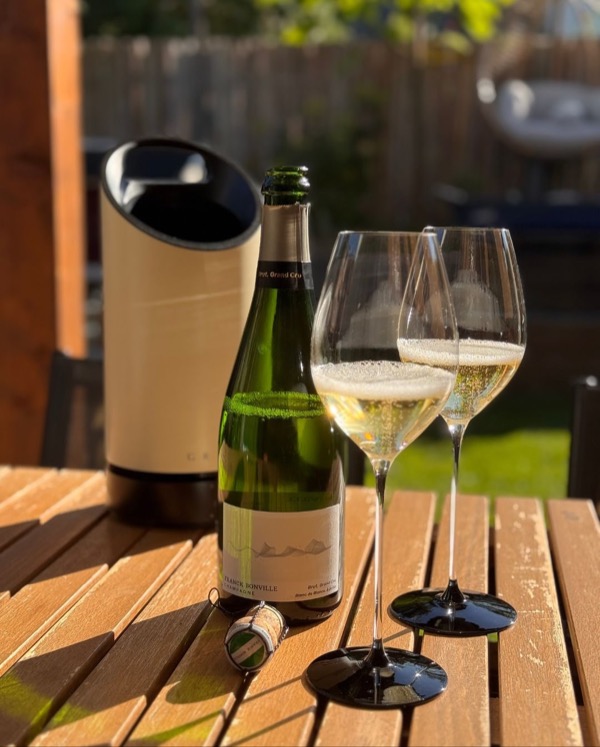
Manchmal sind es die kleinen Details, die im Gedächtnis bleiben: Unter der Folie des @champagne_franck_bonville – Brut Grand Cru Blanc de Blancs…
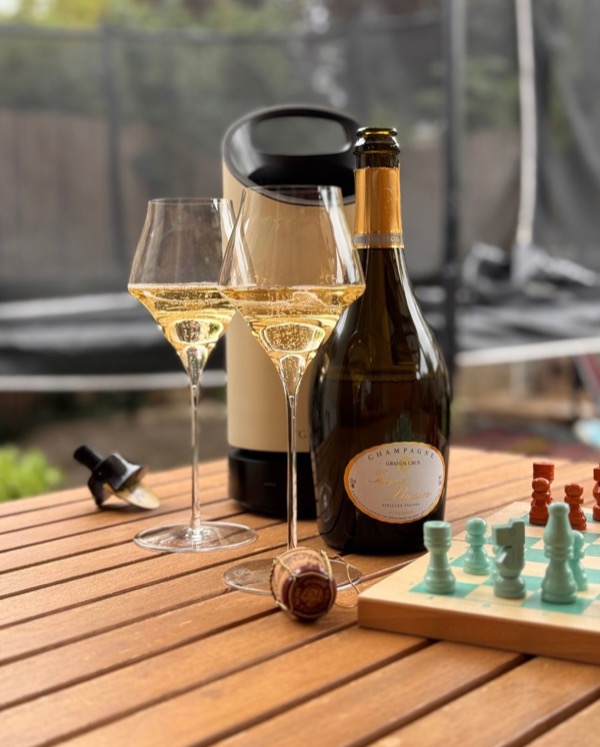
Champagne & Chess So lautete das (spontane) Motto an diesem spätsommerlichen Freitag, an dem sonst gar nichts wirklich geplant war. Die Kinder…
Conclusion: Learning to Taste Terroir
What I've learned so far: Understanding terroir is like learning a new language. Each soil tells its own story, and these stories are found in every glass of champagne. The next time you taste a champagne, think about the soil on which the grapes grew. You'll be surprised how clearly chalk, marl, sand and clay are reflected in your glass.
Champagne is a living