As a longtime champagne enthusiast, I'm constantly fascinated by the incredible variety of floral aromas that can unfold in a glass of champagne. From delicate acacia blossoms to the velvety notes of violets — floral champagnes are among the most elegant and seductive representatives of their kind.
The Magic of Floral Splendor in the Glass
Floral aromas in champagne are like a walk through a French garden in early summer. These delicate fragrances arise through complex biochemical processes during fermentation and aging. Esters and terpenes are primarily responsible for these enchanting notes that immediately transport us to another world.
What particularly excites me: Each floral note tells its own story. Fresh acacia blossom recalls honey and sweetness, while jasmine brings exotic, almost sensual nuances. Linden blossoms exude a calming, herbaceous elegance, rose blossoms bring romantic opulence, and violets provide a powdery, almost nostalgic note.
Chardonnay: The King of Floral Champagnes
The Côte des Blancs — The Heart of Blossoms
In my years of tasting experience, I've found that Chardonnay is the undisputed queen among florally aromatic grape varieties. Particularly the Côte des Blancs with its chalky soils produces champagnes with exceptionally fine floral notes.
The villages of Cramant, Avize, and Le Mesnil-sur-Oger are true treasure troves for floral champagnes. Here, Chardonnay develops a special finesse on the mineral-rich chalk soils, which manifests in delicate acacia and linden blossom notes.
Terroir Influences on Floral Aromatics
The chalk soil of the Côte des Blancs acts like a natural amplifier for Chardonnay's floral characteristics. The good drainage and mineral composition promote slow, even ripening of the grapes, leading to concentrated aromatics.
Pinot Noir and Pinot Meunier: The Floral Surprises
Even though Chardonnay is the main actor, one shouldn't underestimate Pinot Noir and Pinot Meunier. Pinot Noir from the Montagne de Reims, especially from Bouzy and Ambonnay, can develop wonderful rose blossom aromas. These arise mainly in cooler vintages, when the grape can unfold its full aromatic complexity.
Pinot Meunier often surprises with violet notes, which show particularly in young champagnes. In the Vallée de la Marne, I've tasted wonderful examples with pronounced violet aromas.
The Time Factor: When Floral Aromas Emerge
Young Champagnes — The First Bloom
Floral aromas often show in young champagnes, typically in the first 2-5 years after disgorgement. During this phase, primary fruit aromas are still very present and harmoniously combine with emerging floral notes.
The Influence of Aging
Fermentation temperature plays a crucial role. Low fermentation temperatures between 16-18°C promote the formation of esters responsible for floral notes. Lees contact time also influences aromatics: moderate autolysis of 15-24 months can enhance floral notes without masking them.
Specific Champagne Examples with Floral Notes
Blanc de Blancs Masterpieces
Pol Roger Blanc de Blancs is a prime example of acacia blossom aromas. The delicate sweetness and creamy texture perfectly underscore the floral notes.
Billecart-Salmon Blanc de Blancs constantly delights me with its jasmine notes that elegantly combine with citrus fruits.
Rosé Champagnes with Floral Splendor
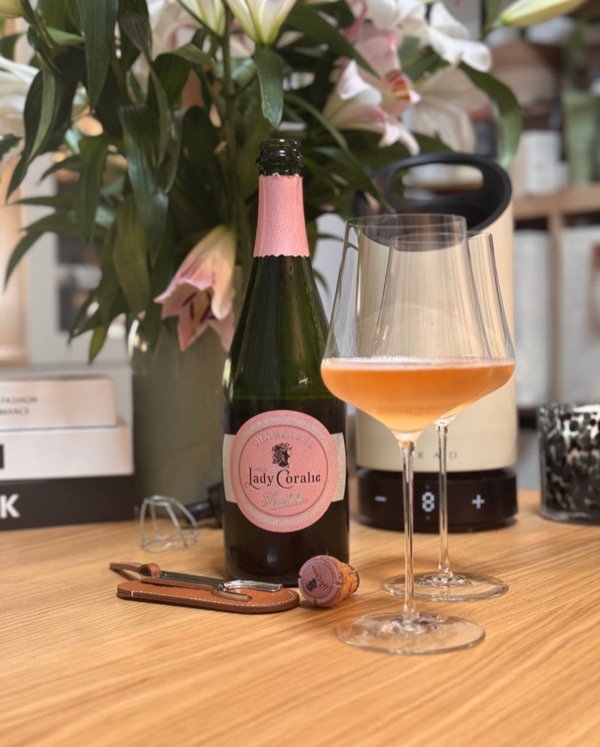
Heute habe ich eine echte Besonderheit aus der „Collector“ Linie von @champagne_mathelin im Glas: Die Cuvée „Lady Coralie“. Das Spannende an diesem…
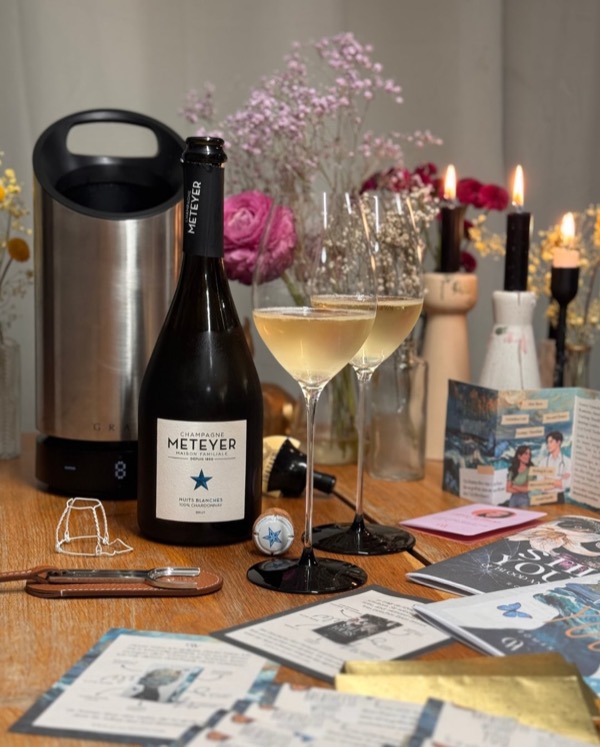
Hier am Tisch herrscht gerade kreatives Chaos der schönsten Sorte: @autorin.olive.wilson bereitet akribisch und mit wahnsinnig viel Liebe ihre…
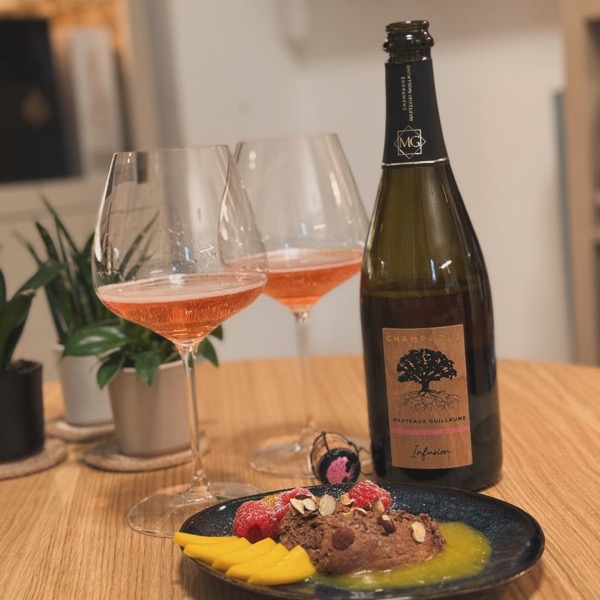
Ein Abend voller Aromen und Experimente – der @champagnemgmarteauxguillaume Infusion hat mich mal wieder überrascht! 🍾✨ Die Kombination aus der…
Laurent-Perrier Cuvée Rosé shows wonderful rose blossom aromas that perfectly match the pink color. The combination of Pinot Noir and the gentle saignée method creates this enchanting aromatics.
Prestige Cuvées with Floral Elegance
Dom Pérignon develops sublime linden blossom notes in good vintages after several years of aging, which combine with mineral nuances into a complex aromatic bouquet.
Food Pairing: Floral Champagnes at the Table
Aperitif Classics
Floral champagnes are perfect aperitif wines. The delicate floral notes stimulate appetite without dominating. I love serving them with:
- Acacia blossom champagnes: With goat cheese and lavender honey
- Jasmine notes: Perfect with sushi and raw fish
- Linden blossom aromas: Harmonize wonderfully with white asparagus
Dessert Accompaniments
The sweet components of floral aromas make these champagnes ideal dessert companions:
- Rose blossom champagnes: With macarons or panna cotta
- Violet notes: Perfect with dark chocolate at 70% cacao
Surprising Combinations
In my experience, floral champagnes also work excellently with spicy Asian dishes. The floral notes temper the heat and create harmonious balance.
The Perfect Tasting of Floral Champagnes
Temperature and Glass Selection
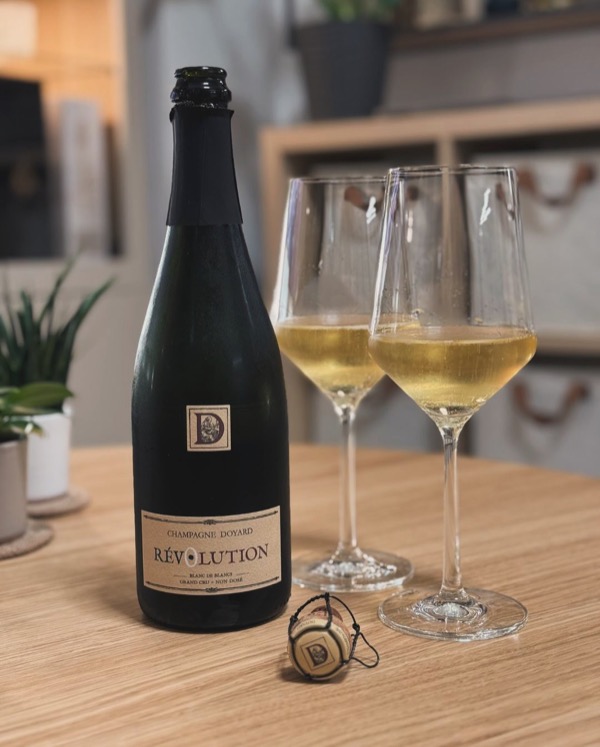
Gestern habe ich noch den Champagne Doyard ( domainedoyard ) – Révolution – Blanc de Blancs geöffnet - ein Erlebnis für die Sinne. Was diesen…
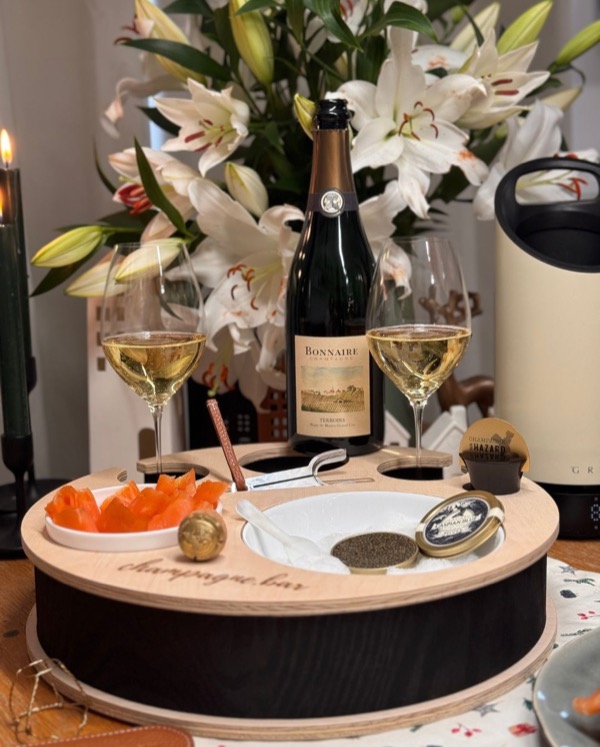
Wenn der Morgen mit Champagner und Kaviar beginnt, dann kann das eigentlich nur ein guter Tag werden. Der purste Moment ist oft der stärkste.…
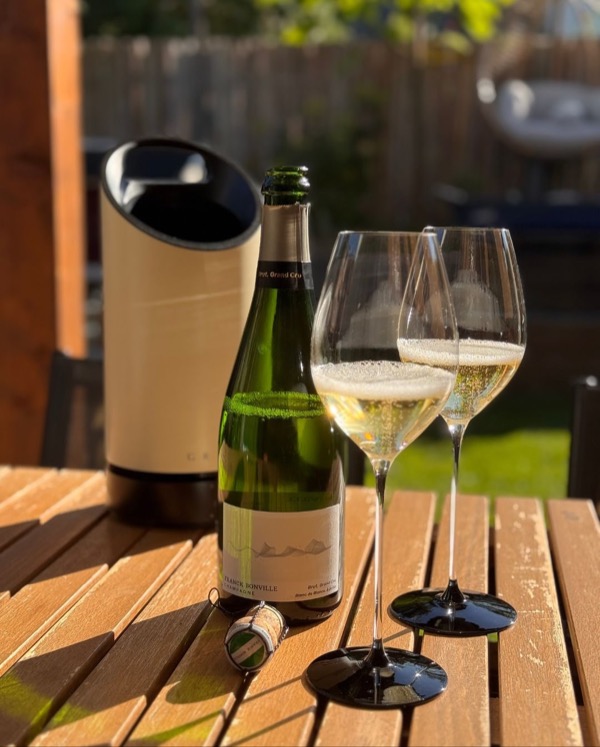
Manchmal sind es die kleinen Details, die im Gedächtnis bleiben: Unter der Folie des @champagne_franck_bonville – Brut Grand Cru Blanc de Blancs…
For floral champagnes, I recommend a serving temperature of 8-10°C. At this temperature, the delicate floral notes unfold optimally — an ice bucket often chills too strongly and closes off precisely these fine aromas. I rely on my GRAD cooler, which keeps the bottle constantly in the right range. As a glass, I prefer a tulip glass that concentrates aromas and beautifully showcases the perlage.
Tasting Notes
When tasting, I pay particular attention to the development of aromas: Often floral notes only show in the second or third impression, after the champagne has warmed slightly in the glass.
Collecting and Storing Floral Champagnes
Floral champagnes shouldn't be aged too long, as the delicate floral notes transform over time into more complex but less floral aromas. My recommendation: Enjoy these champagnes within 3-7 years of purchase.
Conclusion: Poetry in a Glass
Floral champagnes represent the poetic side of this great wine region for me. They combine elegance with accessibility and create moments of pure sensory pleasure. Whether as an aperitif or for special occasions — a floral champagne transforms every moment into something special.
The variety of floral notes impressively shows how complex and fascinating champagne can be. From the first delicate acacia blossom to the last note of violet — every sip is a journey through France's most beautiful gardens.