When I first tasted a Blanc de Blancs from Pierre Péters from Le Mesnil-sur-Oger, I was overwhelmed. Not by lush fruit or creamy lees notes, but by something completely different: a crystal-clear, almost saline minerality that immediately reminded me of crushed chalk. That was my first conscious encounter with what champagne lovers reverently call "minerality."
The Great Minerality Debate: Myth or Reality?
Science is divided on whether mineral notes actually come from the soil. While skeptics argue that vines cannot absorb minerals in a tasteable form, terroir advocates speak of direct flavor transfers from the subsoil. What I've learned so far from tasting different champagnes at home: Whether scientifically proven or not — mineral notes are real and inseparably linked to specific sites.
What I observe: Champagnes from chalky soils taste different from those from clayey terroirs. Whether this happens through pH differences, water balance, or mysterious mineral transfer is ultimately secondary. The result is what counts.
Why Blanc de Blancs from the Côte des Blancs Taste Particularly Mineral
The Côte des Blancs between Cramant and Le Mesnil-sur-Oger is the mecca of mineral champagnes. The reason lies in the subsoil: here you find the purest chalk in Champagne, the famous "Blanc de Craie." This porous, water-storing chalk provides perfect drainage and constant water supply.
Chardonnay, the only permitted grape variety in the Grand Cru sites of the Côte des Blancs, has a natural affinity for mineral expressions. While Pinot Noir tends more toward fruity and spicy notes, Chardonnay can transport terroir unfiltered. In Cramant I taste salty sea notes, in Avize crystalline purity, in Le Mesnil-sur-Oger that famous chalk-like dryness.
Chalk vs. Flint vs. Salt: The Aroma Families in Detail
Chalk Aromas
Chalk aromas are the trademark of Grand Cru sites. They express themselves as dry, almost dusty minerality in the finish. Think of crushed school chalk or wet limestone. These notes are typical for:
- Salon (Le Mesnil-sur-Oger): The epitome of chalky elegance
- Pierre Péters "Les Chétillons": Creamy chalk with salty accents
- Agrapart "Minéral": Here the name says it all
Flint Aromas
Flint notes are rarer and usually associated with Chablis, but also occur in Champagne. They show as smoky, almost metallic minerality with slightly sulfurous nuances. Particularly pronounced in:
- Marie-Courtin (Côte des Bar): Here Chardonnay meets Kimmeridge clay
- Vouette et Sorbée (Côte des Bar): Biodynamic perfection on mineral soils
Salty Notes
Salt aromas often develop near coasts or on certain mineral soils. In Champagne they are subtler but still present:
- R.H. Coutier "Tradition": Salty brioche notes
- Francis Boulard "Petraea": Iodine-like saltiness meets chalk
Concrete Champagne Examples and Their Mineral Profiles
Jacques Selosse "Substance"
Here minerality shows itself in its most complex form. Anselme Selosse vinifies without malo, whereby the acidity carries the mineral notes. I taste wet stone, oyster shells, and a hint of sea salt.
Ulysse Collin "Les Maillons"
A Blanc de Blancs from Congy that proves mineral perfection is possible even outside the Côte des Blancs. Olivier Collin conjures champagne with crystal-clear stone fruit minerality from his chalky soil.
Pierre Gimonnet "Gastronome"
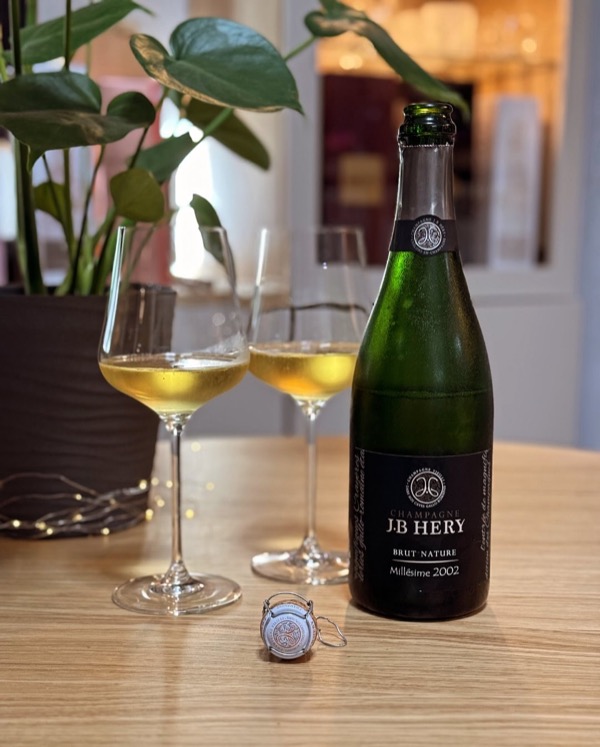
🍾 Heute im Glas: J.B Héry - Millésime 2002 - Brut Nature – ein spannender Fund aus meinem letzten Einkauf. Gerade erst frisch in den Keller…

Hier am Tisch herrscht gerade kreatives Chaos der schönsten Sorte: @autorin.olive.wilson bereitet akribisch und mit wahnsinnig viel Liebe ihre…
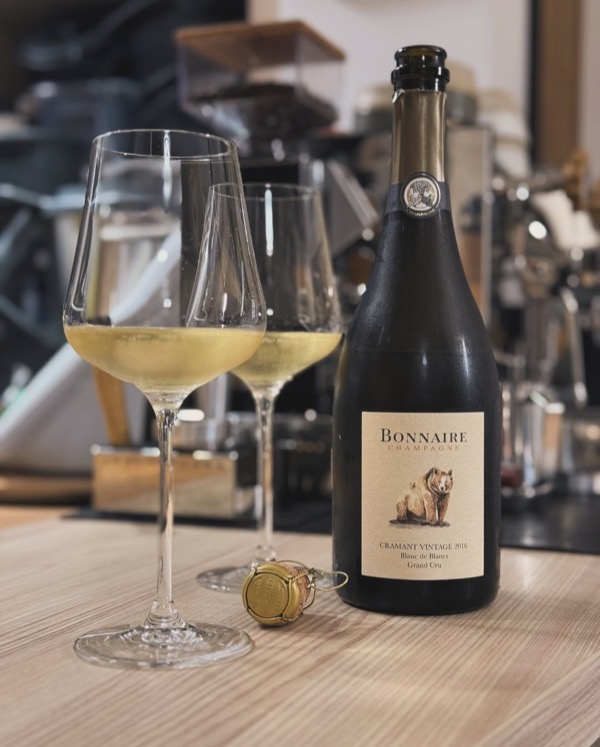
Diese Woche kam eine frische Lieferung direkt aus der Champagne bei mir an – Drei spannende Flaschen von @bonnaireclouet . Für den Auftakt habe ich…
A Premier Cru from Cuis that combines minerality with accessibility. Here I taste damp chalk, but also a hint of lemon zest and white flowers.
Larmandier-Bernier "Longitude"
A Blanc de Blancs from Vertus that shows how chalk minerality develops with time. After ten years on the lees, complex mineral notes develop from wet stone to salty nuts.
Grape Variety Assignment: Who Transports Minerality Best?
Chardonnay is the undisputed king of minerality. The grape variety can transport terroir almost unfiltered and develops increasingly complex mineral facets with time.
Pinot Noir shows minerality more indirectly — as stony underlining to cherry and strawberry notes. Especially in cool sites like Bouzy or Aÿ.
Pinot Meunier is the underestimated minerality transporter. In assemblages it often brings that salty, slightly iodine-like note that grounds the champagne.
Food-Pairing: Minerality at the Table
Mineral champagnes are the perfect food companions for everything that comes from the sea:
Seafood
Oysters and chalky champagne are a classic. I recommend:
- Gillardeau oysters with Salon 2008
- Scallops with Pierre Péters "Cuvée de Réserve"
- Sea urchin with Ulysse Collin "Les Maillons"
Fish
- Turbot in salt crust with mineral Blanc de Blancs
- Sashimi with Marie-Courtin "Resonance"
- Ceviche with salty champagne notes
Cheese
Surprisingly, mineral champagnes also harmonize with certain cheese varieties:
- Goat cheese from the Loire
- Young Comté
- Crottin de Chavignol
Minerality as a Quality Indicator
For me, pronounced minerality is often a sign of quality and authenticity. It shows that the winemaker trusts the terroir and hasn't covered it up through too much dosage or manipulation. Mineral champagnes are usually:
- Aged longer on the lees
- Given low dosage
- From respectfully farmed vineyards
The Future of Mineral Champagnes
Climate change also presents new challenges for minerality. Warmer temperatures could overshadow the fine mineral notes. It becomes all the more important to find sites and techniques that will enable these unique taste experiences in the future as well.
As The Champagne Guy, I can only encourage everyone: Try mineral champagnes! They may not be immediately accessible like fruit-forward cuvées, but they offer a depth and complexity that's addictive. Minerality is terroir in the glass — it doesn't get more pure or direct than that.
A mineral champagne tells the story of its soil, its site, and its winemaker. That makes it more than just a beverage — it becomes liquid geography.
My Posts About This

Wenn der Morgen mit Champagner und Kaviar beginnt, dann kann das eigentlich nur ein guter Tag werden. Der purste Moment ist oft der stärkste.…

Manchmal sind es die kleinen Details, die im Gedächtnis bleiben: Unter der Folie des @champagne_franck_bonville – Brut Grand Cru Blanc de Blancs…
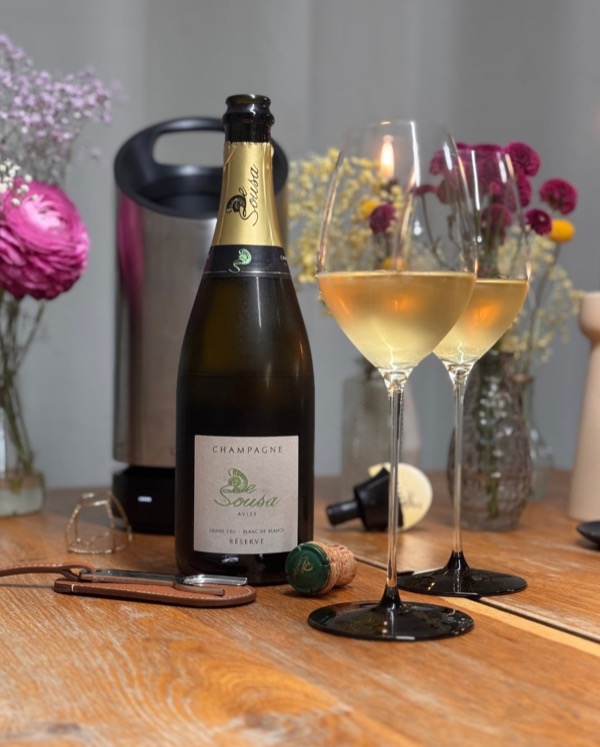
Heute habe ich einen herausragenden Blanc de Blancs geöffnet: Die „Grand Cru Réserve“ von @champagnedesousa aus Avize. Die Familie De Sousa arbeitet…