The Vintage That Broke All the Rules
2003 is the most controversially discussed vintage in Champagne. The heat wave of the century turned everything upside down: the earliest harvest in living memory, the lowest acidity in decades, grapes that almost resembled raisins in some parcels. For a region that thrives on cool climate and high acidity, 2003 was a shock — and a preview of what climate change could bring.
The Weather in 2003
The 2003 heat wave burned itself into Europe's collective memory. Champagne was not spared:
The winter was cold and dry. Spring began mild, but from June onward, temperatures exploded. Flowering proceeded at record speed — everything had finished blooming within just a few days.
Then came the summer that changed everything: July and August brought temperatures over 40 degrees Celsius. For weeks on end. The vines suffered extreme heat stress. Leaves withered, grapes burned in the most exposed locations. Water shortage was severe.
The harvest began as early as late August — unheard of for Champagne. Normally, harvesting here takes place in September or even October. The grapes were extremely ripe, with high sugar levels and alarmingly low acidity.
It was an extreme year that tested the limits of what was possible.
Style of the Vintage
2003 champagnes are atypical for the region:
- Extremely ripe fruit — tropical notes, overripe peach, mango, dried fruit
- Very low acidity — some wines seem almost flat
- Full body — powerful, almost vinous, far from the classic champagne profile
- Warm aromatics — honey, caramel, baked apple
- Short to medium aging potential — the lack of acidity limits longevity
You either love 2003s or you don't. There's hardly a middle ground. For champagne purists, the vintage is a nightmare — too soft, too broad, not champagne enough. For others, it offers a fascinating alternative: full-bodied, lush, with an opulence rarely found in Champagne.
Grape Variety Performance
Pinot Noir handled the heat best. The thick-skinned variety could better withstand sunburn than Chardonnay. The best Pinot Noir parcels on the Montagne de Reims delivered powerful, color-intense material.
Chardonnay had a much harder time. The delicate grapes partially burned on the vine. Where vines were somewhat protected by foliage or slope position, usable material could be harvested. But the typical elegance and freshness of Côte des Blancs Chardonnay was missing almost everywhere.
Pinot Meunier showed surprising resilience. The robust variety handled the stress remarkably well.
My Experience with 2003
I've tasted a bottle from 2003 — and it was exactly what you'd expect from this vintage: lush, broad, with an almost exotic fruitiness. Not what I normally look for in a champagne, but impressive in its own way. You have to take 2003 for what it is: an outlier, a special case, an experiment of nature.
What surprised me: Despite the low acidity, the bottle still had a certain liveliness. Perhaps not the freshness of a classic champagne, but a kind of inner warmth that held the wine together.
The Vintage as a Warning
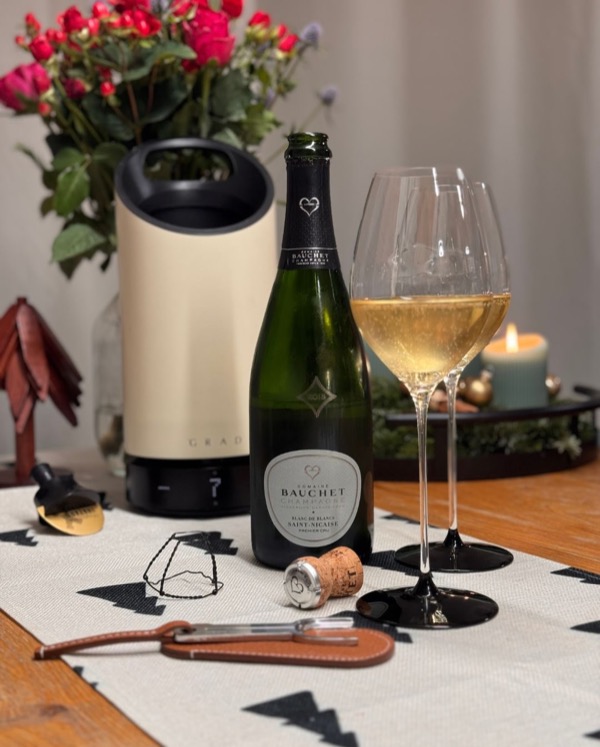
Der Saint-Nicaise 2015 von @domainebauchet hat gestern genau diese ruhige, warme Stimmung getroffen, die man sich für einen entspannten Abend…
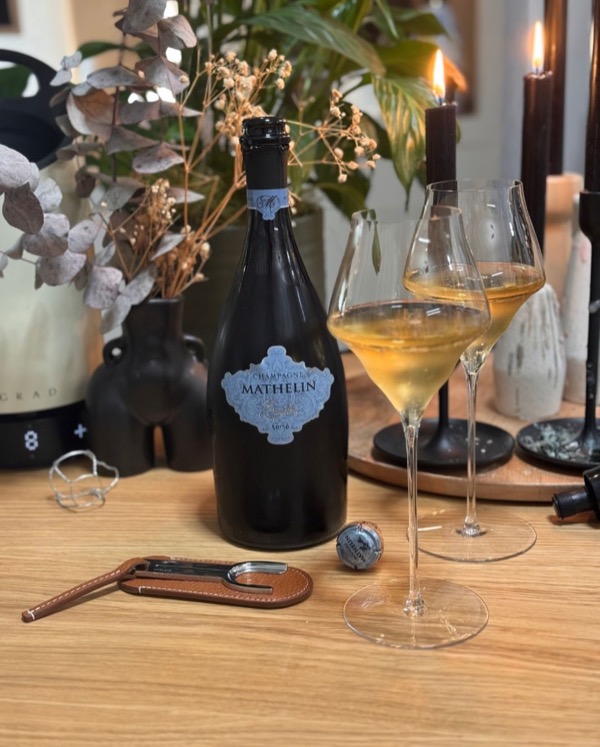
Manchmal sagt ein minimalistisches Etikett schon alles: Beim „Équilibre“ von @champagne_mathelin ist der Name absolutes Programm! Auf der Flasche…
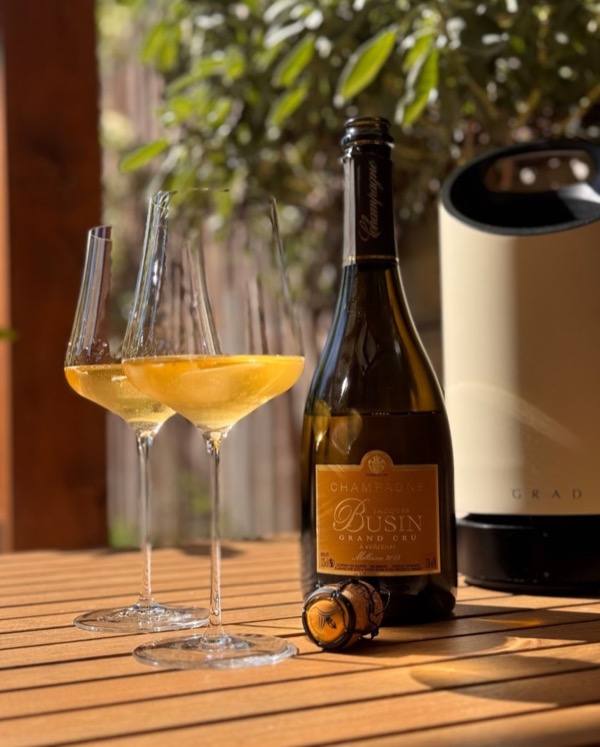
Erinnert ihr euch noch an den @champagnejacquesbusin – Millésime 2015 Grand Cru? Ich hatte diesen kraftvollen Champagner aus Verzenay letztes Jahr…
2003 was a wake-up call for many winemakers. The heat showed what happens when Champagne loses its cool climate. Practices that had worked for decades — late harvest, seeking the ripest possible fruit — suddenly had to be questioned.
As a result, many houses began:
- Considering earlier harvest dates
- Adjusting canopy management to shade grapes
- Revaluing higher-elevation parcels
- Reassessing Pinot Meunier as a climate-resistant option
2003 was in many ways the beginning of the climate change discussion in Champagne.
Comparison
2003 stands alone — there's hardly a comparable vintage in Champagne's recent history. The closest parallel can be drawn to the warm vintages of 2018 and 2019, which were far from being as extreme.
| Characteristic | 2002 | 2003 | 2004 |
|---|---|---|---|
| Character | Elegant, precise | Lush, broad | Fresh, classic |
| Acidity | High | Very low | Good |
| Fruit | Fine | Overripe | Moderate |
The contrast to the elegant neighboring vintages 2002 and 2004 couldn't be greater.
Drinking Window Today
Most 2003s have passed their peak or are approaching it. Without the preserving acidity, these wines age faster. Anyone still holding a bottle should open it soon.
Some exceptions — especially prestige Cuvées that used Dosage and Assemblage artistry to somewhat balance the acidity — may still work. But the clock is ticking.
Posts
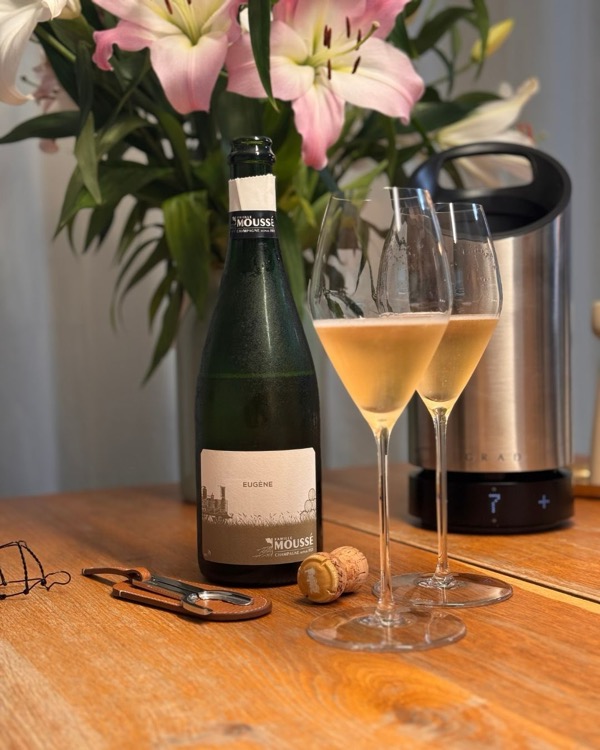
Erinnert ihr euch noch an den L’Orage den ich Anfang November gepostet hatte? Heute blicke ich tiefer in das Repertoire von @champagne_mousse und…
Conclusion
2003 is not a vintage you forget. It polarizes, it provokes, it raises questions. Is this still champagne? Is champagne allowed to be like this? I think: Yes, it is. 2003 is a document of its time — a vintage that shows us where the journey could lead if climate change continues to progress.