What I've read about these ingenious machines never fails to fascinate me. While a riddler traditionally hand-riddles and turns hundreds of bottles daily, this computer-controlled wonder machine does the same work for 500 bottles simultaneously — and in just one week instead of the usual six to eight weeks.
What is a Gyropalette?
The gyropalette is an automated riddling system that revolutionized the traditional riddling process. Instead of individual pupitres (riddling racks), bottles are placed in large, computer-controlled cages that execute precisely programmed movements. Each gyropalette holds exactly 500 bottles and automatically carries out the complete riddling program.
The Invention: A Milestone of the 1970s
The gyropalette was developed in the early 1970s when Champagne producers were searching for solutions to handle their growing production volumes. The steadily increasing demand for champagne made it necessary to modernize the labor-intensive riddling process without compromising quality.
The first prototypes emerged from collaboration between champagne houses and mechanical engineers. The goal was clear: translate the centuries-old craftsmanship of riddling into precise, reproducible machine movements.
How Does the Computer-Controlled Riddling Machine Work?
The Technical Structure
A gyropalette consists of a sturdy metal frame that holds 500 bottles in a grid-like system. Computer-controlled motors ensure precise movements:
- Rotation: The entire palette rotates around various axes
- Inclination: Gradual change of angle from horizontal to vertical
- Riddling: Gentle but deliberate shaking motions
The Program in Detail
| Phase | Duration | Angle | Movements per Day |
|---|---|---|---|
| Start | Day 1-2 | 45° | 8x daily |
| Middle Phase | Day 3-5 | 60-75° | 6x daily |
| End Phase | Day 6-7 | 90° (vertical) | 4x daily |
The computer programs are so precisely calibrated that they perfectly mimic the hand movements of experienced riddlers. Every turn, every inclination follows a thoughtful algorithm that has been perfected over decades.
Why Doesn't Quality Suffer?
Many champagne lovers ask me whether machine processing reduces quality. For me, the answer is clear: No! The gyropalette can even achieve more consistent results than handwork.
Precision Surpasses Intuition
- Uniform movements: Every bottle receives exactly the same treatment
- Constant timing: No human errors or fatigue effects
- Optimal force control: Neither too gentle nor too harsh
Scientific Studies Confirm It
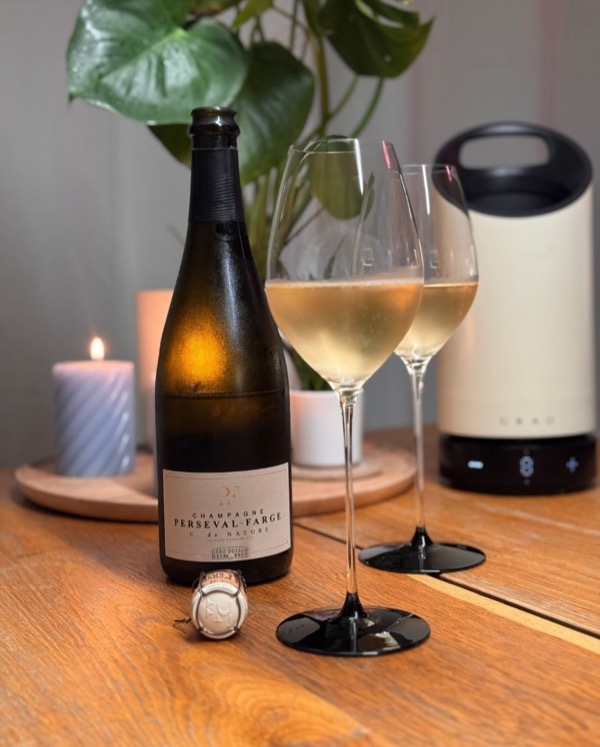
Das große Finale: Station 10 von 10. 🥂✨ Heute schließe ich ein Kapitel, das mich über die letzten Monate intensiv begleitet hat. Mit der Cuvée de…
Wenn der Tag so beginnt wie heute, dann ist eigentlich alles gut :) Mit einem reichhaltigen Brunch mit der Familie und einem passenden Champagner…
Alles beginnt jetzt! 🥂 Wirklich begonnen hat alles aber vor rund drei Jahren, als ich zum ersten Mal bewusst einen Champagner genießen durfte. Wie…
Blind tastings have shown that champagne from gyropalette riddling cannot be distinguished from hand-riddled products. The sediment transport works just as effectively, and clarity is identical.
Why Do Some Producers Stay with Handwork?
Despite all the advantages, some renowned champagne houses still swear by traditional hand remuage. The reasons are varied:
Tradition and Philosophy
Maison Bollinger, for example, still riddles all their bottles by hand. For them, it's a question of authenticity and respect for tradition.
Marketing and Storytelling
Handwork tells a story that touches customers. In an increasingly digitized world, craftsmanship becomes luxury — and often justifies higher prices.
Small Production Volumes
For boutique producers with just a few thousand bottles annually, investing in a gyropalette is often not economical. An experienced riddler can easily handle the entire annual production.
Flexibility with Special Cuvées
Sometimes certain cuvées require individual treatment. A riddler can spontaneously adjust, which is more difficult with a programmed machine.
The Future of Riddling
Today, about 90% of all champagne producers use gyropalettes. The technology is constantly being developed — modern systems are even more precise and can run different programs for different cuvées.
As a passionate champagne enthusiast, I don't see the gyropalette as a threat to tradition, but as an intelligent evolution. It makes it possible to offer more people high-quality champagne at fair prices while keeping quality consistently high.
Whether hand or machine — in the end, what counts is the result in the glass. And that can be absolutely perfect with both methods.