Liqueur de Tirage: The Heart of Prise de Mousse
As a Champagne lover, I'm constantly fascinated by the small but crucial details that make great sparkling wines. Today I'm taking you into the world of Liqueur de Tirage – that mysterious mixture that transforms still base wine into sparkling Champagne.
What is Liqueur de Tirage?
Liqueur de Tirage is a precisely composed solution of sugar, yeasts, and various additives that is added to the base wine before bottling. This mixture triggers the famous mousse/">Prise de Mousse – the secondary fermentation in the bottle that gives Champagne its characteristic bubbles.
The term comes from French: "Liqueur" means liquid, "Tirage" refers to drawing or bottling the wine into bottles. So it's the "bottling liquid" – a rather technical but accurate name.
The Precise Composition: Precision Work in the Cellar
Sugar: The Fuel for Fermentation
24 grams of sucrose per liter – this number is practically set in stone in Champagne. Why exactly this amount? The answer lies in the physics of fermentation:
- 4 g sugar per liter produces about 1 atmosphere of pressure
- 24 g/l thus creates around 6 atmospheres (about 6 bar)
- This corresponds to the ideal pressure for Champagne
| Sugar Amount | Resulting Pressure | Use |
|---|---|---|
| 18-20 g/l | 4.5-5 atm | Light sparkling wines |
| 24 g/l | 6 atm | Champagne standard |
| 28-30 g/l | 7-7.5 atm | Too high, bottle breakage risk |
Yeast: The Silent Workers
For secondary fermentation, Champagne houses exclusively use Saccharomyces cerevisiae strains specifically selected for this task. My experience shows: not every yeast is suitable for bottle fermentation.
Characteristics of ideal Champagne yeast:
- Alcohol tolerance up to 12-13% vol
- Low fermentation temperature (10-15°C)
- Compact sediment formation for easy riddling
- Neutral aroma formation
- High pressure resistance
Most producers today use commercial dry yeast (LSA - Levure Sèche Active) at a dosage of about 0.2-0.3 g/l.
Other Components of Liqueur de Tirage
Nutrients for the Yeast
- Thiamine (Vitamin B1): 0.6 mg/l for optimal fermentation
- Ammonium salts: As nitrogen source
- Yeast nutrients: For uniform fermentation
Clarifying Agents
- Bentonite: For protein stabilization
- Tannins: For structure and shelf life
- Alginate: As natural clarifying agent
Why is Dosage So Critical?
Too Little Sugar (under 20 g/l):
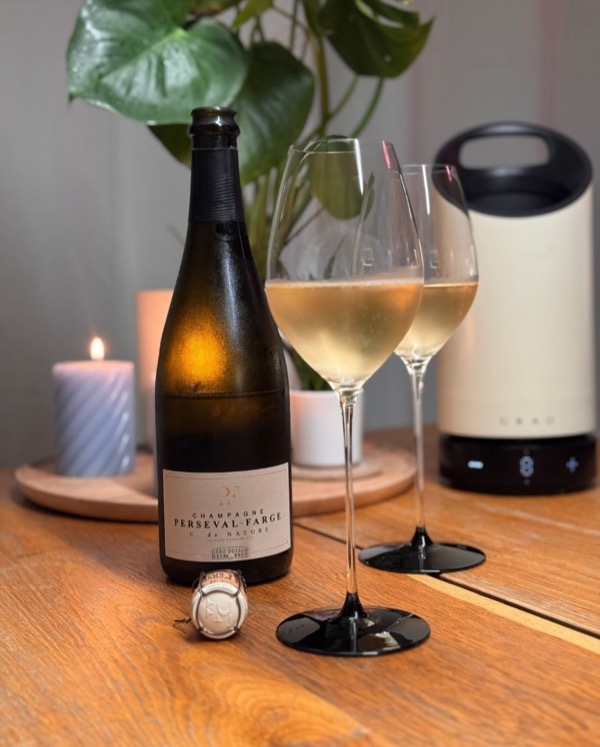
Das große Finale: Station 10 von 10. 🥂✨ Heute schließe ich ein Kapitel, das mich über die letzten Monate intensiv begleitet hat. Mit der Cuvée de…
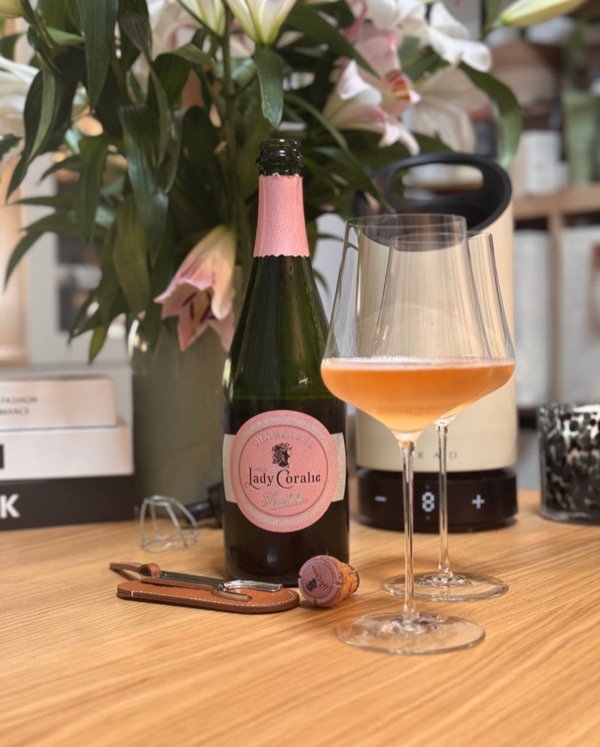
Heute habe ich eine echte Besonderheit aus der „Collector“ Linie von @champagne_mathelin im Glas: Die Cuvée „Lady Coralie“. Das Spannende an diesem…
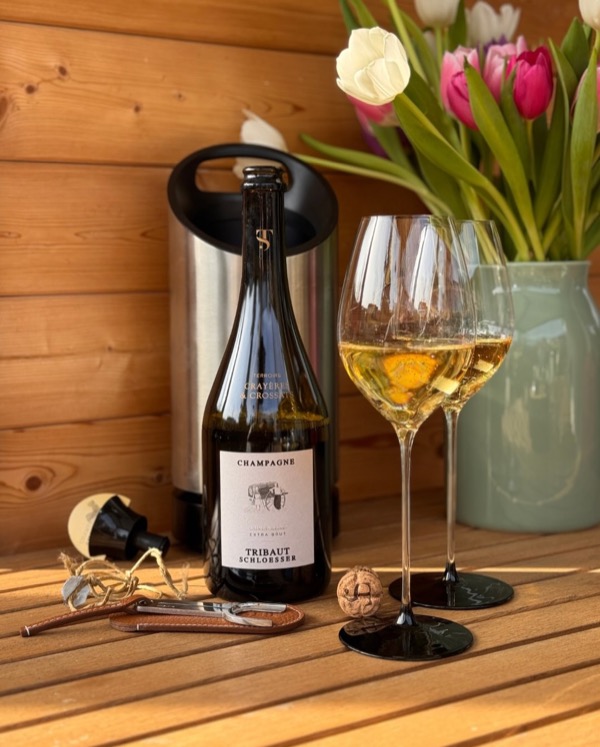
Das perfekte Match für unser heutiges, maritimes Festmahl! 🌊🥂 Bei uns gab es heute ein absolut grandioses, spontanes Seafood-Lineup: Kurz…
- Insufficient pressure (under 5 atm)
- Weak perlage
- No authentic Champagne character
Too Much Sugar (over 26 g/l):
- Bottle explosion risk from overpressure
- Losses up to 15-20% of production
- Legal problems (over 6.5 atm is prohibited)
I remember a visit to a smaller producer who told me how an incorrectly calculated dosage led to hundreds of exploded bottles. A costly mistake that underscores the precision of this work.
Historical Development
From Chance to Science
The history of Liqueur de Tirage is closely linked with the development of Méthode Champenoise:
17th Century: Dom Pérignon and his contemporaries accidentally discovered secondary fermentation through residual sugar in wine.
18th Century: First systematic addition of sugar, but still without scientific foundation.
19th Century: 1836 pharmacist André François developed the first precise formula for sugar dosage.
1884: Henry Goulet established the still-valid 24g/l rule through systematic pressure measurements.
Modern Developments
Today many houses use invert sugar or rectified grape must concentrate (MCR) instead of pure sucrose. These dissolve better and reduce the risk of fermentation problems.
Practical Production in the Champagne Cellar
The preparation of Liqueur de Tirage occurs in several steps:
- Dissolve sugar in filtered water at 15-20°C
- Yeast rehydration in warm water (35-40°C)
- Nutrient addition and homogenization
- Quality control: Sugar content, pH value, germ count
- Immediate use (max. 2 hours standing time)
Modern Alternatives and Innovations
Some progressive producers today experiment with:
- Bio-certified yeasts for organic Champagne
- Autochthonous yeasts for terroir-specific characteristics
- MCR (Rectified Grape Must Concentrate) as sugar substitute
- Encapsulated Yeast for more uniform fermentation
Conclusion: Precision as Art Form
Liqueur de Tirage may seem technical, but it embodies the perfection of Champagne production. These 24 grams of sugar per liter are not just a number – they are the result of