When I tasted my first truly aged champagne years ago — a 1996 Krug Grande Cuvée — I was overwhelmed by the complex nuttiness that unfolded. Roasted hazelnuts, fresh almonds, and even a hint of walnut oil danced on my tongue. Since then, nothing in champagne fascinates me more than these wonderful nutty aromas that time and patience create.
What are nutty aromas in champagne?
Nutty notes belong to the most fascinating aroma groups in champagne. They encompass a broad spectrum: from the delicate freshness of a green almond to the warmth of roasted hazelnuts to the depth of ripe walnuts. I also include marzipan aromas — that sweet-nutty complexity that particularly appears in Blanc de Blancs.
These aromas don't develop by chance. They are the result of complex biochemical processes that require time, temperature, and the right environment.
The science behind nuttiness
Autolysis: The key to nuttiness
The most important factor for nutty aromas is autolysis — the slow breakdown of yeast cells during bottle aging. When champagne lies on the lees, the dying yeast cells continuously release amino acids, proteins, and other compounds.
Particularly relevant are the Maillard reactions that occur between amino acids and sugars. These create exactly those roasted, nutty compounds that we love so much. The longer the champagne lies on the lees, the more intense these aromas become.
Oxidative aging: The second pillar
Parallel to autolysis, controlled oxidation plays a crucial role. In the chalk cellars of Champagne, at constant 10-12°C, the champagne oxidizes minimally but steadily. This gentle oxidation intensifies the nutty notes and allows them to mature — from green-fresh to warm-roasted to deeply nutty.
The evolution of the nut: From young to old
Almond: The youth of nuttiness
Fresh almond aromas develop after relatively short aging periods. In a young champagne after 15-24 months of autolysis, I often recognize this green, fresh almond note — especially in Blanc de Blancs made from Chardonnay.
The Avize Premier Cru from Agrapart shows this characteristic perfectly: After 36 months on the lees, an elegant, almost green almond freshness dominates, framed by mineral notes.
Hazelnut: The golden middle
With increasing maturity — usually from 4-5 years — hazelnut aromas develop. These are warmer, rounder, and often lightly roasted. Here, Pinot Noir plays a particularly important role, as this grape variety naturally tends toward nutty developments.
The Bollinger Special Cuvée, which lies on the lees for at least three years, exemplifies this roasted hazelnut complexity, enhanced by the high Pinot Noir content and the use of reserve wines.
Walnut: The wisdom of age
Walnut aromas are the privilege of truly aged champagnes. Only after 7-10 years and more does this deep, almost oily nuttiness develop. It arises through advanced Maillard reactions and long-lasting oxidative processes.
The legendary Krug Grande Cuvée, based on over 120 wines from 10 different vintages, shows exactly this walnut depth after decades in the cellar — complex, multi-layered, and unmistakable.
Grape varieties and their nutty characteristics
Chardonnay: Elegant almond finesse
Chardonnay develops the most elegant nutty aromas. Coming from the Côte des Blancs, this grape variety shows a fine almond to hazelnut note, especially with long autolysis. The minerality of the chalk soils additionally enhances this elegance.
Pinot Noir: Warm hazelnut power
Pinot Noir from the Montagne de Reims naturally brings more body and warmth. The nutty aromas are more intense here, often more roasted. Especially in Blanc de Noirs, a wonderful hazelnut complexity develops.
Pinot Meunier: Creamy roundness
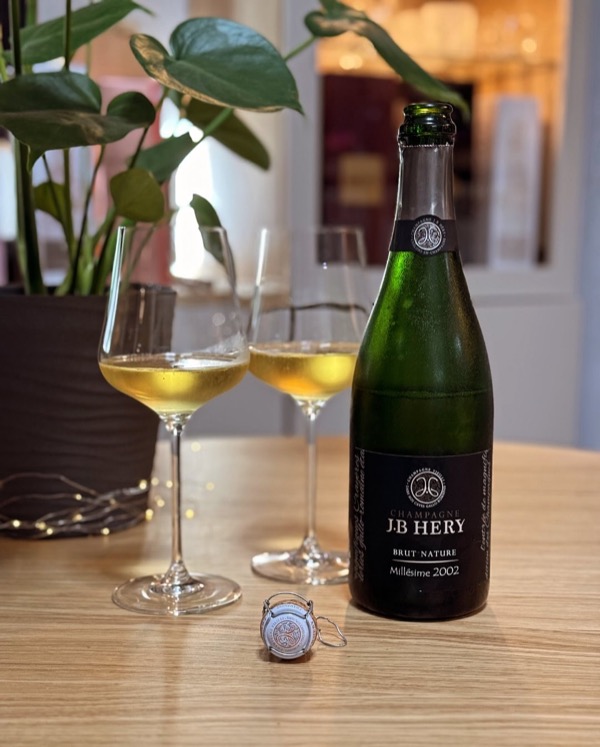
🍾 Heute im Glas: J.B Héry - Millésime 2002 - Brut Nature – ein spannender Fund aus meinem letzten Einkauf. Gerade erst frisch in den Keller…
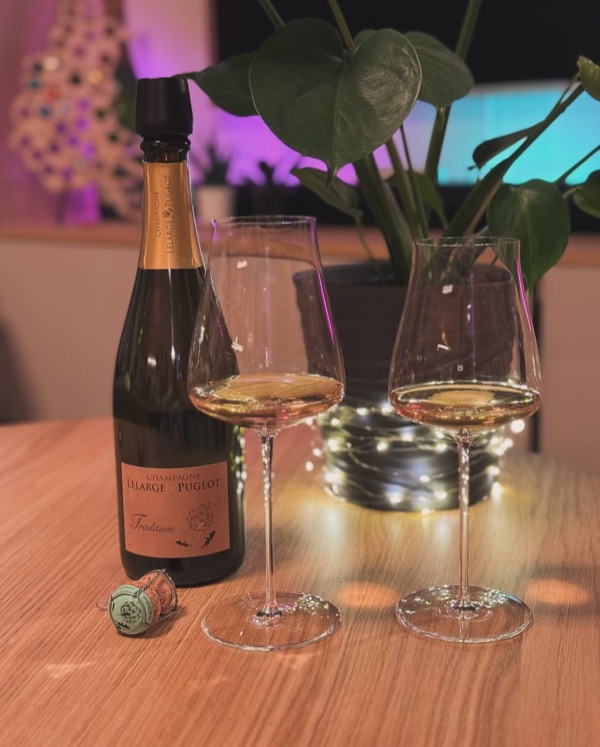
Vor über 10 Jahren habe ich im Rahmen eines Projekts für eine Weinverkostung und ein Feature in einem Print-Magazin Gläser von @eisch_glass ,…
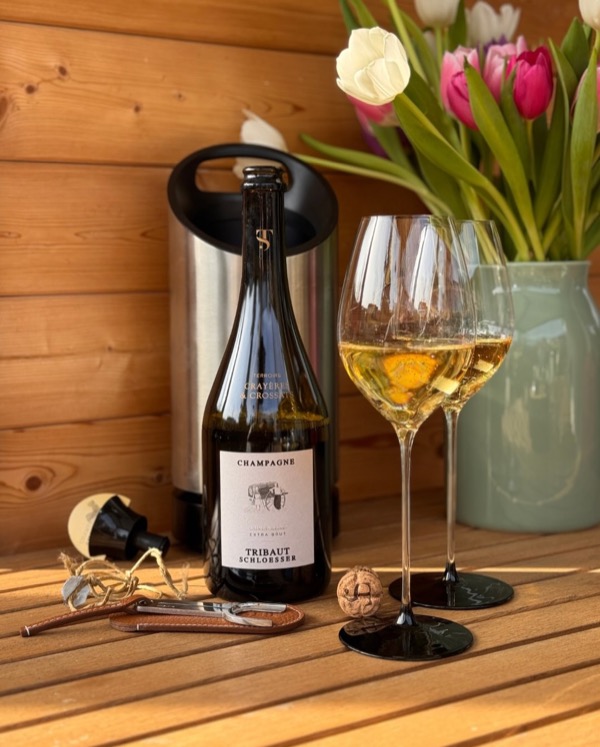
Das perfekte Match für unser heutiges, maritimes Festmahl! 🌊🥂 Bei uns gab es heute ein absolut grandioses, spontanes Seafood-Lineup: Kurz…
Meunier, often underestimated, contributes to the creamy texture and enhances the marzipan-like nuances. In cuvées, this grape variety provides the necessary rounding of the nutty aroma family.
Specific champagne recommendations
For almond lovers:
- Pierre Péters Cuvée de Réserve Blanc de Blancs: Pure Chardonnay elegance with fine almond notes
- Agrapart Terroirs Blanc de Blancs: Green almond meets chalk minerality
For hazelnut enthusiasts:
- Bollinger Special Cuvée: Classic roasted hazelnut through long autolysis
- Pol Roger Brut Réserve: Harmonious hazelnut-fruit balance
For walnut connoisseurs:
- Krug Grande Cuvée: The reference for deep walnut complexity
- Louis Roederer Cristal (after 10+ years): Develops fascinating walnut depth
Food pairing: Nut meets nut
The art of pairing nutty champagnes lies in the play with textures and intensities:
With almond-focused champagnes:
- Roasted almonds and olives as an aperitif
- Trout with almond slivers
- Goat cheese with honey and chopped almonds
With hazelnut-driven champagnes:
- Hazelnut pralines (not too sweet!)
- Pan-seared scallops with hazelnut butter
- Comté cheese with walnut bread
With walnut-complex champagnes:
- Walnut-fig tart
- Roasted duck with walnut sauce
- Roquefort with caramelized walnuts
Storage and development
Proper storage is crucial for the development of nutty aromas. In my cellar, I keep the bottles at constant 12°C, lying down and in darkness. I absolutely avoid vibrations — they disturb the sensitive autolysis.
Patience is key: While a young champagne can already show almond notes, the development of true hazelnut and walnut complexity requires time. At least 5-7 years, better 10-15 years should be planned for truly deep nutty aromas.
My posts about this
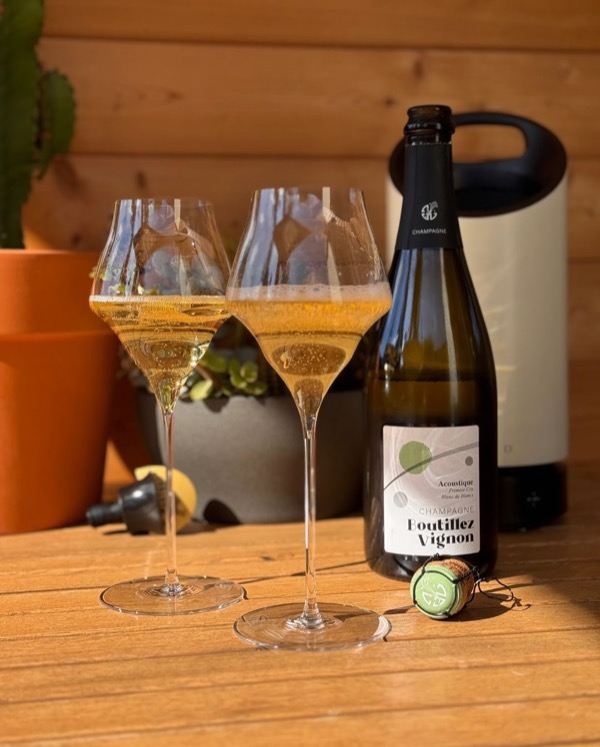
Der gestrige Vormittag war noch voll mit Aufräumen, Wäschewaschen und dem üblichen Sonntag: alles für die neue Woche vorbereiten, ein bisschen…
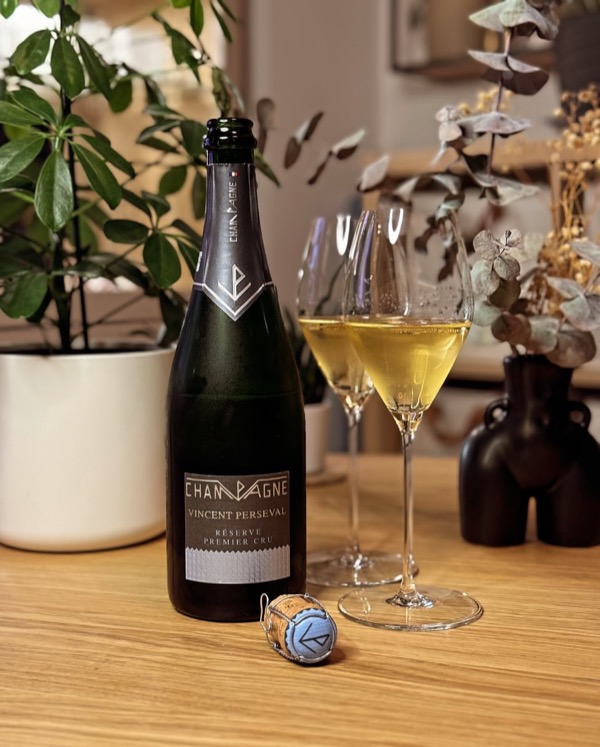
Ich habe mittlerweile schon einige Champagner von @champagnevincentperseval probiert – von Blanc de Blancs bis zum Rosé. Also war es nur eine Frage…
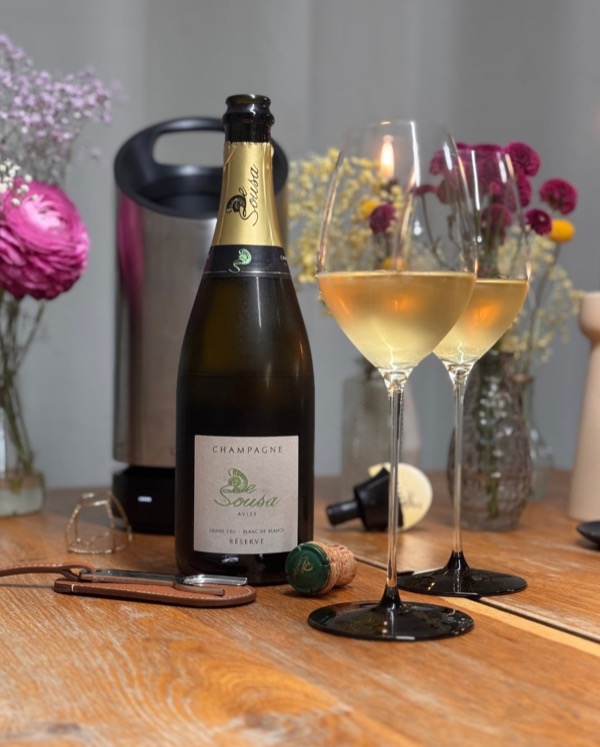
Heute habe ich einen herausragenden Blanc de Blancs geöffnet: Die „Grand Cru Réserve“ von @champagnedesousa aus Avize. Die Familie De Sousa arbeitet…
Conclusion: The magic of time
Nutty aromas in champagne are, for me, the best proof that true greatness takes time. From the fresh almond elegance of young champagnes to the warm hazelnut complexity of aged cuvées to the deep walnut wisdom of old vintages — each stage has its own charm.
As a champagne lover, I advise: Try different maturity levels, experiment with food pairing, and above all — have patience. The most beautiful nutty aromas don't develop overnight, but through years of patient aging in the cool chalk cellars of Champagne.