The Other Name
What is called Pinot Gris in Alsace is traditionally called Fromenteau in Champagne. The variety is officially permitted, but extremely rare. Like Arbane and Petit Meslier, it belongs to the "Cépages Oubliés" — the forgotten grape varieties.
The name Fromenteau probably derives from the French "froment" (wheat) — a reference to the golden-yellow color of the ripe grapes, which resembles ripe grain. In historical documents, you can also find the spellings "Fromentot" or "Fromenteau gris". It is genetically identical to Pinot Gris, but the distinctive name underscores the variety's long history in Champagne.
History and Significance
Fromenteau has a more significant past in Champagne than one might suspect today. Before phylloxera, the variety was much more widespread — some historians suspect that it was even among the main varieties in certain areas of Champagne. Historical sources from the 17th and 18th centuries describe "Fromenteau" wines as particularly esteemed.
In the so-called "Vin de la Rivière" — the famous still wine of Champagne that was the region's main product before the invention of sparkling wine — Fromenteau played an important role. It is even suspected that some of the wines that established Champagne's early fame had a significant Fromenteau component.
Character
Fromenteau brings richness, exotic fruit aromas, and a lightly smoky note. In an Assemblage, a small proportion can make a Champagne significantly more complex.
The aromatic profile is unmistakably distinctive:
- Exotic fruit — Lychee, mango, ripe pineapple
- Smoke — A subtle, almost bacon-like smoky note
- Honey — Even at a young age, a light honey sweetness
- Spices — Ginger, cinnamon, a warmth that other Champagne varieties don't have
- Wax — Similar to Arbane, a waxy texture
Compared to the three main varieties, Fromenteau brings an aromatic dimension that is otherwise missing in Champagne. The exotic fruit and spiciness are more reminiscent of the great Pinot Gris from Alsace — but in the Champagne version, leaner, fresher, and with the acid structure typical of the region.
Fromenteau in Assemblage
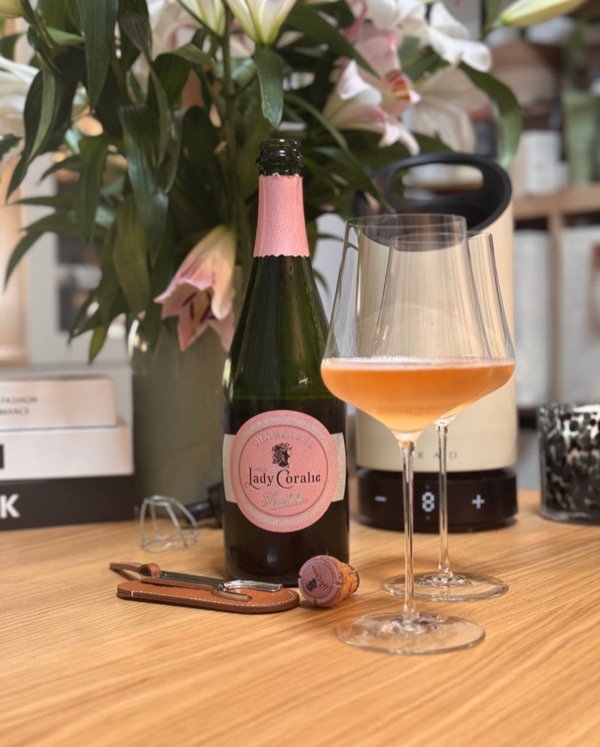
Heute habe ich eine echte Besonderheit aus der „Collector“ Linie von @champagne_mathelin im Glas: Die Cuvée „Lady Coralie“. Das Spannende an diesem…
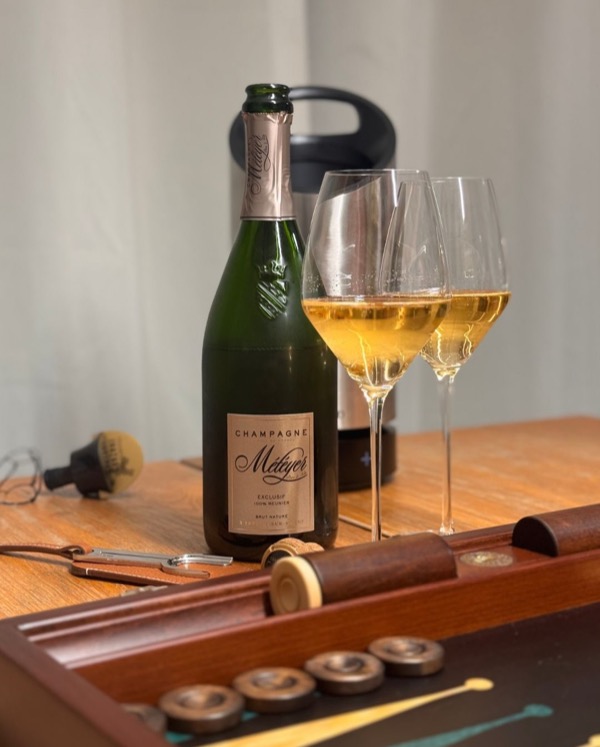
Nach dem monumentalen Rare 2008 am Valentinstag ist es extrem spannend, heute einen völlig anderen Blickwinkel auf dieses Ausnahmejahr zu werfen: Den…

Der Saint-Nicaise 2015 von @domainebauchet hat gestern genau diese ruhige, warme Stimmung getroffen, die man sich für einen entspannten Abend…
Few winemakers use Fromenteau, but those who do swear by its contribution to the Assemblage. A proportion of 5-15% can noticeably enrich a Cuvée:
- The exotic aromas give the Champagne a dimension that Chardonnay and Pinot Noir alone cannot achieve
- The variety's natural richness gives the wine a broader mouthfeel
- The light smokiness adds complexity without making the Champagne heavy
In a "Cépages Oubliés" Cuvée that combines all four forgotten varieties, Fromenteau is often the most striking component. Its aromas are more pronounced than those of Pinot Blanc, less harsh than Petit Meslier, and more accessible than Arbane.
Cultivation and Challenges
Fromenteau is less problematic in cultivation than Arbane or Petit Meslier. The variety is relatively robust and delivers acceptable yields. The main reason for its rarity is not its difficulty, but simply the historical decision to replace it with the more productive main varieties.
One problem, however, is the grape coloration. The berries of Fromenteau are gray-pink — significantly darker than Chardonnay. When pressing, one must work carefully to avoid color transfer. This is the same reason why the variety is sometimes considered "difficult" — although pressing red grapes is standard in Champagne.
Where to Find Fromenteau?
The few remaining plantings are mainly in the Aube (Côte des Bar) and sporadically on the Côte des Blancs. Some of these vines are old — 60, 70, or even 80 years. Old vines deliver lower yields but more concentrated, more aromatic grapes. A Fromenteau from old vines has an intensity that younger plantings cannot achieve.
Future
Of all the forgotten varieties, Fromenteau perhaps has the greatest potential for a comeback. The variety is less difficult to cultivate than Arbane or Petit Meslier, it delivers more reliable yields, and brings an aromatic profile that clearly distinguishes itself from the three main varieties. In a Champagne that increasingly strives for individuality and uniqueness, Fromenteau could find a permanent place.
Climate change could help. In a warmer Champagne, where Chardonnay loses its acidity, Fromenteau could become interesting as an alternative — a variety that brings natural richness and copes better with higher temperatures.
3 Champagnes with Fromenteau in my collection. The variety deserves more attention — it shows a facet of Champagne that most will never know.