The Crown Jewel of Champagne
The Montagne de Reims — a wooded hill range between Reims and Épernay — is home to Champagne's most famous Pinot Noir vineyards. Grand Cru villages like Ambonnay, Bouzy, Verzenay, and Mailly-Champagne produce grapes of exceptional quality here.
If you want to understand Champagne as a wine region, you must start on the Montagne de Reims. Here, everything that makes the region special comes together: Grand Cru terroir, centuries-old winemaking tradition, and a concentration of world-class producers that is unmatched anywhere in the world.
The Montagne de Reims is not a single mountain, but a plateau — a flat hill range covered by forest with slopes planted with vines all around. The shape resembles an island: a wooded center surrounded by vineyard slopes facing all directions. This all-around exposure is the key to the region's diversity.
Terroir
The soil: chalk. Pure, white belemnite chalk that was deposited 70 million years ago on the floor of a tropical sea. The chalk stores water, reflects light, and regulates temperature — perfect conditions for slow, even ripening.
Belemnite chalk is the geological foundation of Champagne's best vineyards. It consists of fossil remains of belemnites — extinct cephalopods that populated this area as a tropical sea 70 million years ago. The chalk is extremely porous: it can store up to 400 liters of water per cubic meter. In dry summers, it slowly releases this water to the vines. In wet years, it absorbs excess water and prevents waterlogging. This is natural irrigation regulation at its finest.
Add to this the heat reflection. The white chalk reflects sunlight back onto the grapes and provides additional warmth — crucial in one of the world's northernmost wine regions.
Exposure varies around the hill: southern slopes (Bouzy, Ambonnay) are warmer and produce more powerful wines. Northern slopes (Verzy, Verzenay) are cooler and yield tighter, more mineral champagnes.
Grand Crus
The Montagne de Reims is home to 9 Grand Cru villages — more than any other region:
| Village | Main Grape Variety | Character |
|---|---|---|
| Ambonnay | Pinot Noir | Powerful, structured |
| Bouzy | Pinot Noir | Fruity, full-bodied |
| Verzenay | Pinot Noir | Austere, mineral |
| Mailly | Pinot Noir | Elegant, fine |
| Beaumont-sur-Vesle | Pinot Noir | Light, accessible |
| Puisieulx | Pinot Noir | Rare, fine |
| Sillery | Pinot Noir/Chardonnay | Historic, elegant |
| Louvois | Pinot Noir | Rare |
| Verzy | Pinot Noir | Cool, tight |
Ambonnay: The Superstar
For many, Ambonnay is Champagne's best Pinot Noir site. South-facing, on pure chalk, with perfect drainage and ideal sun exposure. The wines are powerful but never heavy — a combination of volume, structure, and finesse that is unique in Champagne. Producers like Egly-Ouriet or Marguet show here what Pinot Noir can achieve at Grand Cru level.
Bouzy: The Fruity Side

Heute gibts den 1000% Pinot Noir von @champagne_herbertandco . Von diesem kleinen, feinen Haus (geführt von @thomas___herbert und @charlottehbrt_ in…
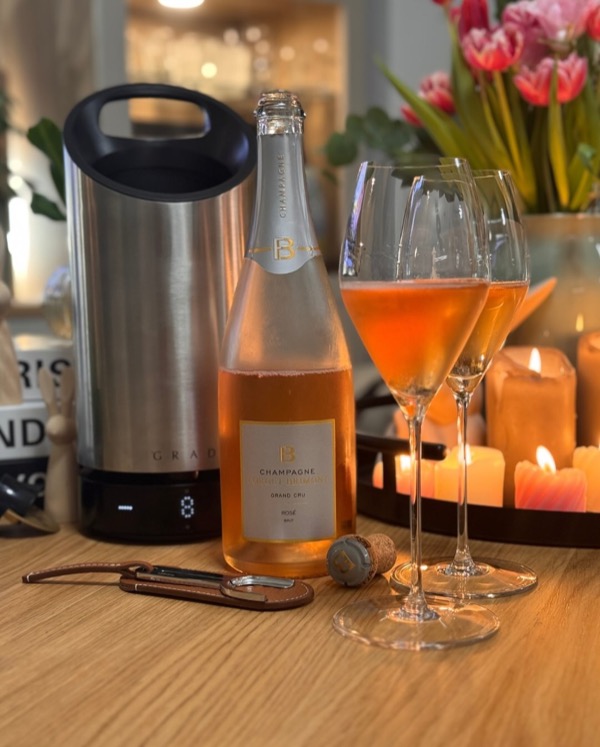
Heute gibt es mal wieder einen Rosé, der optisch und geschmacklich richtig Spaß macht: Den Brut Rosé von @champagne_forget_brimont . Wie ihr auf dem…

Champagne & Chess So lautete das (spontane) Motto an diesem spätsommerlichen Freitag, an dem sonst gar nichts wirklich geplant war. Die Kinder…
Bouzy, right next to Ambonnay, produces the more fruit-forward Pinot Noir. The wines are riper, rounder, less austere. Bouzy is also famous for its red still wine — Bouzy Rouge — which shows that Pinot Noir in Champagne also works as a red wine. Some producers offer this rare still wine alongside their champagne range.
Verzenay: The Mineral Austerity
Located on the north side of the Montagne de Reims, Verzenay is the counterpart to Bouzy. Cooler, more austere, with a mineral tension reminiscent of Chablis. Pinot Noir from Verzenay often needs years to open up — but when it does, the complexity is impressive.
Premiers Crus and Other Important Villages
Besides the Grand Crus, the Montagne de Reims has several significant Premier Cru villages: Chigny-les-Roses, Ludes, Rilly-la-Montagne, Villers-Marmery (known for Chardonnay on the Montagne), Trépail, Tauxières. These villages often deliver champagnes of Grand Cru quality at Premier Cru prices.
Chardonnay on the Montagne
Although Pinot Noir dominates, there is also Chardonnay on the Montagne de Reims — especially in villages like Villers-Marmery and Trépail on the eastern side. This Chardonnay has a different character than that from the Côte des Blancs: broader, nuttier, less tight. In assemblages, it provides richness and complexity.
The Montagne de Reims is the place where you understand why Pinot Noir is the soul of Champagne. Nowhere else does the grape variety get so much structure and depth.
Posts
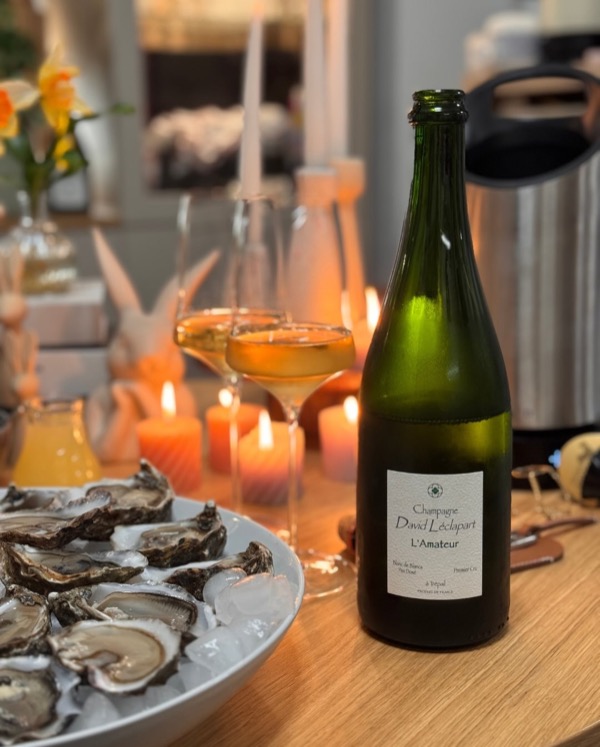
Wenn der Tag mittags schon mit einem grandiosen Seafood-Menü startet, wie kann man ihn dann abends noch toppen? Richtig, mit 20 frischen Austern 🦪…
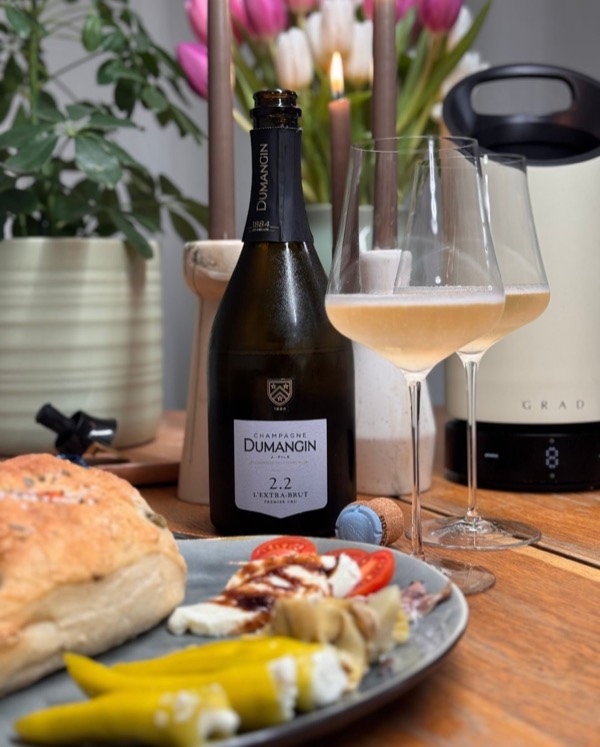
Heute mal ein mediterraner Kurzurlaub mit Oliven-Focaccia, Sardellen, eingelegten Artischocken, gefüllten Paprika und dieser Mix aus Tomate,…

Der @georges.remy – Les Quatre Terroirs No. 21 hat uns bei den wichtigsten Weihnachtsvorbereitungen am 3. Advent nicht nur kurz begleitet. Vom…
| Champagnes Tasted | 71 |