Beezer Champagne Chiller: Quick Cooling, Not Keeping Cool
The Beezer has filled a gap for me that I hadn't really noticed before: the quick cooling of a bottle from the shelf without having to stuff it into a bucket full of ice water. Important for understanding: The Beezer is not a chiller for keeping cool, but a quick chiller. It brings a room-temperature bottle quickly to drinking temperature — and then something else takes over for me.
What the Beezer actually does
The Beezer cools a champagne bottle in about 4–6 minutes — quickly, gently and evenly. This is the point where it gets interesting: ice water also cools quickly, but often too harshly and especially unevenly. The bottom area gets ice cold, the upper part of the bottle is still noticeably warmer. The Beezer surrounds the bottle all around and cools it evenly — you notice this later in the glass.
App-controlled
What I find particularly practical: The Beezer can be controlled via app. I can set the target temperature, start the cooling process and get feedback when the bottle is ready. This initially sounds like a gimmick, but makes a huge difference in everyday life — especially when guests are over and I don't want to constantly feel a bottle to check if it's cold enough yet.
The combination that really works for me
Here comes the second part that makes the Beezer the perfect setup for me:
Step 1 — Cooling down with the Beezer: Bottle from the shelf into the Beezer, start app, wait 4–6 minutes, done. The bottle now has exactly the drinking temperature I specified.
Step 2 — Keeping at temperature with the GRAD.dk: The chilled bottle goes directly into the GRAD.dk chiller. It's made for exactly the opposite of what the Beezer is built for: It keeps the temperature constant for hours without cooling the bottle further or letting it get warmer. No ice water, no dripping labels, no temperature that slowly creeps up.
This division of roles is the game-changer for me: Quick cooling is handled by the Beezer, keeping at temperature is handled by the GRAD.dk. Both devices each do exactly one thing really well, instead of one halfheartedly trying both.
When the Beezer comes into play for me
Spontaneous champagne moments
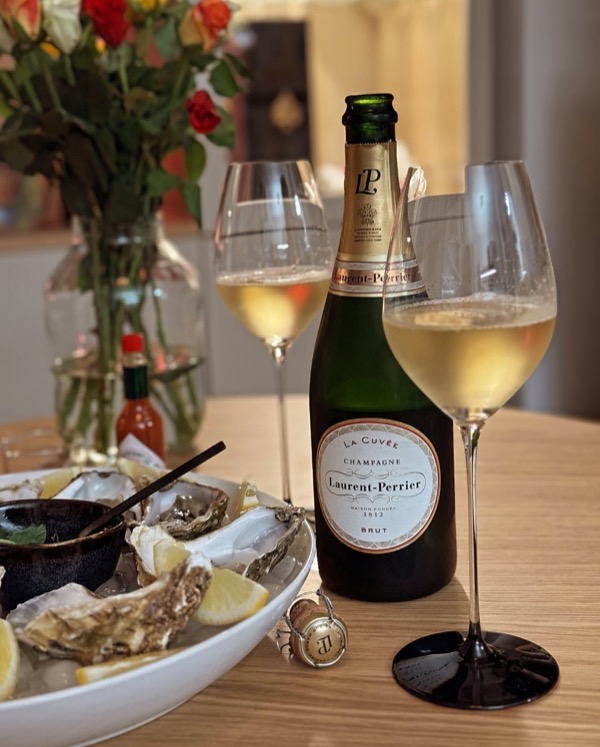
Gestern Abend lief es mal wieder anders als geplant. Eigentlich sollte es der perseval/">Vincent Perseval - Blanc de Blancs 2019 zu den Austern werden – doch…
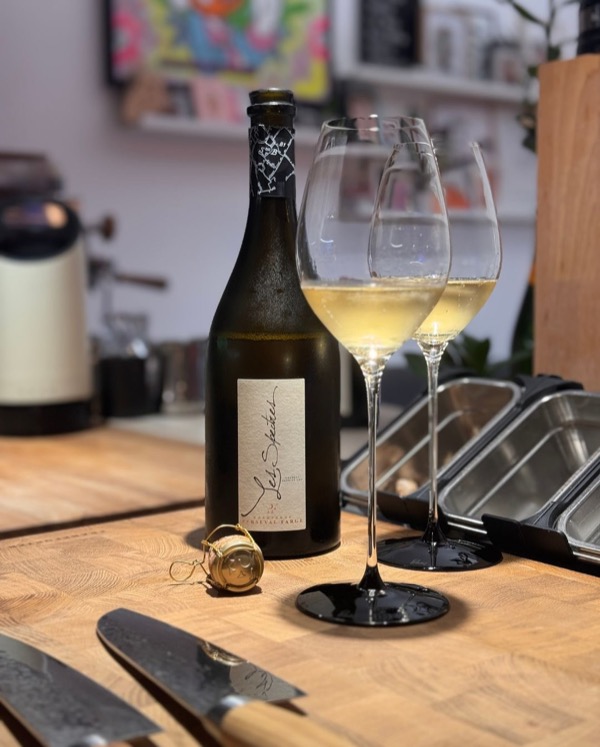
Manche Champagner begleiten Gespräche. Dieser hier unterbricht sie. Die Cuvée Parcellaire „Les Spectres“ von @persevalfarge verlangt…
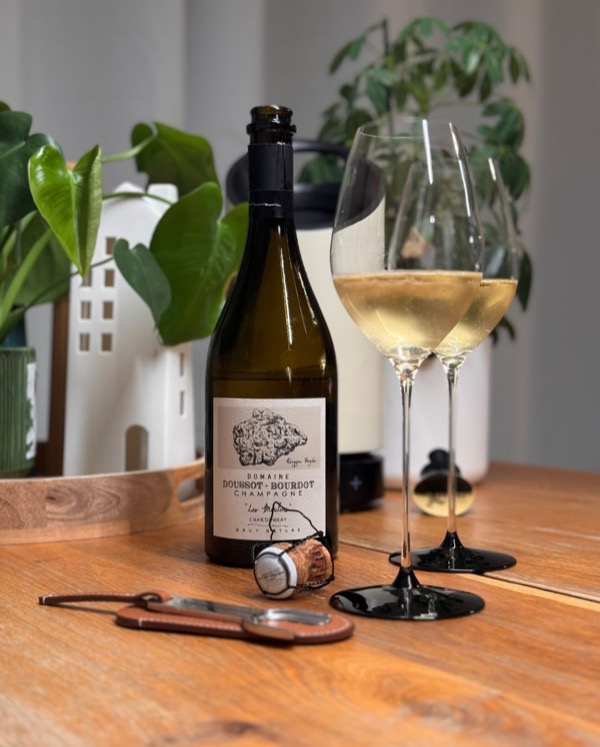
Manchmal öffnest du eine Flasche – und sie hat sofort ihren eigenen Charakter. Beim Les Moulins von @domainedoussotbourdot war klar: Das wird ein…
The classic case: someone drops by on short notice, the bottle is sitting at room temperature on the shelf. Previously this meant: prepare ice bucket, wait, turn the bottle in the ice water, hope the label survives. Today: bottle into the Beezer, start app, a few minutes later it's ready to serve — and no dripping coaster.
Before a longer tasting
When I want to taste several bottles one after another, I cool them down consecutively with the Beezer and park them in the GRAD.dk. This way I end up with several perfectly tempered bottles ready, without any of them being "over-chilled" or having gotten warm again.
Gentler than ice water
What I've noticed over time: The Beezer really cools gently. With quick cooling in ice water, you sometimes get the feeling that the aromatics seem a bit "closed" shortly after — as if the champagne needs a moment to open up. With the Beezer this is less the case. Whether this is due to the more even temperature gradient or simply the controlled operation, I can't say for certain. But in direct comparison, the champagne from the Beezer tastes fresher and more present to me.
Small note about the glass
Once the champagne is perfectly tempered — please don't pour it into a flute. #saynotoflutes: In the flute, barely any of the aromatics remain. Tulip glass or wine glass is the much better choice, especially when I'm already taking the trouble to properly chill the champagne.
My conclusion
The Beezer isn't a replacement for the GRAD.dk for me — it's the perfect complement. For quick, gentle and even cooling in 4–6 minutes, there's currently nothing better for me. And in combination with the GRAD.dk, which handles keeping cool for hours, I finally have a setup that cleanly separates both tasks.
Who should get the Beezer? Anyone who regularly opens champagne spontaneously and is tired of ice water hassles — and anyone who prefers to chill their bottles in a controlled and even way, rather than leaving them to the chance of a half-melted ice bucket.