As The Champagne Guy, I'm regularly asked: "What do I do with an opened bottle of champagne?" The answer is more complex than many think. Because while a good champagne can indeed last a few days, everything depends on the right closure.
How long does opened champagne last?
An opened champagne bottle maintains its quality for 1-3 days when stored correctly. The rule is: the higher quality the champagne, the longer it remains enjoyable. A simple champagne noticeably loses its effervescence after just 24 hours, while a vintage champagne can still be drinkable after three days.
Important factors for shelf life:
- Quality of the closure
- Storage temperature (optimal: 4-6°C)
- Fill level of the bottle
- Original quality of the champagne
Comparing different champagne stoppers
Lever Stoppers (Champagne Closure)
The lever stopper is my absolute favorite and the only closure I truly recommend. These closures consist of a rubber stopper with a lever mechanism that clamps around the bottle neck.
Advantages:
- Reliably retains carbonation
- Easy to use
- Reusable
- Cost only $5-15
How it works: The rubber stopper seals the bottle opening while the metal clamps provide the necessary pressure. I've successfully stored champagne for three days using this method.
Vacuum Pump System
Vacuum pumps remove air from the bottle and are supposed to prevent oxidation. My experience: They're completely unsuitable for champagne.
Why vacuum pumps fail with champagne:
- They remove not only oxygen but also CO₂
- The champagne goes flat faster
- More expensive than lever stoppers ($20-40)
- Complicated handling
The Spoon Trick: Myth or Reality?
Here I must dispel a widespread myth as The Champagne Guy: A silver spoon in the bottle neck does NOT retain carbonation.
Why the spoon trick doesn't work
I've tested this "trick" multiple times and found the following:
- No seal: The spoon doesn't seal the bottle
- No temperature effect: The minimal cooling from the metal is negligible
- Placebo effect: People believe the champagne tastes better
Scientific explanation: CO₂ continuously escapes from the open bottle. A spoon cannot physically prevent this process.
What really retains carbonation?
The carbonation in champagne is the result of secondary fermentation in the bottle. For opened bottles, three factors determine its preservation:
Airtight Closure
Only a completely airtight closure prevents CO₂ from escaping. Even the smallest opening leads to pressure equalization and thus loss of effervescence.
Temperature
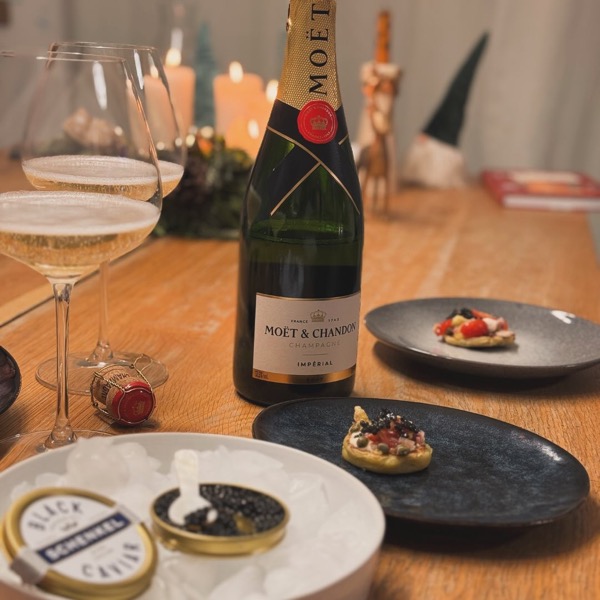
Manchmal braucht es keine große Inszenierung, um echten Luxus zu erleben – nur einen guten Black Imperial Stör Kaviar von @schenkeldelikatessen ,…
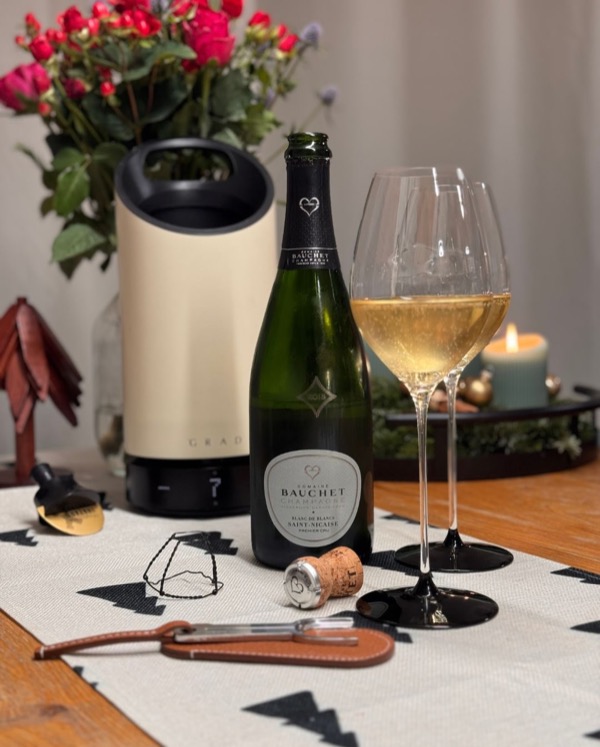
Der Saint-Nicaise 2015 von @domainebauchet hat gestern genau diese ruhige, warme Stimmung getroffen, die man sich für einen entspannten Abend…
Alles beginnt jetzt! 🥂 Wirklich begonnen hat alles aber vor rund drei Jahren, als ich zum ersten Mal bewusst einen Champagner genießen durfte. Wie…
Cold temperatures dissolve more CO₂ in the champagne. This is why an opened bottle should go immediately into the refrigerator (4-6°C).
Pressure in the Bottle
The less champagne remaining in the bottle, the more air is present. This significantly accelerates CO₂ loss.
Practical Tips from The Champagne Guy
Immediate Measures After Opening
- Apply lever stopper immediately - not the next day
- Into the refrigerator - room temperature is the enemy of carbonation
- Store upright - reduces contact surface with air
And while the bottle sits open on the table: A good champagne chiller keeps the temperature low, even without a refrigerator. I've been using chillers from GRAD for over a year — they reliably keep the bottle at 6-8 degrees without ice water. This keeps the carbonation longer, even when taking your time with a bottle all evening.
How do you recognize flat champagne?
| Characteristic | Fresh Champagne | Flat Champagne |
|---|---|---|
| Foam | Fine-bubbled, persistent mousse | Little to no foam |
| Taste | Fresh, lively acidity | Flat, oxidized |
| Perlage | Continuous bubbles | No or very few bubbles |
My Purchase Recommendation
Invest in a high-quality lever stopper made of stainless steel with silicone sealing. These cost $10-15 but last for years and are worth every cent. Cheap plastic versions often fail the sealing test.
My Posts About This
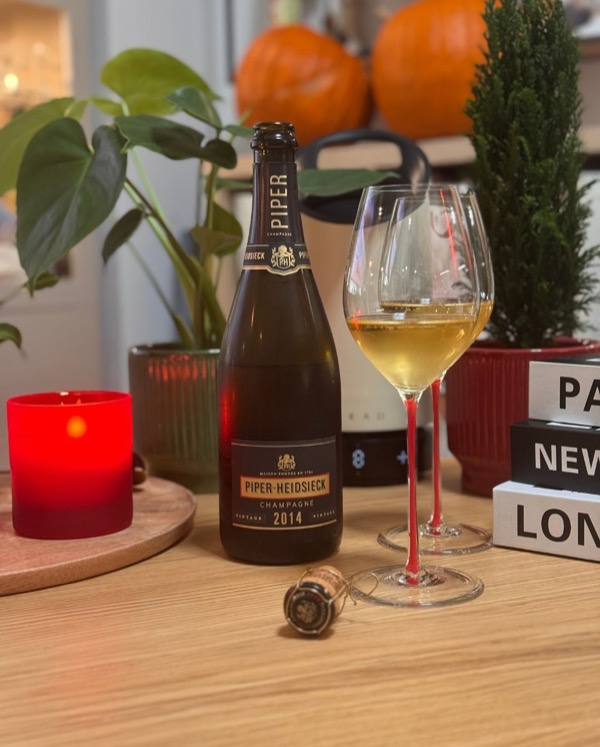
Wer kennt es nicht: Man will einfach mal abschalten – und greift trotzdem alle fünf Minuten wieder zum Handy. Noch eine Nachricht, noch eine Idee,…
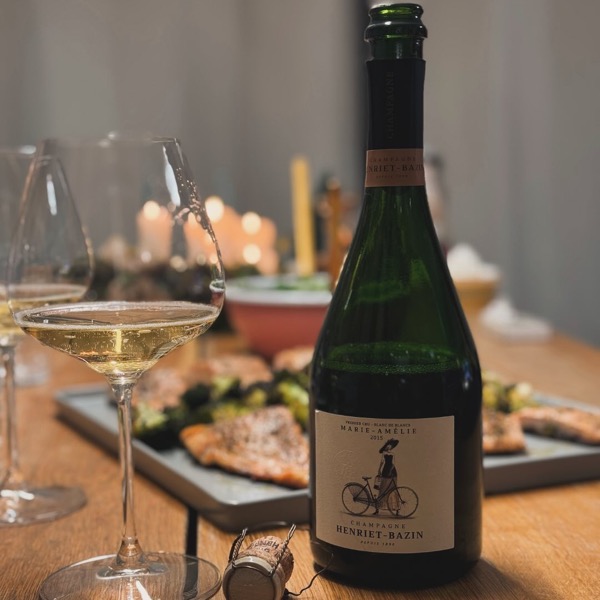
Mit nur noch 28 Flaschen im Kühler war die Wahl heute schnell getroffen: der @champagne_henriet_bazin - Marie-Amélie 2015, ein Blanc de Blancs, der…
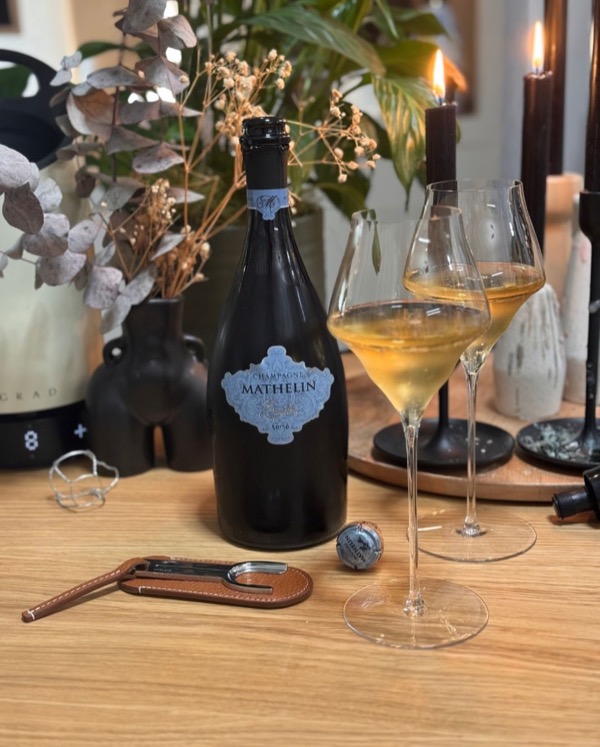
Manchmal sagt ein minimalistisches Etikett schon alles: Beim „Équilibre“ von @champagne_mathelin ist der Name absolutes Programm! Auf der Flasche…
Conclusion: Quality Decides
As The Champagne Guy, I advise you: forget spoons, vacuum pumps, and other home remedies. A good lever stopper is the only reliable method to keep opened champagne enjoyable for 1-3 days. And remember: even the best closure can't stop time – opened champagne should be consumed promptly.