Glass Is Not Just Glass
The champagne flute belongs in a museum. Period. #saynotoflutes — anyone drinking champagne from a narrow flute is robbing themselves of 80% of the experience. The narrow shape suppresses aromas and bouquet, your nose can't get close to the wine, and the bubbles — however beautiful they look — aren't the most important thing. Flutes are an outdated cliché that has nothing to do with real champagne enjoyment.
Good champagne deserves a good glass. And "good" here means: wide enough for aroma development, thin-walled enough for texture perception, and shaped so your nose can do its work.
My Four Glasses
With the champagnes I've tasted at home, four brands have established themselves in my rotation:
Riedel
The glass that appears most frequently in my posts. Riedel has an enormous range — from the entry-level Vinum to mouth-blown Sommeliers glasses. For champagne, I mainly use the Riedel Veritas Champagne Wine Glass — deliberately not a flute format, but a tulip-shaped wine glass with a slightly narrowed opening. That's exactly how it should be.
When I use it: For everyday drinking, for tastings with multiple champagnes, when durability matters.
Gabriel-Glas
The Gabriel-Glas One for All is exactly that: a universal glass that can do everything. Thin-walled, elegant, with a tulip-shaped bowl that showcases champagne just as well as Burgundy or Riesling.
When I use it: When I'm only taking one glass. For meals. For champagnes that need air.
Josephinenhütte
Mouth-blown glass from the tradition of Silesian glassmaking. The Josephinenhütte glasses are extremely thin-walled and delicate — almost frighteningly light. Texture perception with these glasses is on another dimension entirely.
When I use it: For special bottles. When I want to focus on a single champagne.
GRAD
The Danish brand GRAD has specialized in champagne coolers — but their glasses deserve attention. Minimalist Scandinavian design, functional and aesthetic. The GRAD coolers have been a fixed part of my setup for over a year and appear in practically every one of my Instagram posts. They maintain temperature perfectly without ice water — this has fundamentally changed my champagne experience.
When I use it: Together with the GRAD cooler, when temperature has to be right. The interplay between glass and cooler is well thought out — Scandinavian understatement that works.
What a Good Champagne Glass Needs
- Tulip shape — Wide enough for aromas, narrow enough at the top for concentration
- Thin wall — The thinner, the better the texture perception on the palate
- Adequate volume — At least 300ml, better 400ml+
- Stem — So your hand doesn't warm the champagne
Flute, Coupe, or Wine Glass?
My Posts About This
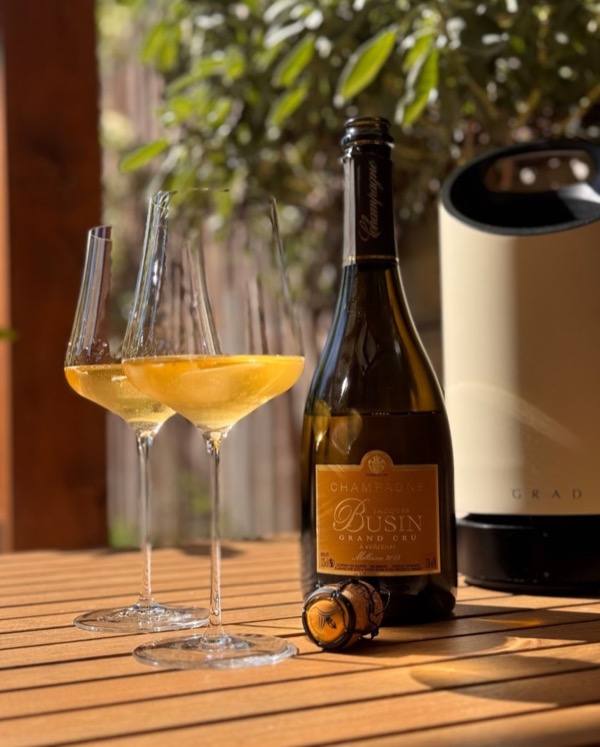
Erinnert ihr euch noch an den @champagnejacquesbusin – Millésime 2015 Grand Cru? Ich hatte diesen kraftvollen Champagner aus Verzenay letztes Jahr…
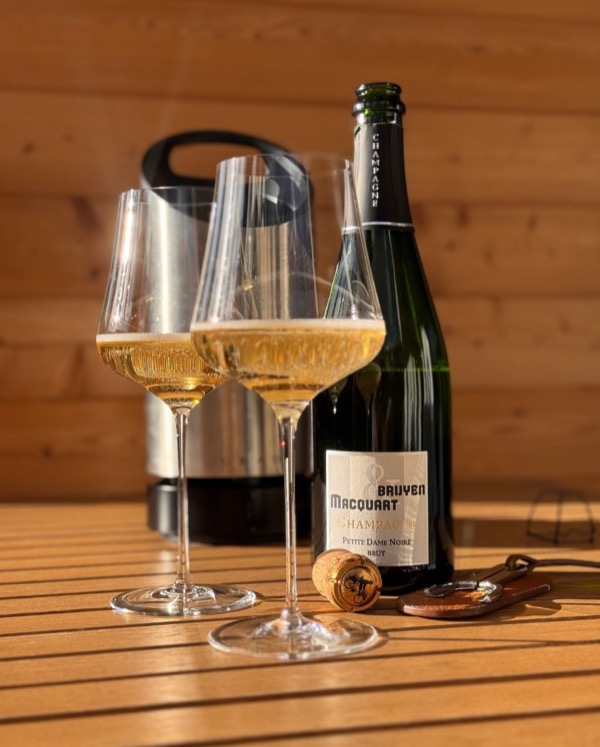
Erinnert ihr euch an die „Petite Dame Noire“ von Bruyen & Macquart (@champagnebruyen)? 🥂✨ Nachdem ich genau diese Flasche im November schon mal…
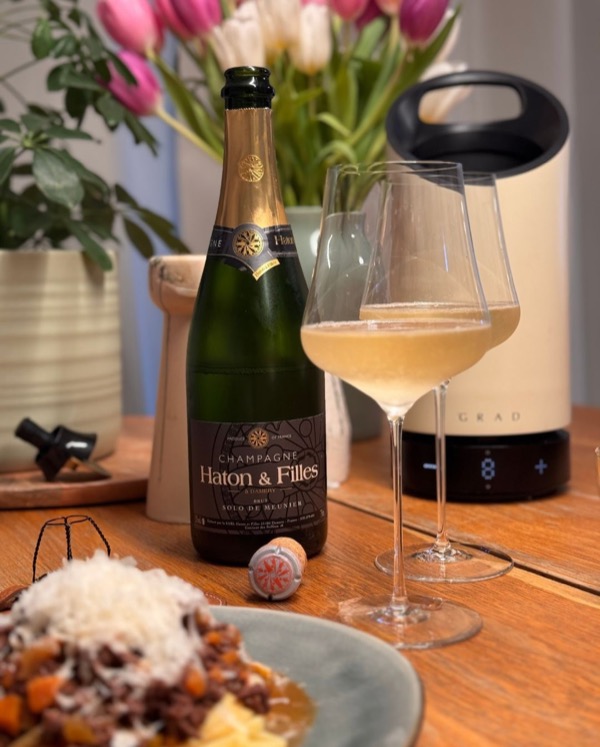
Manchmal sind die bodenständigsten Gerichte die besten. Gestern stand die Bolognese stundenlang auf dem Herd – dieser Duft, der durch das ganze Haus…
| Glass Type | Aromas | Bubbles | Temperature | Verdict |
|---|---|---|---|---|
| Flute | Catastrophic | Beautiful | Good | Stay away — destroys the experience |
| Coupe | Average | Gone quickly | Poor | Nostalgia, not function |
| Tulip/Wine glass | Excellent | Good | Good | The standard |
| Burgundy glass | Maximum | Barely visible | Average | For mature vintages |
My honest advice: One good universal glass is better than ten mediocre specialty glasses. Better to invest 50 euros in a Gabriel-Glas than 50 euros in six flutes that kill your aromas. #saynotoflutes
Posts
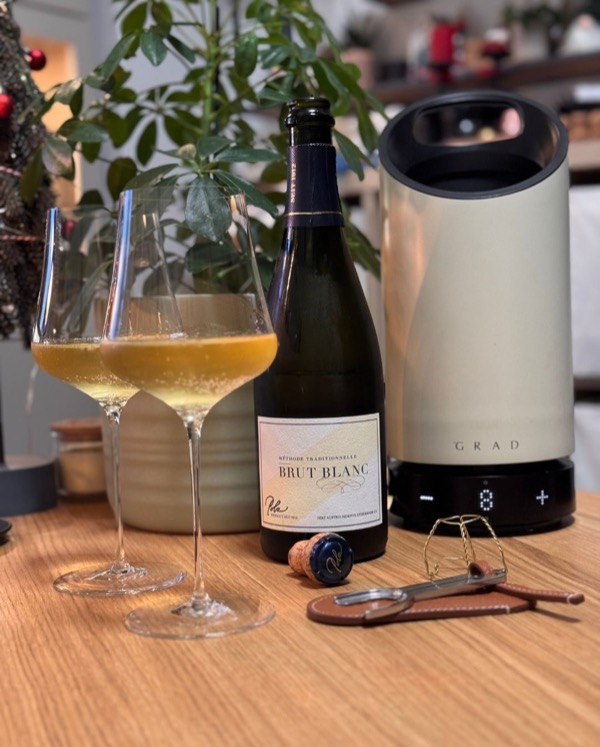
Heute mal ein kleiner Exkurs nach Österreich. Der Brut Blanc vom @weingut_polz ist ein Sekt, den man ernst nehmen kann. Schönes, klares Aroma, ruhig…
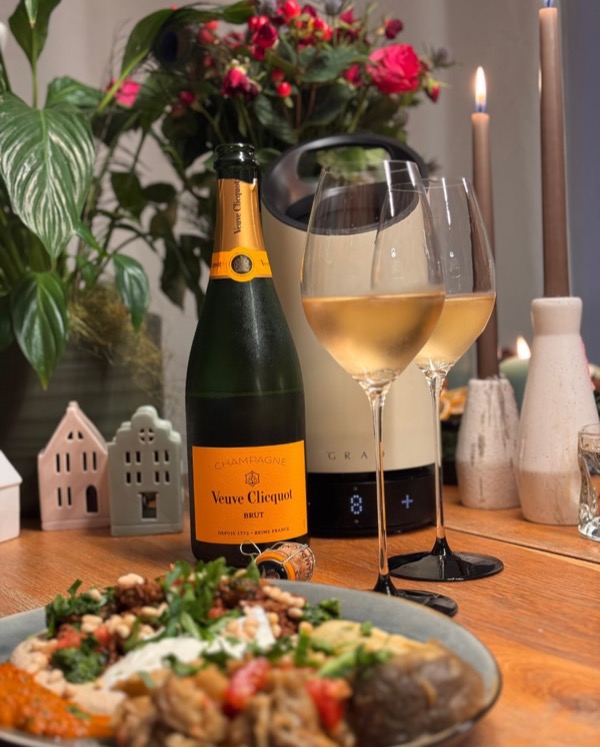
Hier hat meine Frau ganz spontan zum @veuveclicquot Yellow Label gegriffen. Nicht zuletzt wegen des gelben Etiketts – ihr Lieblingschampagner. Und…
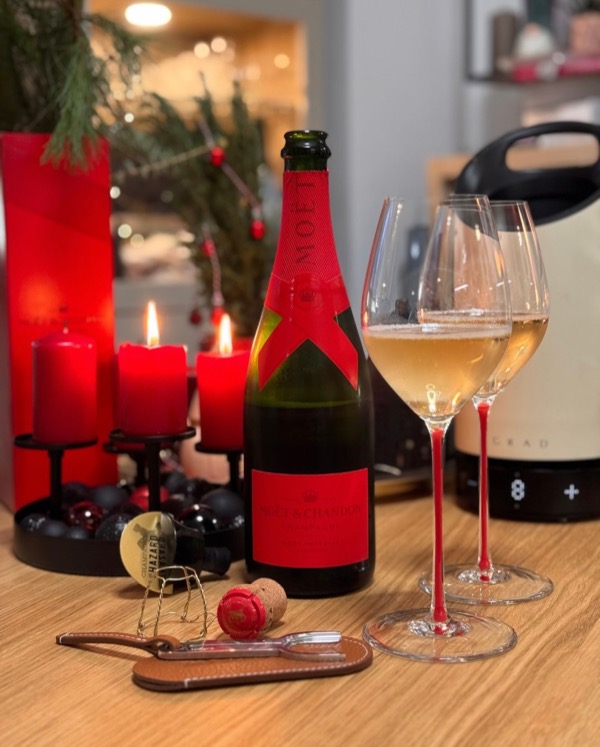
Manchmal passt eine Flasche einfach perfekt in den Moment. 3. Advent, rote Kerzen auf dem Tisch, die @riedel_official Fatto a Mano mit rotem Stiel –…