What is Mousiness?
Mousiness (French: goût de souris, German: Mäuseln) is a wine fault that leaves an unpleasant, metallic-musty aftertaste. The name comes from the smell that resembles a mouse cage.
The insidious thing: mousiness is often not perceptible when smelling. It only shows up in the mouth — as a long, unpleasant aftertaste that lingers for minutes. Some describe it as metallic, others as musty-dusty, still others as "cage-like." It's a taste that, once recognized, you'll never forget.
I still remember exactly the first time I consciously encountered mousiness. I was drinking a natural wine Champagne that smelled wonderful on the nose — fruity, mineral, lively. Then the first sip. At first everything was good, even impressive. And then came the aftertaste. Like a film spreading across the tongue and palate, metallic and furry, that just wouldn't stop. Minutes later it was still there.
How Does Mousiness Develop?
Mousiness is caused by certain lactic acid bacteria (Lactobacillus) and Brettanomyces yeasts. The compounds (2-acetyltetrahydropyridine and 2-acetylpyrroline) become perceptible at low pH in the mouth — hence the effect that you only notice it when drinking.
The scientific background also explains why some people perceive mousiness more strongly than others. The pH level in the mouth varies from person to person. Those with lower saliva pH perceive the compounds more intensely. This leads to the bizarre situation where at a table with five people, three immediately recognize the mousiness while the other two notice nothing.
There's a simple test: Put a drop of wine on the back of your hand, rub it in, and wait until it dries. Then smell. When drying, the pH rises, and the mousiness compounds become volatile — now you can perceive them in the nose.
Risk factors:
- Little or no SO2 — natural wines are more susceptible
- High pH level in the wine (paradoxically)
- Uncontrolled fermentation
- Contaminated barrels or equipment
- High fermentation temperatures
- Poor nutrient supply for yeast during fermentation
Mousiness and Champagne
In classic Champagne production with controlled fermentation and moderate SO2 use, mousiness is rare. But: with the trend toward natural wine Champagnes and minimal intervention, the risk increases.
Champagnes made without added SO2, that undergo spontaneous fermentation and are unfiltered, are fundamentally more susceptible. This doesn't mean every natural wine Champagne has mousiness — most don't. But the risk is statistically higher than with conventionally produced Champagne.
It becomes particularly tricky when the winemaker simultaneously uses little SO2 and doesn't have cellar hygiene one hundred percent under control. Brettanomyces yeasts, one of the main culprits, are present everywhere in old cellars. In conventional production, SO2 keeps them in check. Without SO2, they can multiply unhindered.
What to Do?

In meiner Journey merke ich jetzt nach fast einem Jahr immer wieder, wie normal es für mich geworden ist, Champagner zu trinken. Deswegen probiere…

Heute kam die Flasche nicht von mir. Ich habe meist eine ziemlich klare Vorstellung davon, welche Champagner ich für welche Situation öffnen möchte.…

Als ich letzten Herbst die erste Flasche von @champagnecolettebonnet geöffnet hatte, war mir sofort klar: Davon muss ich alles probieren. Es gibt…
If a Champagne has mousiness, nothing helps. The fault doesn't disappear through decanting, temperature changes, or waiting. The bottle is lost.
There are isolated reports that light mousiness can diminish after longer bottle aging. But betting on that is risky — in most cases, the fault remains stable or even worsens.
The Debate in the Natural Wine Scene
The topic of mousiness divides the natural wine scene. On one side are purists who argue that mousiness is a natural expression of the wine — part of its character, not a fault. They accept it as the price for minimal intervention and see SO2-free winemaking as a higher good.
On the other side are those — and I count myself among them — who say: a wine that tastes unpleasant has missed its purpose. Wine should bring joy. When a wine fault becomes so dominant that it destroys the entire drinking experience, it doesn't matter how "naturally" it developed.
The truth probably lies somewhere in between. Light mousiness that only appears as a fleeting hint in the aftertaste can be tolerable. Heavy mousiness that dominates the palate for minutes is a clear fault — regardless of philosophy.
How to Protect Yourself
- When buying: If possible, taste natural wine Champagnes before purchasing
- When dining out: If a Champagne has mousiness, complain — it's a wine fault
- When storing: Maintain correct storage temperature, avoid heat
- When opening: If the first sip tastes furry-metallic, take a second and pay attention to the aftertaste. Mousiness becomes more apparent with each sip.
Mousiness is a topic that's hotly debated in the natural wine scene. Some accept it as "natural," others see it as a clear fault. My opinion: a wine that tastes unpleasant is faulty — no matter how "naturally" the fault developed.
Posts
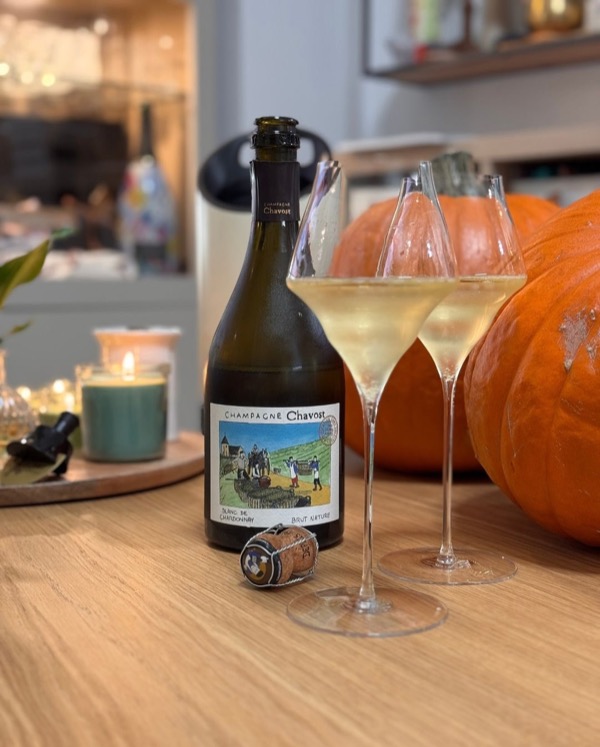
Ich hatte in den letzten Monaten einige wirklich schöne Begegnungen mit @champagnechavost – jede Flasche präzise, lebendig, modern gedacht.…