When I first tasted a Récoltant-Manipulant Champagne years ago, it was an aha moment. Those two small letters "RM" on the label represent a revolution that has swept through Champagne over the past two decades — away from the dominance of large houses, toward the authenticity of grower champagne.
What does Récoltant-Manipulant mean?
Récoltant-Manipulant is an official classification found on every champagne label. The designation tells us exactly who produced the champagne:
- Récoltant = Winegrower who cultivates their own grapes
- Manipulant = the one who vinifies and markets the wine themselves
An RM producer is therefore a winegrower who exclusively makes champagne from their own grapes. At least 94% of the grapes used must come from their own vineyard — this guarantees maximum control over quality and character.
Overview of Different Champagne Classifications
My Posts About This
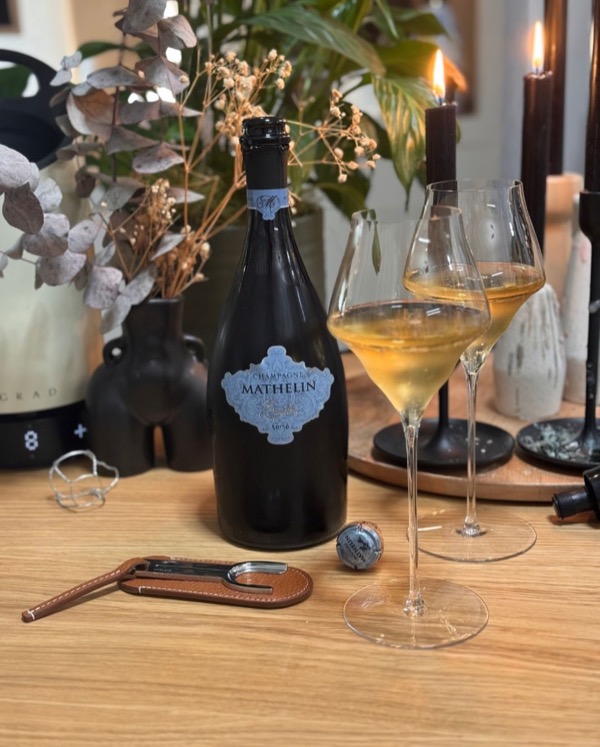
Manchmal sagt ein minimalistisches Etikett schon alles: Beim „Équilibre“ von @champagne_mathelin ist der Name absolutes Programm! Auf der Flasche…
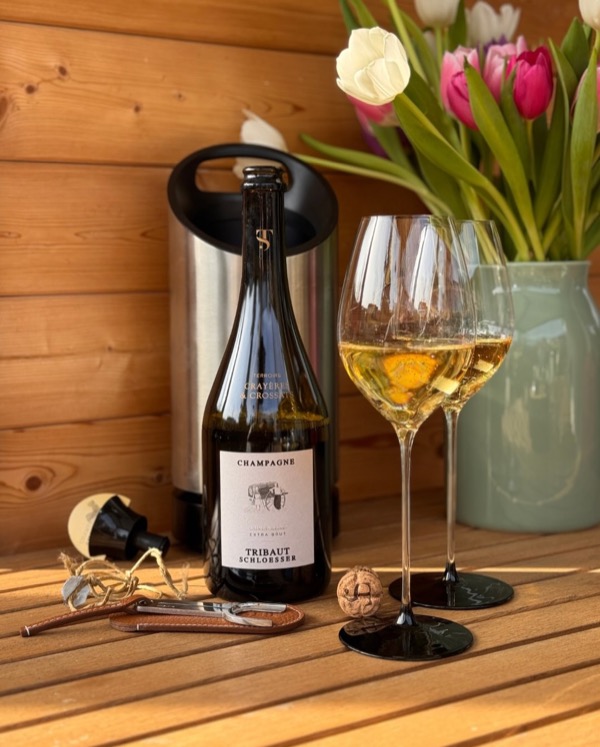
Das perfekte Match für unser heutiges, maritimes Festmahl! 🌊🥂 Bei uns gab es heute ein absolut grandioses, spontanes Seafood-Lineup: Kurz…
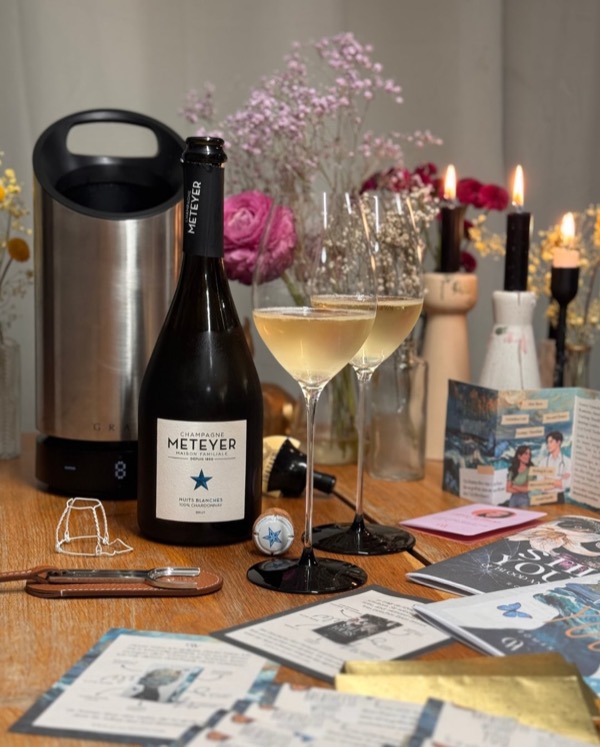
Hier am Tisch herrscht gerade kreatives Chaos der schönsten Sorte: @autorin.olive.wilson bereitet akribisch und mit wahnsinnig viel Liebe ihre…
| Code | Meaning | Description |
|---|---|---|
| RM | Récoltant-Manipulant | Winegrower with own grapes |
| NM | Négociant-Manipulant | Champagne houses (purchase grapes) |
| CM | Coopérative-Manipulant | Winegrower cooperatives |
| RC | Récoltant-Coopérateur | Winegrower sells to cooperative |
| SR | Société de Récoltants | Family estates in cooperation |
Why RM Champagne Became a Trend in 20 Years
The Grower Champagne movement began in the early 2000s and has steadily gained momentum since then. Several factors contributed to this boom:
The Hunger for Authenticity
Consumers increasingly sought authentic stories behind their wines. While large houses like Moët or Veuve Clicquot focus on consistency and brand image, RM producers offer personal stories: the grandfather who planted the vineyards, the daughter who converted to organic farming, the son who develops new cuvées.
Terroir Expression Instead of Brand Style
RM champagnes allow us to taste specific sites and vintages. Instead of a uniform house style, we get authentic terroir expressions — the mineral character of Chouilly, the power of Verzenay, or the elegance of Le Mesnil-sur-Oger.
Social Change and the Craft Movement
The craft beer and specialty coffee movements didn't stop at champagne. Connoisseurs appreciate artisanal production, limited releases, and the opportunity to connect directly with the producer.
The Advantages of Grower Champagne
Pure Terroir Expression
As an RM producer, one can vinify specific parcels separately and bring out their characteristics. While a large house blends hundreds of different base wines into a uniform style, the winegrower can consciously highlight the special qualities of their sites.
Artisanal Flexibility
RM producers have the freedom to experiment:
- Using old, local yeast strains
- Longer aging on lees
- Reduced dosage for purer expression
- Biodynamic or organic farming
- Single-vineyard champagnes and vintage cuvées
Fair Prices for Quality
Without intermediaries and marketing budgets, RM producers can often offer exceptional quality at fair prices. A high-quality RM champagne often costs less than a comparable Grand Marque champagne.
The Challenges of Grower Champagne
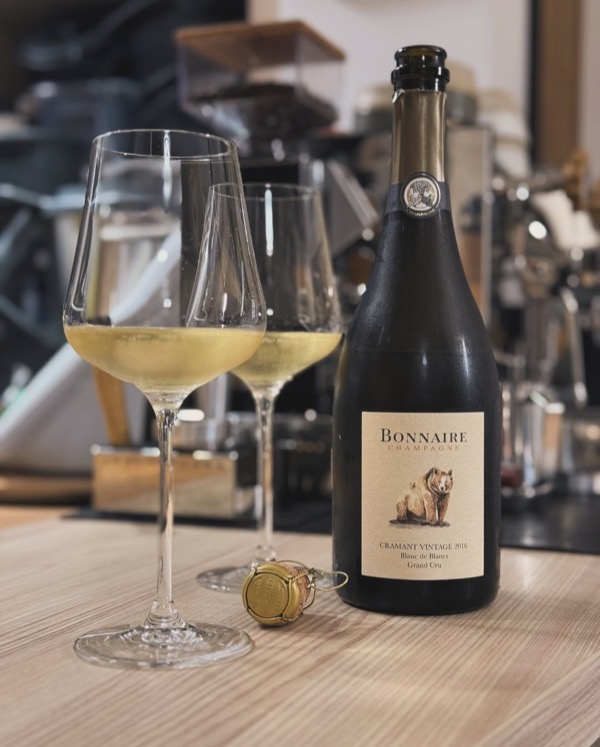
Diese Woche kam eine frische Lieferung direkt aus der Champagne bei mir an – Drei spannende Flaschen von @bonnaireclouet . Für den Auftakt habe ich…
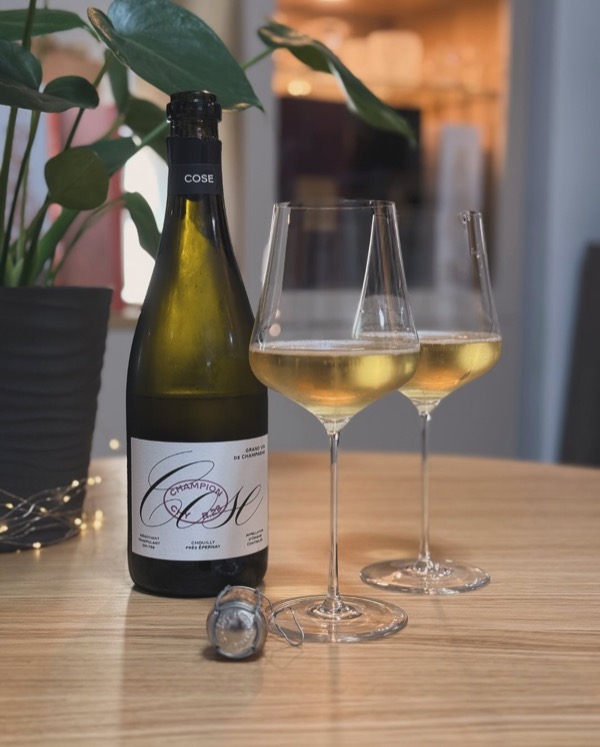
Es gibt Champagner, die eine Geschichte erzählen – und dann gibt es Champagner wie Champion CHY R.22 von @champagne.cose , die ganze Traditionen neu…
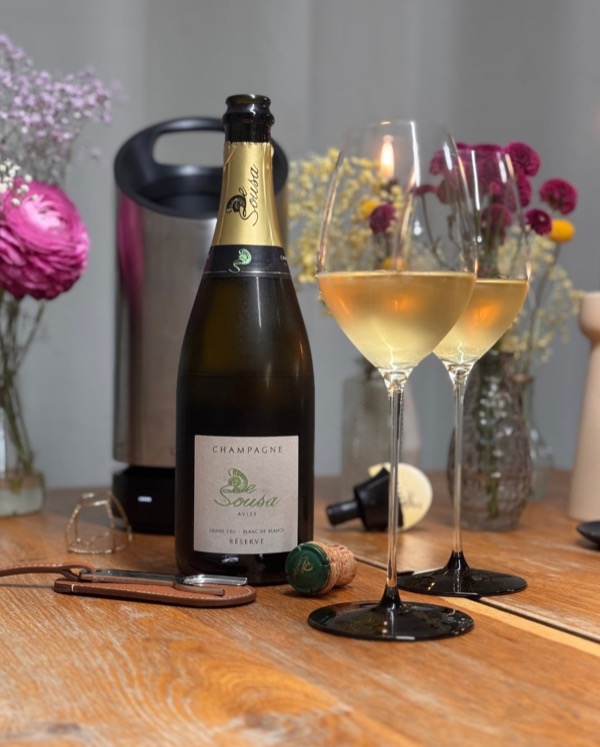
Heute habe ich einen herausragenden Blanc de Blancs geöffnet: Die „Grand Cru Réserve“ von @champagnedesousa aus Avize. Die Familie De Sousa arbeitet…
Consistency Over the Years
While large houses can guarantee consistent quality year after year through their enormous reserve wine stocks, RM producers are more dependent on weather and vintage character. This can lead to fascinating diversity, but also to fluctuating quality.
Limited Volumes
Most RM producers farm only a few hectares of vineyards. This means:
- Limited availability of popular cuvées
- Difficulties with international distribution
- Less negotiating power for equipment and materials
Marketing and Sales
Without large marketing budgets, RM producers often must rely on word-of-mouth and direct sales. This limits their reach but also creates closer customer relationships.
Famous RM Producers Making History
Pierre Peters (Le Mesnil-sur-Oger)
Rodolphe Peters has set standards with his Grand Cru Blanc de Blancs. His "Cuvée de Réserve" shows how elegant Chardonnay from Le Mesnil can be.
Jacques Selosse (Avize)
Anselme Selosse is considered a revolutionary of Champagne. His oxidative, Burgundian winemaking styles have influenced the entire industry.
Egly-Ouriet (Ambonnay)
Francis Egly produces powerful Pinot Noir-driven champagnes that show what depth RM champagnes can achieve.
Cédric Bouchard (Celles-sur-Ource)
As the enfant terrible of the Côte des Bar, Bouchard creates radical single-vineyard champagnes that express terroir in extreme purity.
Leclerc Briant (Épernay)
Pascal Leclerc was a pioneer of biodynamic champagne and showed that sustainable viticulture and top quality go hand in hand.