When I first entered a traditional riddling cellar and saw the endless rows of characteristic A-shaped wooden frames, it became clear to me: Here stands one of the most ingenious inventions in wine history. The Pupitres – these unassuming yet revolutionary riddling racks – changed Champagne production forever.
Madame Clicquot's Visionary Innovation
The story of the Pupitres begins around 1816 in the cellars of Veuve Clicquot. Barbe-Nicole Clicquot-Ponsardin, the legendary "Widow Clicquot," faced a problem that plagued all Champagne producers: How do you cleanly remove the yeast from the bottle without clouding the precious Champagne?
The breakthrough came through her cellar master Antoine de Müller. This German immigrant developed a system together with Madame Clicquot that was as simple as it was ingenious: massive wooden frames in an A-shape, drilled with round holes at various angles.
How Do Traditional Pupitres Work?
The Structure of Riddling Racks
The classic Pupitres consist of two heavy oak boards that stand at approximately a 45-degree angle to each other. Each board is fitted with precisely drilled holes – usually 120 per side, totaling 240 bottles per Pupitre.
The special feature lies in the hole system:
- Upper rows: Nearly horizontal (about 45 degrees)
- Middle rows: Increasing angle
- Lower rows: Almost vertical (90 degrees upside down)
The Daily Rhythm of the Remueur
Working daily as a remueur among the Pupitres requires years of experience and impressive precision. The rhythm is strictly prescribed:
The daily routine:
- One-eighth turn (45 degrees) per bottle
- Gentle riddling while turning
- Gradual lowering to the next deeper angle
- Approximately 8,000 bottles per remueur per day
Why Exactly 1/8 Turn?
This precise dosage has a scientific background: With an eighth-turn, the yeast moves just enough not to stick firmly to the glass, but not so much that it gets stirred up again. After eight days, each bottle has completed a full rotation.
The Time Investment of Traditional Remuage
| Phase | Duration | Activity |
|---|---|---|
| Week 1-2 | 14 days | Daily riddling, still nearly horizontal |
| Week 3-4 | 14 days | Progressive lowering, more intensive riddling |
| Week 5-6 | 14 days | Fine-tuning, bottles nearly upside down |
| Week 7-8 | 14 days | Final position, yeast collects in bottle neck |
Total duration: 6-8 weeks for the complete process.
Pupitres Today: Craft Meets Efficiency
Alles beginnt jetzt! 🥂 Wirklich begonnen hat alles aber vor rund drei Jahren, als ich zum ersten Mal bewusst einen Champagner genießen durfte. Wie…
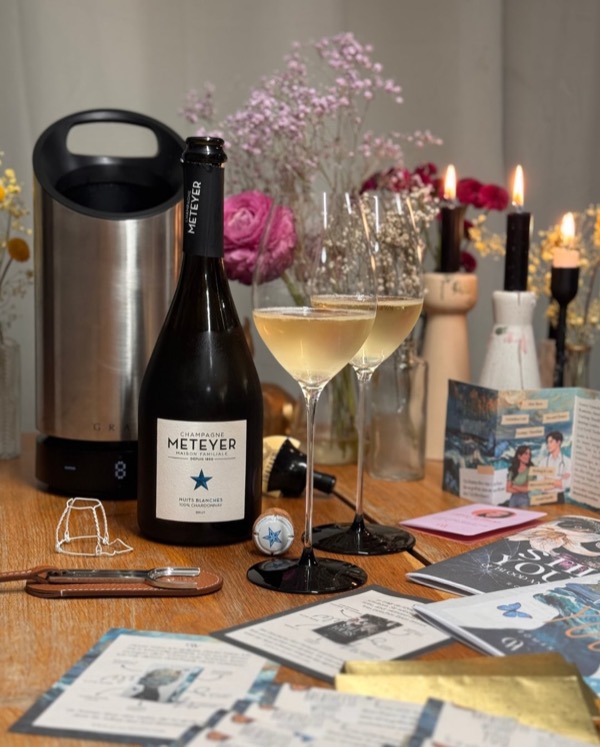
Hier am Tisch herrscht gerade kreatives Chaos der schönsten Sorte: @autorin.olive.wilson bereitet akribisch und mit wahnsinnig viel Liebe ihre…
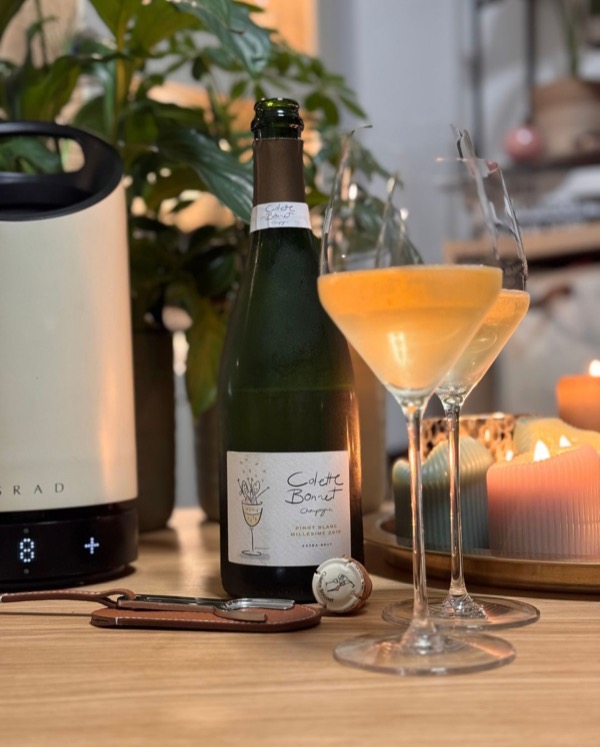
Als ich letzten Herbst die erste Flasche von @champagnecolettebonnet geöffnet hatte, war mir sofort klar: Davon muss ich alles probieren. Es gibt…
Why the Tradition Still Survives
Although modern gyropalettes can reduce the remuage process from 8 weeks to 8 days, many prestige houses still rely on Pupitres. The reasons are multifaceted:
Qualitative aspects:
- Gentler movement of the yeast
- Individual treatment of each bottle
- Traditional craftsmanship as a quality marker
Marketing and tradition:
- Authenticity and history
- Visitor experience in the cellars
- Artisanal excellence as a selling point
The Limitations of Pupitres
Honestly, efficiency clearly favors modern methods. An experienced remueur manages about 40,000-50,000 bottles in 6-8 weeks. A gyropalette handles 504 bottles in one week – at significantly lower personnel costs.
My Experience with Traditional Remuage
During my visits to the great Champagne houses, I'm always fascinated by the precision of the remueurs. These men – and they are almost exclusively men – develop an intuitive connection to each individual bottle over the years. They can tell by weight and resistance how the yeast is behaving.
The Future of Pupitres
Today, Pupitres have primarily become a statement – a visible commitment to tradition and craftsmanship. The major houses use them for their prestige cuvées, while base wines have long been riddled mechanically.
Conclusion: More Than Just Wooden Frames
Madame Clicquot's Pupitres were far more than a practical invention. For the first time, they enabled the industrial production of crystal-clear Champagne and thus laid the foundation for Champagne's worldwide success.
Today they may be less efficient than modern alternatives, but they represent something priceless: the soul of a tradition that is over 200 years old. Every time I taste a Champagne from traditional remuage, I'm not just tasting the wine – I'm tasting history.