Too Cold is Worse Than Too Warm
Most people drink champagne too cold. At 4-5 degrees — straight from the refrigerator — the aromas are locked away, the bubbles are aggressive, and the champagne tastes one-dimensional.
This is the most common mistake I see among champagne beginners. You buy a really good champagne, put it in the refrigerator for hours, and then drink something that tastes like cold acid and carbon dioxide. It's like drinking a fine Burgundy at 8 degrees — you're robbing yourself of the pleasure.
Why is too cold so problematic? At low temperatures, volatile aroma compounds are suppressed. Your nose gets almost nothing because the aromas are literally frozen. At the same time, the carbonation becomes more aggressive — it prickles sharper and masks the finer nuances. And the acidity appears more piercing and dominant when cold.
The Rule of Thumb
| Champagne Type | Temperature | Why |
|---|---|---|
| Simple NV Brut | 7-8 degrees | Fresh, sparkling, uncomplicated |
| Blanc de Blancs | 8-10 degrees | Aroma development, minerality |
| Vintage / Prestige | 10-12 degrees | Complexity needs warmth |
| Rosé | 8-10 degrees | Fruit aromas unfold |
| Demi-Sec | 6-8 degrees | Cold balances the sweetness |
| Old Champagne (10+ years) | 12-14 degrees | Treat like great Burgundy |
The logic behind this is simple: the more complex the champagne, the warmer it should be. A simple NV Brut lives on freshness and bubbles — 7-8 degrees is perfect there. But a Prestige Cuvée with ten years of lees aging has so much aromatic depth that you simply don't perceive it at 7 degrees. The brioche notes, the hazelnut, the honey facets — all of this only shows itself at 10-12 degrees.
Temperature Evolution in the Glass
One aspect many forget: champagne warms up in the glass faster than you think. In a heated room, the temperature rises by about 0.5-1 degree per minute. This means: a champagne that's poured at 8 degrees already has 13-15 degrees after ten minutes.
This isn't necessarily bad — often a champagne only really unfolds when it has warmed up a bit in the glass. That's why I recommend pouring slightly cooler than the target temperature and letting the champagne develop in the glass. I've had the best champagne experiences when I've drunk a bottle over 30-45 minutes and discovered something new with each sip because the temperature was slowly changing.
Practical Tips
- Refrigerator: 2-3 hours before opening
- Ice bucket: 20-30 minutes (half ice, half water)
- Freezer: Maximum 15 minutes (Forgetting = explosion)
- In the glass: Champagne warms up quickly. Better to start a bit too cool — it reaches temperature in the glass
The Ice Bucket Trick
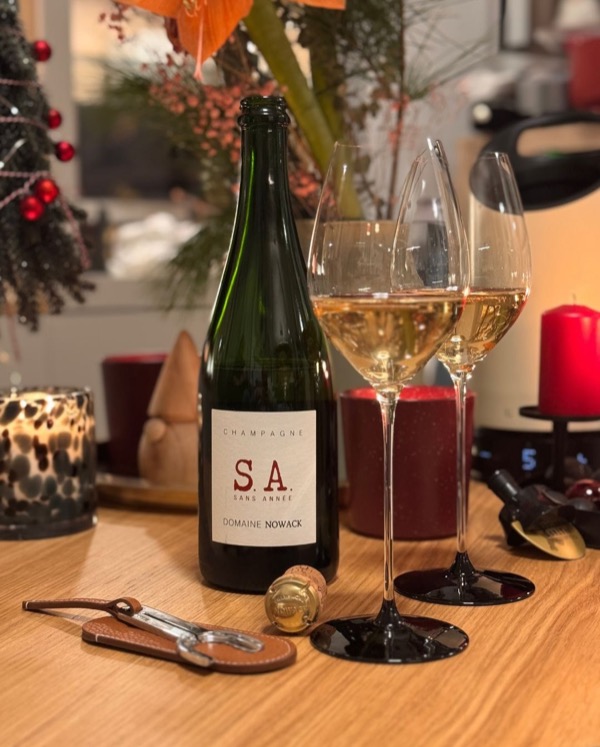
Heute kam die Flasche nicht von mir. Ich habe meist eine ziemlich klare Vorstellung davon, welche Champagner ich für welche Situation öffnen möchte.…
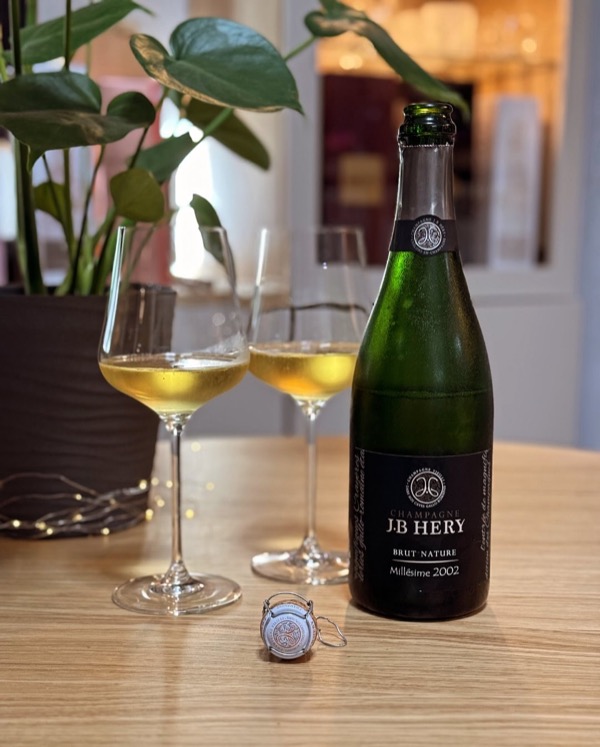
🍾 Heute im Glas: J.B Héry - Millésime 2002 - Brut Nature – ein spannender Fund aus meinem letzten Einkauf. Gerade erst frisch in den Keller…
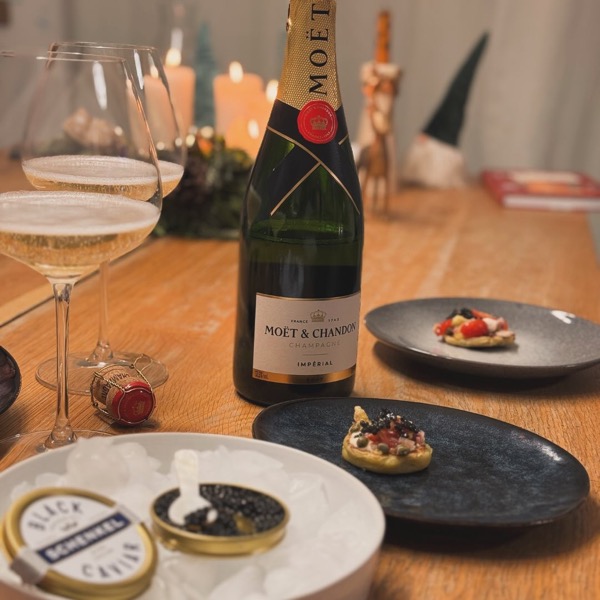
Manchmal braucht es keine große Inszenierung, um echten Luxus zu erleben – nur einen guten Black Imperial Stör Kaviar von @schenkeldelikatessen ,…
The fastest way to chill champagne is an ice bucket with water and ice — in a 50:50 ratio. The water is crucial: it conducts cold much better than ice alone. Pure ice in the bucket takes twice as long. For even faster results, add a tablespoon of salt — this lowers the freezing point and accelerates the cooling process again.
Thermometer or Feel?
Some champagne fans work with thermometers. That's not wrong, but after a while you develop a feel for it. When you touch the bottle and it feels "pleasantly cool" — not ice-cold, not lukewarm — then you're usually in the right range of 8-10 degrees. If the bottle is so cold that your hand slightly hurts, it's too cold.
Storage Temperature vs. Serving Temperature
An important distinction: storage temperature is not serving temperature. Champagne should be stored at 10-12 degrees — constantly, without fluctuations. This is cooler than most apartments, but warmer than the refrigerator. A wine temperature cabinet is ideal. If you don't have one, use the coolest place in your home — basement, storage room, north side.
Storing champagne permanently in the refrigerator is not a good idea. The air in the refrigerator is too dry, which can dry out the cork. Additionally, a refrigerator vibrates — and vibrations are the enemy of any champagne.
My tip: Treat Prestige Cuvées and vintage champagnes like a good Burgundy. 10-12 degrees, wide glass, and time to breathe. The difference from "ice-cold from the flute" is dramatic.
Posts
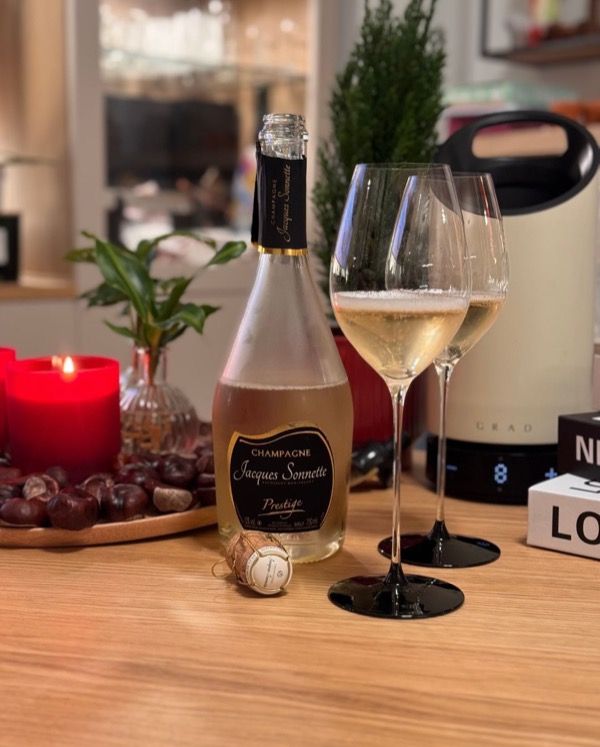
Abends, Kerzenlicht, kein großes Programm – einfach ein Moment zum Ankommen. Und dazu der Jacques Sonnette – Prestige Brut. Ein Champagner, der ohne…
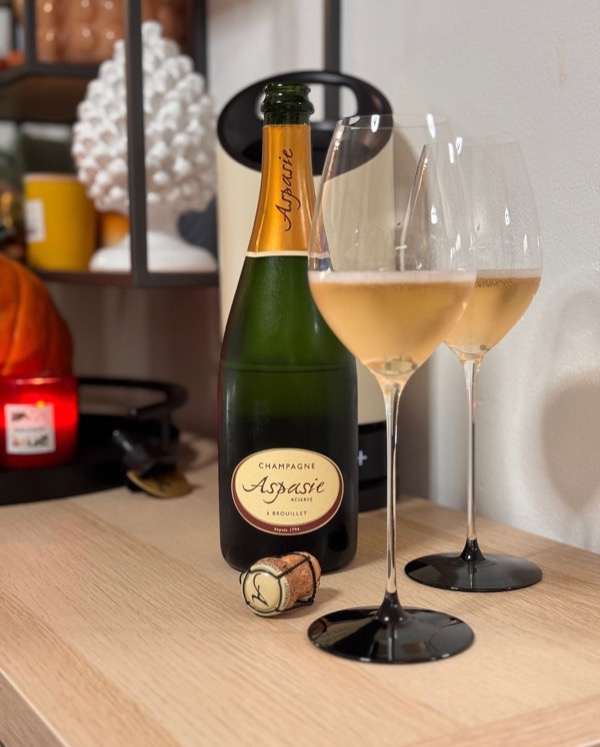
Nach einigen charakterstarken Flaschen in den letzten Tagen wollte ich gestern einfach etwas Klassisches. Etwas, das nicht analysiert werden will –…
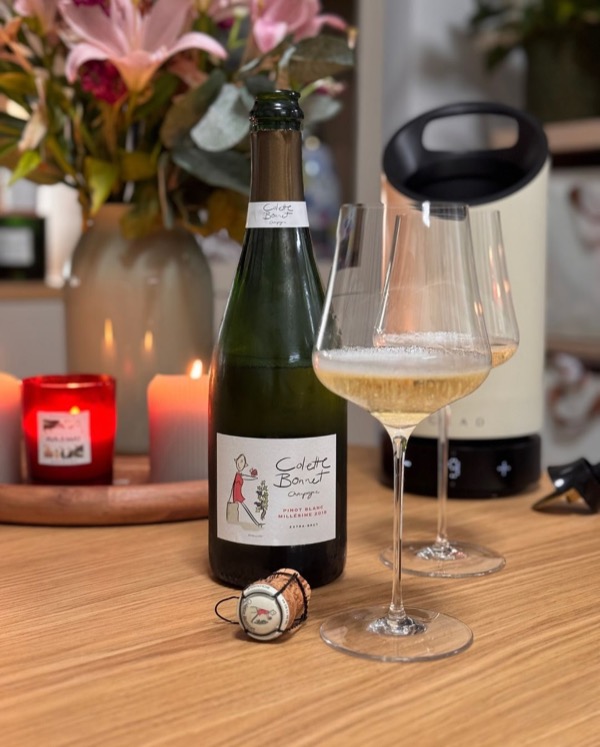
Manchmal beginnt eine Flasche schon zu erzählen, bevor man sie überhaupt öffnet. Beim @champagnecolettebonnet – Pinot Blanc Millésime 2018 war’s…