When I first participated in a champagne harvest and watched the grapes go directly into the traditional press after picking, I immediately understood why the winemakers speak of the Tête de Cuvée with such reverence. These first 2,050 liters of must, obtained from 4,000 kilograms of grapes, are literally the heart of every great champagne.
What Makes Tête de Cuvée So Special?
The Tête de Cuvée are the very first liters of must that emerge during the gentle pressing of the grapes. This precious liquid is created practically without mechanical pressure – the grapes give up their juice almost voluntarily. The result is a must of exceptional purity and finesse.
The Unique Characteristics of the First Pressing
With Tête de Cuvée, I get:
- Crystal-clear color without any cloudiness
- Lowest phenol extraction from the skins
- Highest acid concentration for freshness and aging potential
- Purest aromas without bitter aftertaste
- Optimal sugar-acid balance
Tête de Cuvée vs. Taille: The Crucial Difference
After the 2,050 liters of Tête de Cuvée comes the Taille – an additional 500 liters of must from the same 4,000 kilograms of grapes. Here the dramatic quality difference becomes apparent:
My Posts About This

Heute mal wieder was aus der Supermarkt-Kategorie. Zwei Flaschen, ein Supermarkt, 17,99 € das Stück. Gekauft bei Hofer – rein aus Neugier:…
| Aspect | Tête de Cuvée | Taille |
|---|---|---|
| Volume | 2,050 liters | 500 liters |
| Press pressure | Minimal | Increased |
| Clarity | Crystal clear | Slightly cloudy |
| Phenol content | Very low | Significantly higher |
| Acid content | High | Lower |
| Use | Premium champagne | Base cuvées |
Why Exactly 2,050 Liters from 4,000 kg of Grapes?
These precise volume specifications are not arbitrary – they stem from centuries of experience and are now legally enshrined in the Champagne codex. The 4,000 kilograms of grapes constitute the so-called "Marc" – the standard quantity for one pressing.
The Mathematics Behind Perfection
From one marc of 4,000 kg of grapes, the maximum that may be obtained is:
- 2,050 liters Tête de Cuvée (80.4% of total volume)
- 500 liters Taille (19.6% of total volume)
- Total: 2,550 liters of must
Anything pressed beyond this is classified as Rebèche and may not be used for champagne production.
Why Do Prestige Houses Use Only Tête de Cuvée?

Manchmal öffnet man eine Flasche und weiß sofort: Das passt. Genau das hatte ich gestern mit der Cuvée Gabin Brut von @champagne.daniel.leclerc . Ein…

Manchmal hat man eine Erwartung an einen Champagner – und wird dann doch überrascht. Beim @champagne_jm_labruyere - Prologue Extra Brut war genau das…
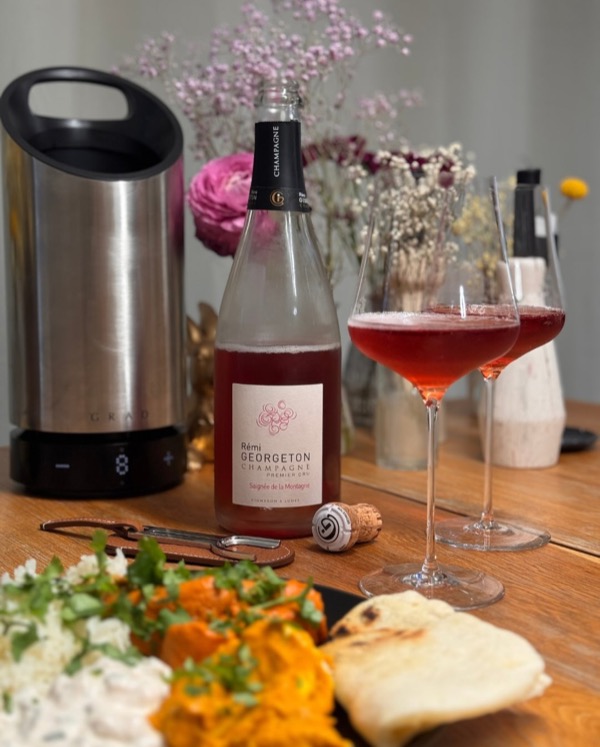
Bei uns kommt ja regelmäßig indisch auf den Tisch, und dieses Mal gab es das volle Wohlfühl-Programm: Butter Chicken, Royal Paneer, erfrischendes…
When I visit the great champagne houses, every cellar master tells me the same thing: for their flagship champagnes, they use exclusively Tête de Cuvée. The reason is simple – and expensive.
The Quality Advantage Justifies the Price
When a house like Dom Pérignon or Cristal uses only the first 2,050 liters and discards or markets the 500 liters of Taille elsewhere, it foregoes almost 20% of the possible volume. For premium champagnes, where each bottle costs $200 or more, this represents an enormous economic sacrifice – in favor of quality.
The Sensory Benefits of Pure Tête de Cuvée
Champagnes made from pure Tête de Cuvée display:
- Exceptional finesse in mouthfeel
- Longer aging potential due to higher acidity
- Clearer terroir expression without interfering secondary notes
- More elegant perlage from purer must
- More complex development during maturation
How Do I Recognize a Pure Tête de Cuvée Champagne?
Most houses don't openly communicate which press fractions they use. However, some clues help me:
Price Range as an Indicator
Champagnes over $80 usually use predominantly or exclusively Tête de Cuvée. Prestige cuvées almost always 100%.
Tasting Notes
- Exceptional purity in the finish
- No bitter or astringent notes
- Crystal-clear, brilliant color
- Very fine, persistent perlage
My Conclusion: Quality Has Its Price
The Tête de Cuvée embodies the essence of what makes champagne so special. These first 2,050 liters from each pressing are the reason why a great champagne doesn't just sparkle, but unites the terroir, grape varieties, and winemaker's craftsmanship in perfect harmony.
When I open a premium champagne today, I always think about this: this liquid was once the very first, most precious drop obtained from the finest grapes of Champagne. And that's exactly what I taste in every sip.