As a passionate champagne lover, I experience magical moments time and again when a champagne and a dish form a perfect symbiosis. This harmony doesn't happen by chance – it follows clear principles that I've learned from tasting different champagnes at home. Today I'm sharing my insights about the fascinating world of champagne food pairing with you.
The Basic Principles: Harmony vs. Contrast
With champagne food pairing, two fundamental approaches are available to us: complementary pairing and deliberate contrast.
Complementary Pairing: Like with Like
In the complementary method, the flavors of champagne and dish mutually enhance each other. A mineral Chablis Premier Cru from Billecart-Salmon harmonizes beautifully with fresh oysters because both share the same salty, oceanic minerality. The flavors merge into a harmonious unity, without one component overpowering the other.
This harmony works particularly well with:
- Creamy champagnes with creamy sauces
- Fruity bubbles with fruity desserts
- Spicy cuvées with seasoned dishes
Contrasting Pairing: Opposites Attract
The contrast approach relies on exciting opposites. A dry, mineral champagne can perfectly balance a rich, fatty dish. The acidity and minerality cut through the heaviness and create freshness on the palate.
Classic contrast combinations:
- High-acid champagnes with fatty foods
- Sweet Demi-Sec with salty dishes
- Light Blanc de Blancs with intense meat dishes
Flavor Profiles and Their Perfect Partners
Fruity Champagnes → Seafood and Fish
Champagnes with pronounced fruit flavors – often dominated by Chardonnay or Pinot Noir – harmonize fantastically with seafood. The natural acidity and fruity notes enhance the delicacy of fish and shellfish.
My recommendations:
- Dom Pérignon Vintage with grilled salmon: The citrus notes and creamy texture perfectly complement the fish's richness
- Veuve Clicquot Brut with scallops: The apple and pear aromas harmonize with the sweet notes of the shellfish
- Pol Roger Brut Réserve with sushi: The freshness and elegance underscores the purity of the raw fish
The fruitiness brings liveliness into play without overwhelming the subtle sea flavors. Especially with grilled or sautéed seafood, the caramelization creates a wonderful bridge to the fruit esters in the champagne.
Yeasty, Brioche-like Champagnes → Cheese and Pastries
Champagnes with long autolyse develop complex yeast notes reminiscent of fresh brioche, roasted nuts, or even biscuit. These flavors are made for cheese and baked goods.
Perfect combinations:
- Krug Grande Cuvée with aged Comté: The nutty, brioche-like notes of the champagne harmonize with the crystalline texture and nut flavors of the cheese
- Louis Roederer Cristal with croissants on Sunday morning: A luxurious start to the day
- Bollinger Special Cuvée with Camembert: The powerful yeast notes can keep up with the intensity of the soft cheese
The commonality lies in the fermented flavors – both in champagne production and cheese aging, similar flavor compounds develop through bacterial processes.
Mineral Champagnes → Oysters and Raw Seafood
Nothing embodies elegance more than the combination of mineral champagne and fresh oysters. This pairing is a classic that never gets boring.
My favorite oyster champagnes:
- Billecart-Salmon Champagne: The salty minerality enhances the oceanic notes of the oysters
- Pierre Peters Blanc de Blancs: Pure chalk minerality from the Côte des Blancs
- Agrapart & Fils Mineral: The name says it all – perfect with Belon oysters
The minerality in champagne comes mainly from the chalky soils of Champagne. This geological connection to maritime history creates a natural harmony with seafood, which is itself rich in minerals.
Spicy, Complex Champagnes → Asian Cuisine
The complexity of Asian dishes with their diverse spices, sweet, sour, and umami-rich components needs champagnes with corresponding depth.
Asia-suitable champagnes:
- Dom Pérignon Rosé with Peking duck: The fruitiness and spice can keep up with the hoisin flavors
- Krug Rosé with sushi and wasabi: The complexity and power stand up to the sharp wasabi
- Bollinger La Grande Année with Thai curry: The spice and minerality balance the coconut milk and chili
With Asian dishes, a rosé champagne is often the better choice, as the Pinot Noir component brings additional spice and body.
Specific Champagne Recommendations for Different Cuisines
French Classic
For classic French cuisine, I swear by Louis Roederer Brut Premier. Its elegance and balance pair with almost everything – from Coq au Vin to Bouillabaisse.
Italian Passion
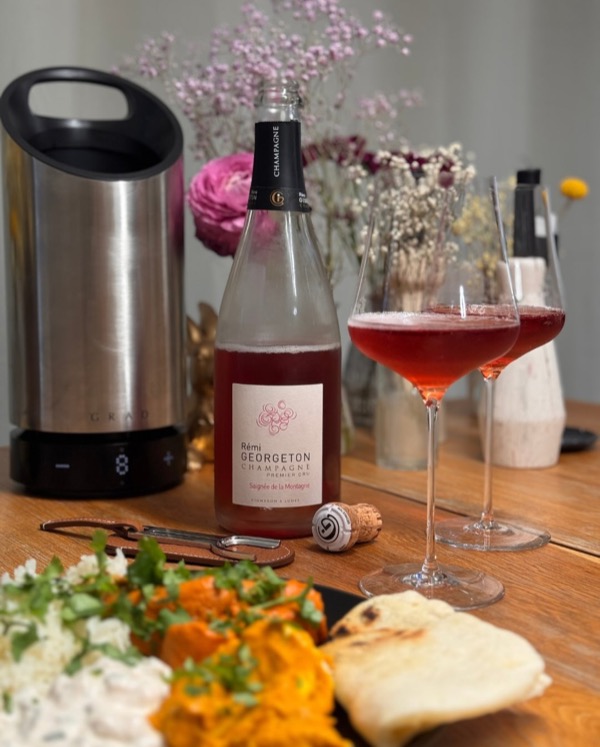
Bei uns kommt ja regelmäßig indisch auf den Tisch, und dieses Mal gab es das volle Wohlfühl-Programm: Butter Chicken, Royal Paneer, erfrischendes…
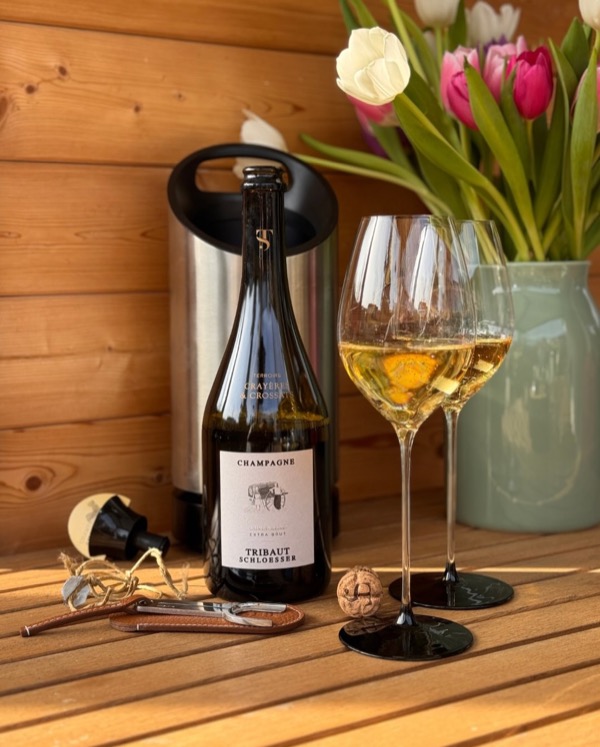
Das perfekte Match für unser heutiges, maritimes Festmahl! 🌊🥂 Bei uns gab es heute ein absolut grandioses, spontanes Seafood-Lineup: Kurz…
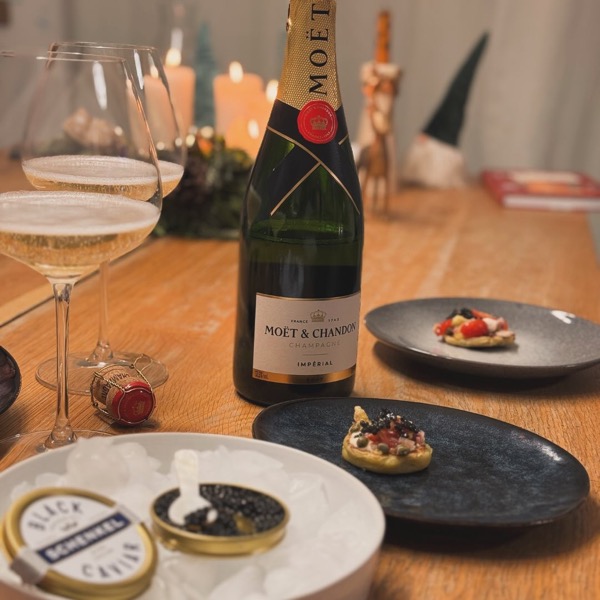
Manchmal braucht es keine große Inszenierung, um echten Luxus zu erleben – nur einen guten Black Imperial Stör Kaviar von @schenkeldelikatessen ,…
Ruinart Blanc de Blancs is my Italian companion of choice. The freshness harmonizes perfectly with pasta in cream sauces or risotto.
German Cuisine
For hearty German cuisine, I recommend Pol Roger Brut Reserve. Its substance and elegance can even keep up with pork roast and sauerkraut.
Japanese Precision
Pierre-Jouët Belle Epoque embodies Japanese cuisine's precision for me – delicate, elegant, and perfectly balanced with sashimi and tempura.
The Most Important Pairing Rules
Rule 1: Match Intensity Levels
A delicate Blanc de Blancs gets lost next to a robust beef roast. Conversely, a powerful prestige champagne would overwhelm delicate oysters.
Rule 2: Use Acidity as a Palate Cleanser
The natural acidity in champagne works like a reset button for the palate. Essential especially with fatty or rich dishes.
Rule 3: Mind the Temperature
Champagne should be served between 6-8°C. Too cold, and the flavors close up. Too warm, and the elegance is lost. A GRAD cooler on the table keeps the bottle in the right range all evening.
Rule 4: Order of Champagnes
With multiple courses: from light to heavy, from dry to sweet, from young to old.
Rule 5: Dare to Experiment
I often make the most beautiful discoveries with unconventional combinations. Who would have thought that Billecart-Salmon Rosé tastes fantastic with chocolate desserts?
My Personal Conclusion
From what I've learned so far experimenting and from my tastings at home, I can say: There's no absolute truth in food pairing. The basic principles provide guidance
My Posts About This
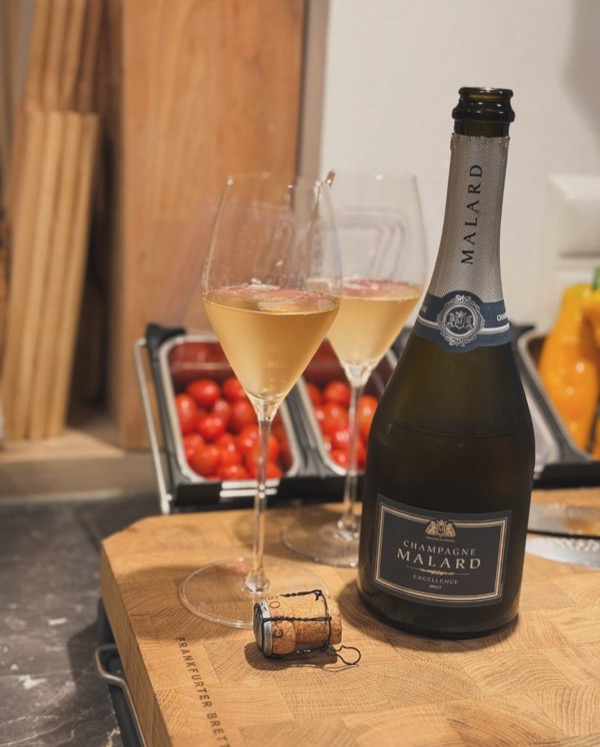
Heute mal Excellence ohne Allüren mit dem Excellence Brut von @champagne_malard. Dieser Champagner bringt beides mit: Anspruch und Trinkfreude. Ideal…
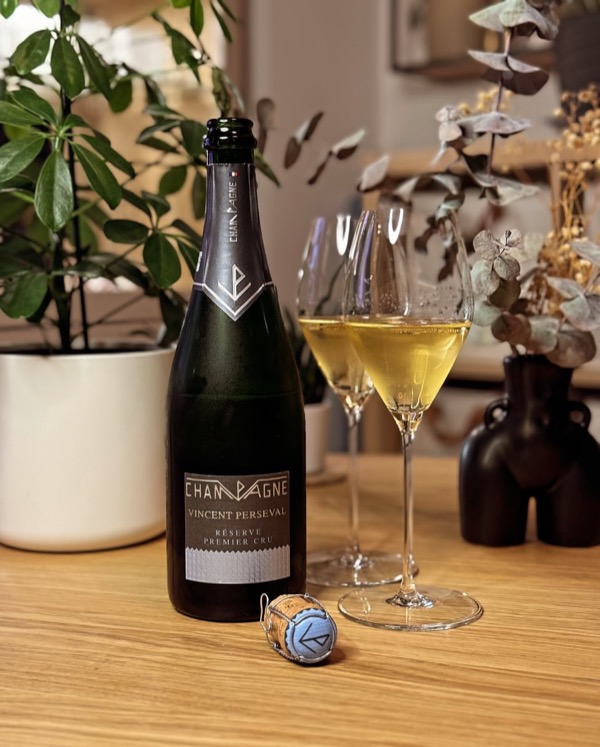
Ich habe mittlerweile schon einige Champagner von @champagnevincentperseval probiert – von Blanc de Blancs bis zum Rosé. Also war es nur eine Frage…
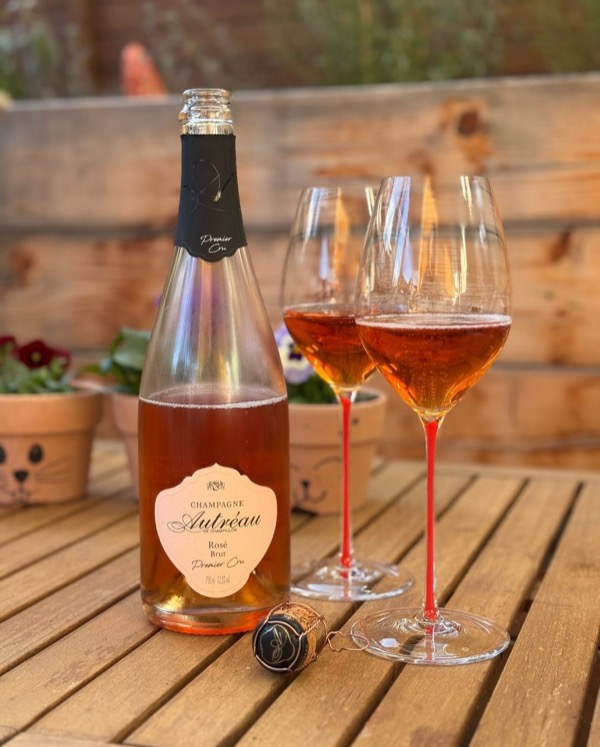
Heute Nachmittag haben wir die Gelegenheit genutzt, um die warmen Strahlen auf der Terrasse aufzusaugen – mit einem Glas @champagne_autreau_off Rosé…