The Most Important White Grape
Chardonnay is the soul of Champagne. About 30% of the vineyard area is planted with it, and it appears in almost every champagne — whether as the dominant variety in Blanc de Blancs or as an elegant partner in the Assemblage.
277 of my 432 tasted champagnes contain Chardonnay. That says it all.
What Chardonnay Contributes to Champagne
Chardonnay is the most versatile grape variety in Champagne. It brings:
- Freshness and acidity — Chardonnay's naturally high acidity gives champagne its liveliness and aging potential
- Minerality — Especially on chalk soils, Chardonnay shows a pronounced mineral signature
- Finesse — Finer perlage, leaner body, more elegance than Pinot-influenced champagnes
- Citrus and floral aromas — Lemon, white peach, acacia blossom, jasmine
- Aging ability — Chardonnay-based champagnes are among the most long-lived
Terroir: Where Chardonnay Shines
Côte des Blancs
The heartland. On the chalk slopes of Cramant, Avize, Oger and Le Mesnil-sur-Oger grows the purest Chardonnay of Champagne. Taut, mineral, with an almost salty chalk note. Grand Cru Blanc de Blancs from here are among the most coveted champagnes in the world.
Côte de Sézanne
More southern, warmer, somewhat more opulent. Chardonnay from the Côte de Sézanne is often fruitier and more accessible than the taut Côte des Blancs wines. Less well-known, often more affordable — and rising in quality.
Montagne de Reims
Surprising: Even on the Pinot Noir-dominated Montagne de Reims, there is excellent Chardonnay. In individual sites like Villers-Marmery or Trépail, Chardonnay grows with its own personality — somewhat broader and more powerful than its Côte des Blancs counterpart.
Young vs. Mature
Young Chardonnay champagne can seem harsh. The acidity cuts, the aromas are closed, citrus and chalk dominate in the mouth. Many drink Blanc de Blancs too young and are disappointed.
The secret: time. After 5-10 years of bottle aging, the magic happens:
| Young (0-3 years) | Mature (5-10+ years) |
|---|---|
| Lemon, green apple | Candied fruit, quince |
| Chalk, lime | Brioche, hazelnut |
| Taut, linear | Creamy, voluminous |
| Closed | Complex, multi-layered |
Chardonnay rewards patience. The best Blanc de Blancs I've ever tasted were all at least 10 years old. The transformation from steely-taut to creamy-complex is one of the great champagne experiences.
In the Assemblage
Not every Chardonnay champagne is a Blanc de Blancs. In the classic Assemblage (blend), Chardonnay plays a crucial role as the "backbone" — it provides freshness, structure and longevity. Without Chardonnay, many Prestige Cuvées would be unthinkable: Dom Pérignon, Krug, Cristal — all rely on a significant proportion of Chardonnay.
Posts
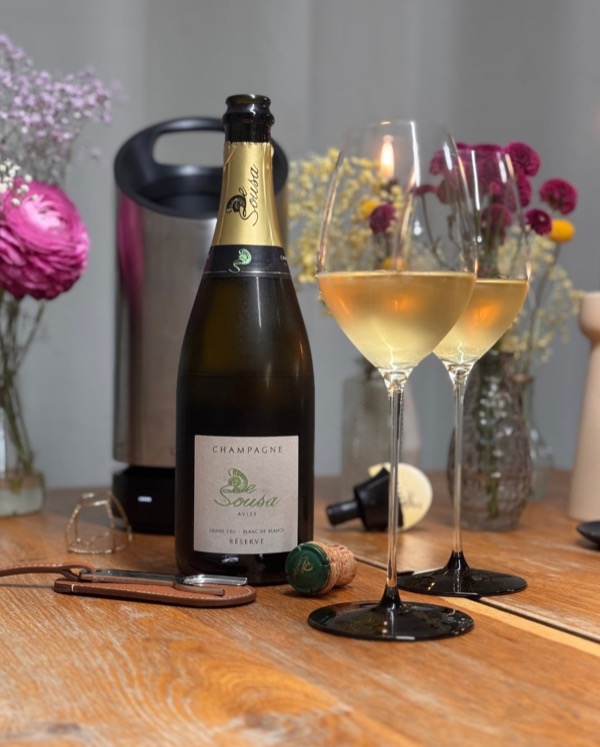
Heute habe ich einen herausragenden Blanc de Blancs geöffnet: Die „Grand Cru Réserve“ von @champagnedesousa aus Avize. Die Familie De Sousa arbeitet…
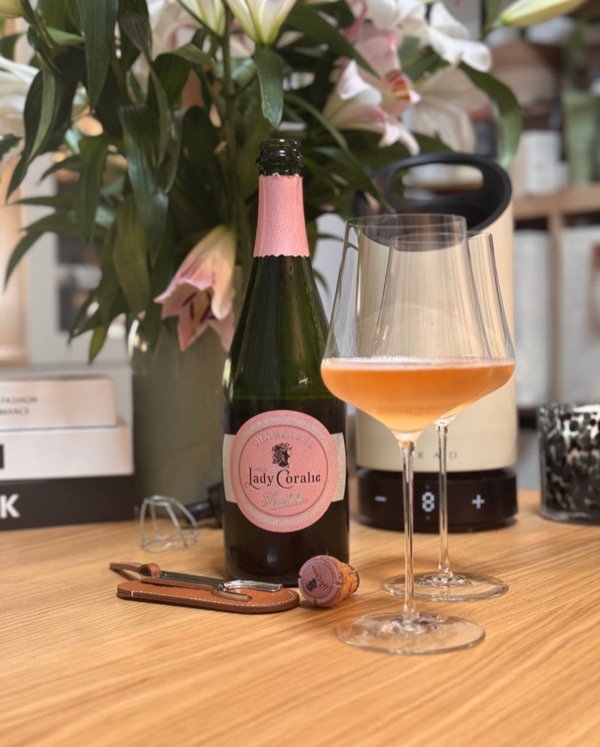
Heute habe ich eine echte Besonderheit aus der „Collector“ Linie von @champagne_mathelin im Glas: Die Cuvée „Lady Coralie“. Das Spannende an diesem…
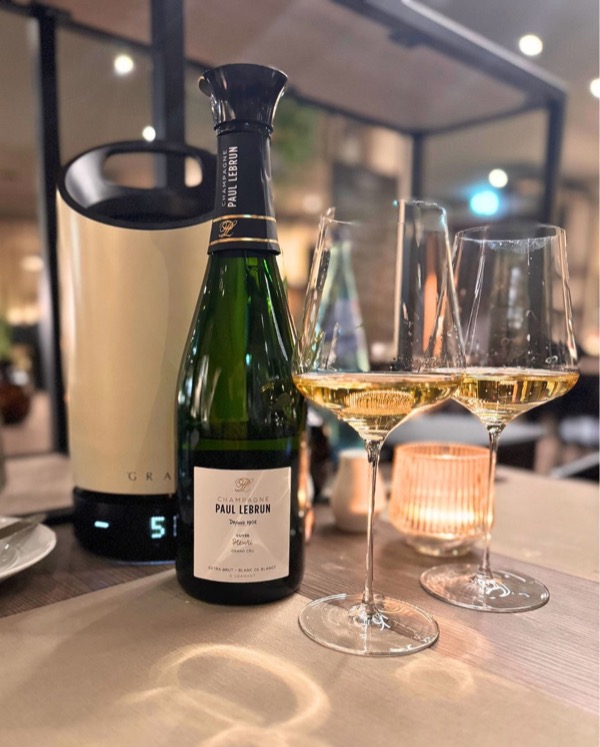
Kennt ihr das? Man ist unterwegs, freut sich nach einem langen Tag auf ein solides Abendessen im Hotel – und dann der Blick in die Weinkarte: Kein…