Less than 1% of vineyard area
Pinot Blanc is one of the "forgotten" grape varieties of Champagne. Together with Arbane, Petit Meslier, and Fromenteau, it forms the group of permitted but barely cultivated varieties. Less than 1% of the total vineyard area is devoted to these four rarities.
The fact that Pinot Blanc still exists in Champagne at all is no given. After the phylloxera catastrophe in the late 19th century, the vineyards were replanted with the most productive and robust varieties — Chardonnay, Pinot Noir, and Meunier prevailed. The rarer varieties like Pinot Blanc almost completely disappeared. Only a few winemakers held onto them, often out of pure stubbornness or traditional consciousness.
Character
Pinot Blanc delivers wines with moderate acidity, floral aromas, and a soft, round texture. In Champagne, it's rarely vinified as a single variety — most often it appears as a small portion in assemblages, where it contributes body and floral notes.
What distinguishes Pinot Blanc from the three main varieties is its gentleness. Where Chardonnay brings tension and minerality, where Pinot Noir provides structure and Meunier delivers fruit, Pinot Blanc brings harmony above all. It's the peacemaker in the assemblage — it rounds out, connects, smooths. A small proportion of 5-10% can make a cuvée noticeably more supple without one explicitly tasting the Pinot Blanc.
Aroma profile
Those lucky enough to taste a single-variety Pinot Blanc from Champagne will find the following aromas:
- White flowers — Acacia, jasmine, elderflower
- Stone fruit — White peach, nectarine, ripe pear
- Delicate almond — A slightly nutty note in the background
- Creamy texture — Soft and enveloping on the palate
- Moderate acidity — Less taut than Chardonnay, but more supple
Compared to Alsace, where Pinot Blanc is widespread and often rich and fruit-forward, the Champagne version shows more slender and delicate. The cooler climate keeps the acidity somewhat higher and the fruit more restrained.
Risk of confusion with Chardonnay
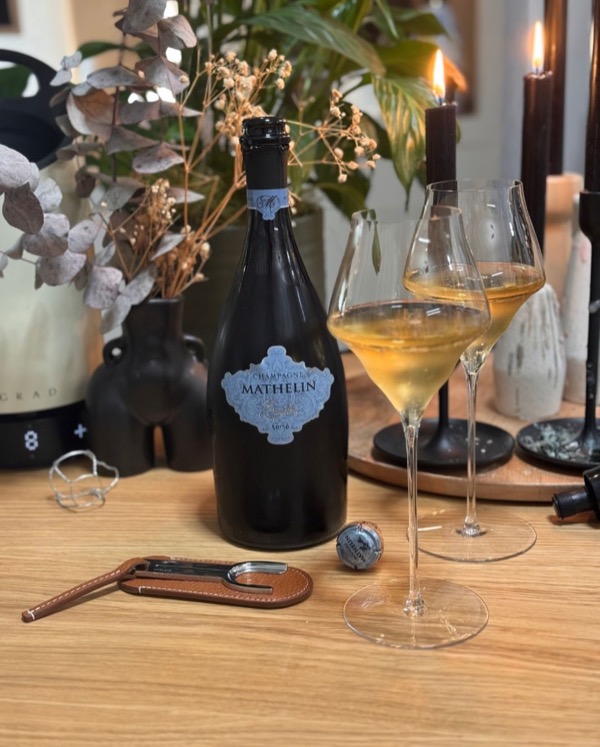
Manchmal sagt ein minimalistisches Etikett schon alles: Beim „Équilibre“ von @champagne_mathelin ist der Name absolutes Programm! Auf der Flasche…

Der Saint-Nicaise 2015 von @domainebauchet hat gestern genau diese ruhige, warme Stimmung getroffen, die man sich für einen entspannten Abend…
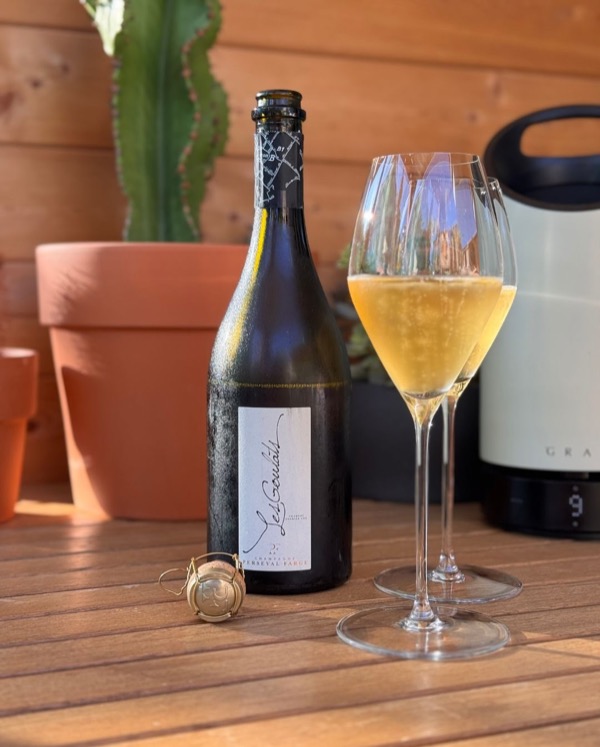
Heute endlich mein Post zum @persevalfarge – Les Goulats. Bei dieser Flasche hat mich vor allem die Rebsorten-Mischung gereizt – Arbane, Petit…
An interesting detail: Pinot Blanc and Chardonnay look confusingly similar in the vineyard. Both have green grapes, similar leaf shapes, and comparable growth characteristics. It's historically documented that many parcels labeled as "Chardonnay" in Champagne actually contained Pinot Blanc — or mixed plantings of both varieties.
Only modern DNA analyses have provided clarity. Many a winemaker who thought he had Chardonnay discovered that his old vines were partially or entirely Pinot Blanc. This explains why some "Blanc de Blancs" from older parcels have a different aromatic signature than expected.
Where to find Pinot Blanc?
The largest stocks of Pinot Blanc are found in the Côte des Bar (Aube) and occasionally on the Côte des Blancs. In the Aube, where the climate is somewhat warmer and winemakers are more experimental, some producers have consciously maintained Pinot Blanc as part of their "Cépages Oubliés" cuvées or even planted it anew.
Some winemakers use Pinot Blanc as a deliberate component of their assemblage. Others have it in old mixed plantings, where different varieties stand intermixed and are harvested and processed together — a relic from the time before modern monoculture.
Future of the variety
With growing interest in rare grape varieties and historical diversity, Pinot Blanc is experiencing a modest comeback. New plantings are rare, but they happen. Winemakers who focus on biodiversity in the vineyard sometimes consciously choose the forgotten varieties — as a counterweight to the monoculture of Chardonnay and Pinot Noir.
Climate change could also play into Pinot Blanc's hands. As a variety with moderate acidity and good heat tolerance, it could gain importance in a warming Champagne — as a complement to Chardonnay, which loses its freshness at excessively high temperatures.
10 of my tasted champagnes contain Pinot Blanc — mostly as part of a multi-cépage assemblage. The variety is so rare that every encounter is a small event.
Posts
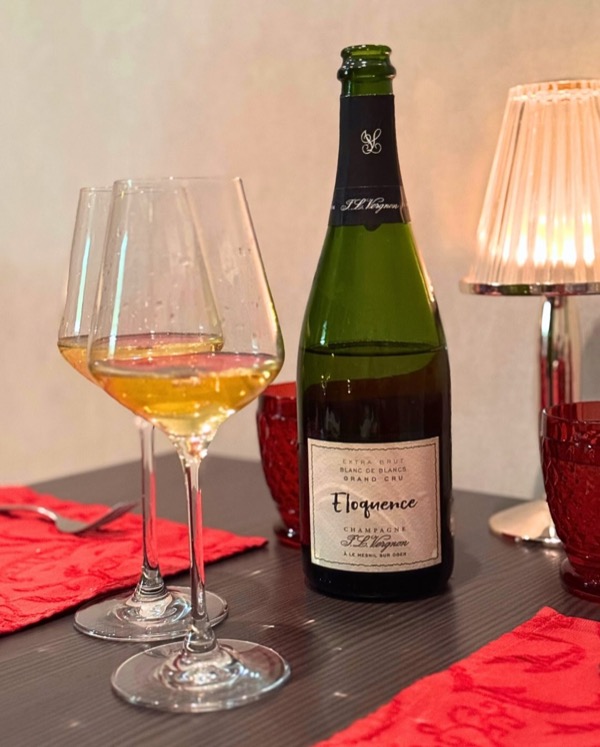
Gestern Abend waren wir zum Abschluss noch im restaurant_cest_la_vie_leipzig und haben uns ein fantastisches 7-Gänge-Menü gegönnt. Die Bilder vom…
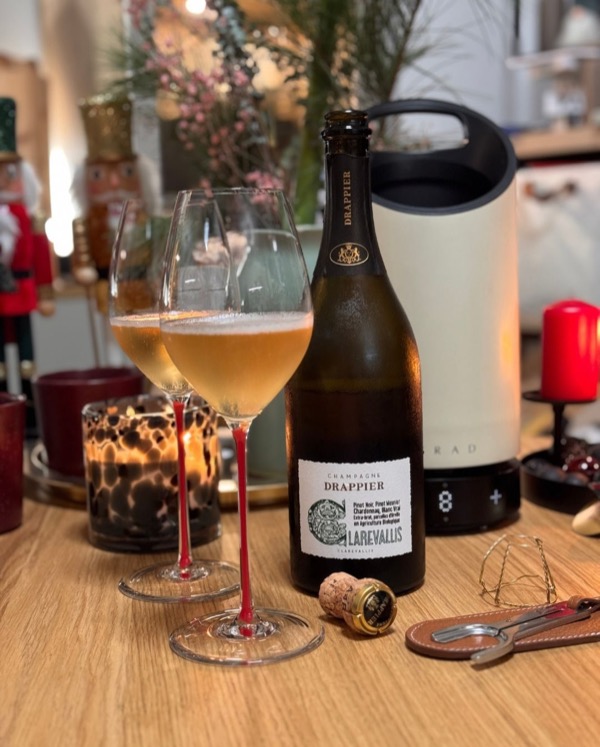
Der Clarevallis von @champagnedrappier war gestern die perfekte Flasche für gemütliche Weihnachtsvorbereitungen. Unaufgeregt, leise – und einfach…

@champagnelaborderie kannte ich schon – aber die “Trois Contrées” bisher noch nicht. Diese Flasche war Teil des @terroirundadiletten Champagner…