The most important red grape
Pinot Noir covers around 38% of the vineyard area in Champagne and is thus the most widely planted variety. Although a red grape, it is almost always vinified as white wine — the skins are immediately separated from the must so that no color is transferred.
This is one of the great paradoxes of Champagne: The dominant grape variety is red, but the majority of champagne is white. This fact alone shows how differently Champagne functions compared to the rest of the wine world. Here it's not about color, but about structure.
Pinot Noir in Champagne is a different animal than Pinot Noir in Burgundy. In Champagne, the grape rarely fully ripens — the cool temperatures and northern location ensure that acidity remains high and sugar levels moderate. This is exactly what makes it ideal for sparkling wine: High acidity is the basic prerequisite for a good champagne base.
What Pinot Noir contributes to champagne
- Structure and body — Pinot Noir gives champagne its backbone
- Red fruit aromas — Cherry, strawberry, raspberry (subtle, not dominant)
- Power — More volume and intensity than Chardonnay
- Aging potential — Pinot-driven champagnes develop depth and complexity with maturity
- Vinous character — Champagnes with high Pinot content often seem more "wine-like"
In assemblage, Pinot Noir is the anchor. A Brut Sans Année without Pinot Noir is conceivable, but rare — most houses use the grape variety as a foundation upon which Chardonnay builds elegance and Meunier builds fruit. The classic Brut NV from the major houses typically contains 30-40% Pinot Noir.
Terroir: Where Pinot Noir shines
Montagne de Reims
The heart for Pinot Noir. The Grand Cru villages Ambonnay, Bouzy and Verzenay deliver the most powerful, most structured Pinot Noir in Champagne. Chalky soils, southern exposures, perfect ripeness.
What makes the Montagne de Reims special is the belemnite chalk. This ancient rock — deposits from a tropical sea from the Cretaceous period — stores water, reflects heat and gives the wines a pronounced minerality. The Pinot Noir from the Montagne is taut, structured, with dark fruit and a mineral core reminiscent of flint.
Within the Montagne de Reims there are enormous differences. Bouzy on the south side delivers the ripest, most fruit-driven Pinot Noir — some call it the most "Burgundian" of Champagne. Verzenay on the north side is cooler, more austere, more mineral. Ambonnay combines both sides: power and elegance in one.
Côte des Bar (Aube)
The southernmost region of Champagne is Pinot Noir country. Over 80% of the vineyard area. On Kimmeridgian marl grows a different style: fruitier, juicier, less mineral than the Montagne de Reims.
The Côte des Bar lies over 100 kilometers south of Reims, closer to Burgundy than to Épernay. Geologically it belongs to the same Kimmeridgian arc as Chablis — and you can taste it. The Pinot Noir from here has a juiciness and fullness that doesn't develop on chalky soils. Less tension, more generosity. Often the more accessible Pinot Noir style for beginners.
Vallée de la Marne
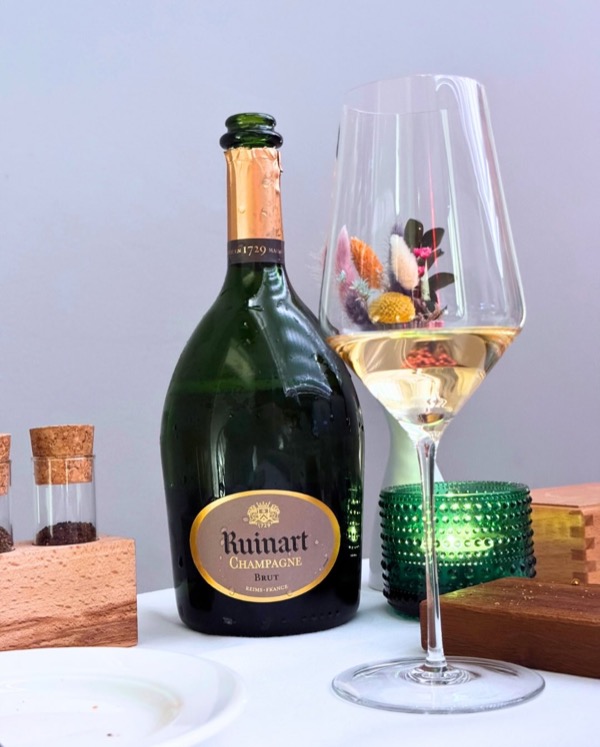
Gestern waren wir im wunderbaren @max_enk_leipzig . Wenn man ein wirklich großartiges Menü vor sich hat, braucht man manchmal keinen ultra-komplexen,…
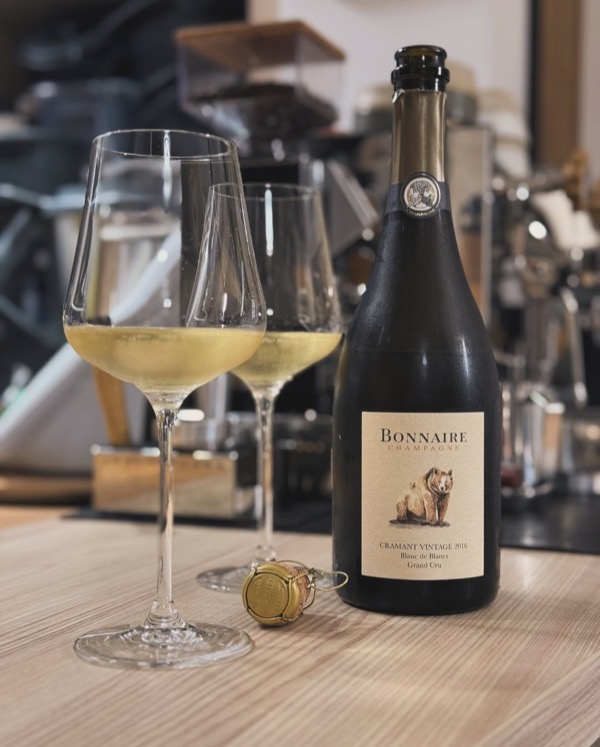
Diese Woche kam eine frische Lieferung direkt aus der Champagne bei mir an – Drei spannende Flaschen von @bonnaireclouet . Für den Auftakt habe ich…
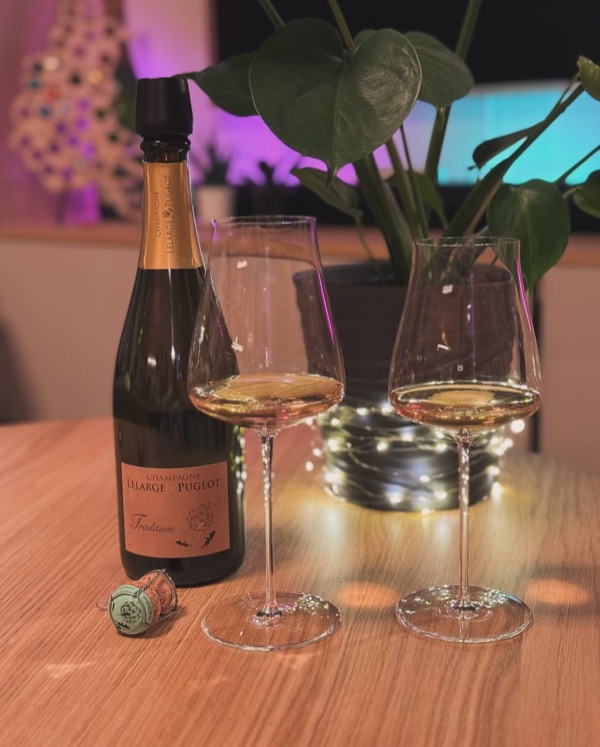
Vor über 10 Jahren habe ich im Rahmen eines Projekts für eine Weinverkostung und ein Feature in einem Print-Magazin Gläser von @eisch_glass ,…
Here Pinot Noir shares the area with Meunier. On the best south-facing slopes, surprisingly elegant Pinot Noirs are produced. In the Vallée de la Marne, Pinot Noir grows mainly on the upper slopes where the soils are more chalky and the exposure warmer. The valley floors belong to Meunier.
Pinot Noir in rosé production
For rosé champagne, Pinot Noir is indispensable. There are two methods:
- Rosé d'Assemblage: A small proportion of red still wine (from Pinot Noir, mostly from Bouzy or Les Riceys) is blended with the white base wine. The more common method.
- Rosé de Saignée: The Pinot Noir grapes are left on the skins briefly until enough color is extracted. Then the must is drawn off. This method produces more intense, more powerful rosés.
261 of my tasted champagnes contain Pinot Noir. The range is enormous — from slender rosé to powerful Blanc de Noirs, this grape variety shows a versatility that is second to none compared to Chardonnay.
Pure Pinot Noir: Blanc de Noirs
100% Pinot Noir produces a Blanc de Noirs — "white from blacks." These champagnes show the grape variety without compromise: more body, more fruit, more power than any blend. A Blanc de Noirs from a Grand Cru like Ambonnay can be a force that one associates more with a good Burgundy than with champagne.
Growing challenges
Pinot Noir is not an easy grape variety. It is susceptible to gray rot (Botrytis), sensitive to late frost and needs the best sites to really shine. In Champagne, the harvest windows are extremely short — a few days too late, and the acidity drops too much. A few days too early, and the phenolic ripeness is lacking.
Climate change is altering the situation. Champagne is getting warmer, Pinot Noir ripens more easily. This brings fuller base wines, but also the danger of sugar levels that are too high and acidity that is too low. The best winemakers are responding with earlier harvests and adapted vineyard work.
Posts
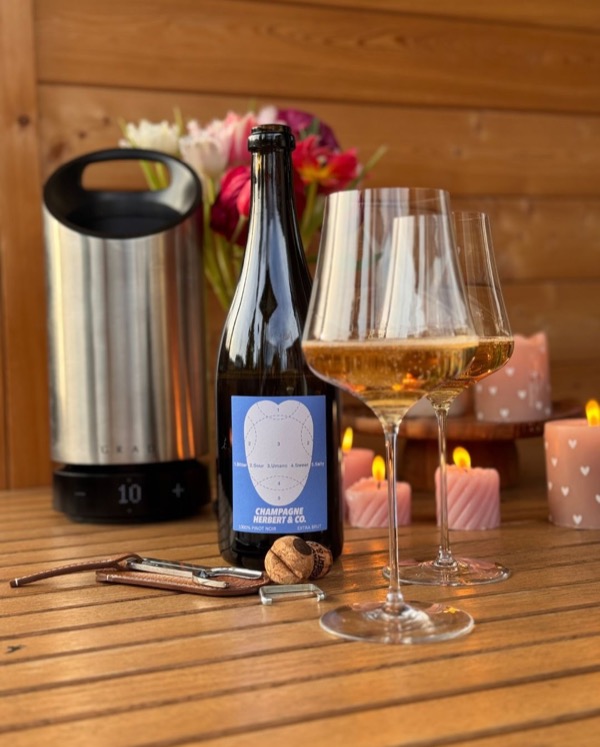
Heute gibts den 1000% Pinot Noir von @champagne_herbertandco . Von diesem kleinen, feinen Haus (geführt von @thomas___herbert und @charlottehbrt_ in…

Eigentlich war das Menü nach dem Dessert am Ende, aber @saschalein114 hatte zum Abschluss doch noch eine Auswahl an Weichkäse geplant. Ein Trio aus…

Manchmal verbergen sich hinter schlichten Etiketten die spannendsten Geschichten, wie zum Beispiel hier beim @champagne_edouard_duval – Brut…