The moment when champagne touches my palate is always fascinating to me as The Champagne Guy. The Bouche — the palate analysis — reveals dimensions of champagne that even the finest nose cannot capture. This is where it's decided whether a champagne truly convinces.
The Three Phases of Palate Analysis
Attaque — First Impressions Count
The Attaque is the initial taste, that crucial first moment when the champagne touches the tongue. In this phase, I evaluate:
- Intensity of the first impression: Is it powerful or restrained?
- Perlage quality: How fine and persistent are the bubbles?
- Initial flavor notes: Which aromas dominate initially?
- Acid structure: How present is the acidity on first contact?
A great champagne already shows its class in the Attaque — harmonious, yet characterful, never aggressive or flat.
Milieu de Bouche — The Heart of the Tasting
In the middle section, the true character of the champagne unfolds. Here I analyze the complex structure:
Flavor Components:
- Primary aromas (grape and terroir)
- Secondary aromas (fermentation and assemblage)
- Tertiary aromas (lees aging and maturation)
Structural Elements:
- Balance between acidity and sweetness
- Body and weight
- Minerality and salinity
- Complexity of aroma development
Finale — The Lasting Impression
The Finale or finish shows me the true quality of a champagne. Here I evaluate:
- Length: How long do the aromas remain present?
- Evolution: How do the flavor notes develop?
- Harmony: Does the champagne finish in a balanced way?
- Memorability: What impressions remain?
What the Palate Evaluates — The Five Pillars
1. Acidity — The Backbone of Champagne
Acidity is the structure-giving element. I distinguish between:
| Acid Type | Characteristic | Origin |
|---|---|---|
| Tartaric acid | Firm, structured | Grape |
| Malic acid | Green, sharp | Unripe/cool climate |
| Lactic acid | Soft, creamy | Malolactic fermentation |
2. Sweetness — More Than Just Dosage
Sweetness comes not only from the dosage, but also from:
- Natural fruit sweetness
- Glycerin from fermentation
- Phenolic sweetness from ripe grapes
- Perceived sweetness through low acidity
3. Perlage — The Soul of Champagne
On the palate, I evaluate the carbonation based on:
- Fineness: Small, silky bubbles vs. coarse carbonation
- Integration: Harmonious integration into the overall structure
- Persistence: How long does the perlage remain active?
- Creaminess: Does a creamy texture develop?
4. Texture — Mouthfeel Decides
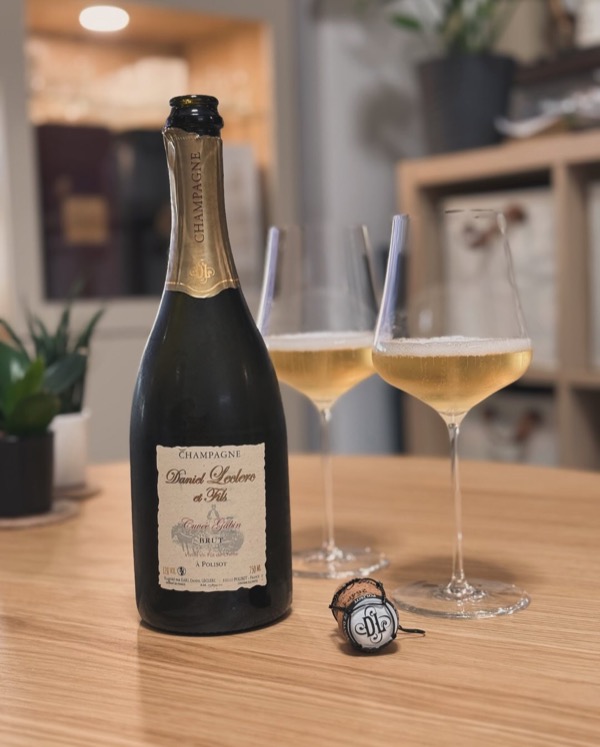
Manchmal öffnet man eine Flasche und weiß sofort: Das passt. Genau das hatte ich gestern mit der Cuvée Gabin Brut von @champagne.daniel.leclerc . Ein…
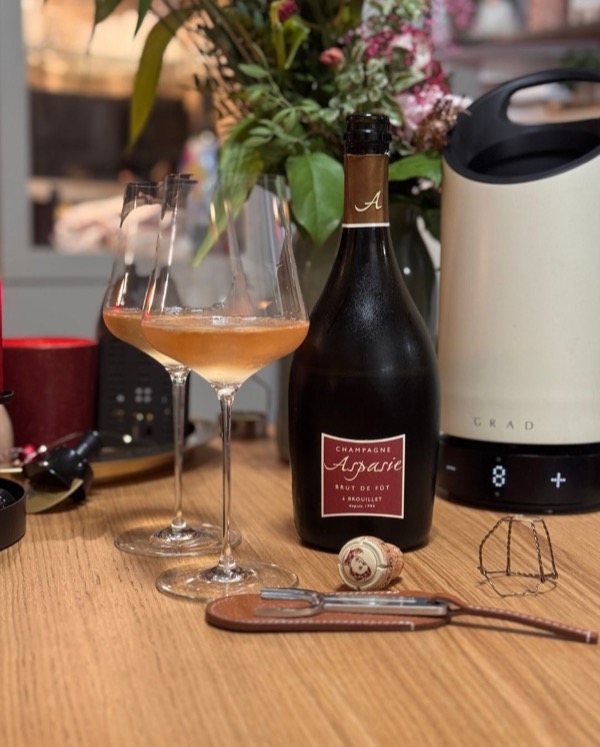
Der Brut de Fût von @champagneaspasie , den wir gestern geöffnet haben, ist warm, strukturiert, leicht würzig, mit dieser typischen Fassnote, die…
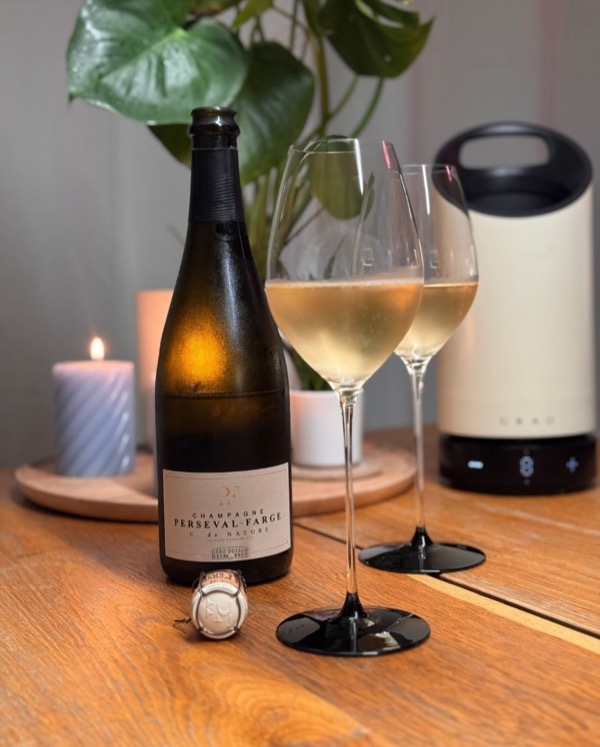
Das große Finale: Station 10 von 10. 🥂✨ Heute schließe ich ein Kapitel, das mich über die letzten Monate intensiv begleitet hat. Mit der Cuvée de…
Texture is an often underestimated aspect:
Light Texture:
- Elegant and delicate
- Typical for Blanc de Blancs
- High acid content
Fuller Texture:
- Creamy and substantial
- Often in Pinot-emphasized cuvées
- Longer lees aging
5. Length — The Measure of Quality
I measure length in "caudalies" (one caudalie = one second of aftertaste):
- Short: 1-3 caudalies (simple champagnes)
- Medium: 4-7 caudalies (good quality)
- Long: 8+ caudalies (great champagnes)
Palate vs. Nose — Different Worlds
While the nose mainly captures volatile aromatic components, the palate analyzes:
Only perceptible on the palate:
- Taste directions (sweet, sour, salty, bitter, umami)
- Texture and mouthfeel
- Temperature sensation
- Astringency and tannins
- Perlage quality
Different aromatic world: Retronasal perception (aromas that rise from the palate to the nose) often shows completely different nuances than direct nasal analysis.
Training the Palate — My Recommendations
Basic Exercises for Beginners
- Isolate taste directions: Test different sweetness levels, acid intensities
- Temperature training: Taste the same champagne at different temperatures
- Perlage comparison: Distinguish between different carbonation qualities
Advanced Techniques
Structure blind tastings:
- Systematically go through all three phases
- Make notes on each element
- Conduct comparative tastings
Memory training:
- Document flavor profiles
- Train recognition
- Establish reference champagnes
Practical Tips
- Neutral oral hygiene: No toothpaste before tasting
- Right amount: About 15-20ml for optimal palate coverage
- Take time: Keep each sip in your mouth for at least 10 seconds
- Progressive tasting: Taste from light to strong
My Posts About This
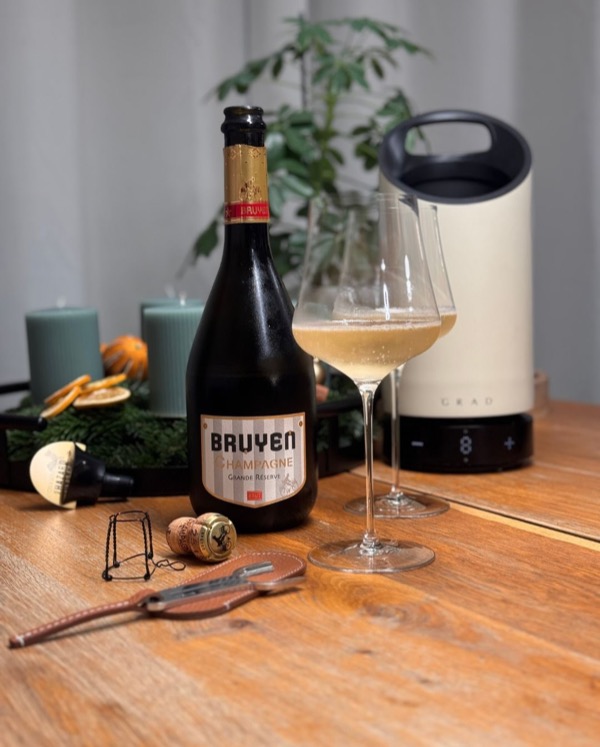
Heute der Grande Réserve von @champagnebruyen – ein 50/50-Blend aus Chardonnay und Pinot Noir, Jahrgang 2019, extra brut mit 4 g/l. Schon im Glas…
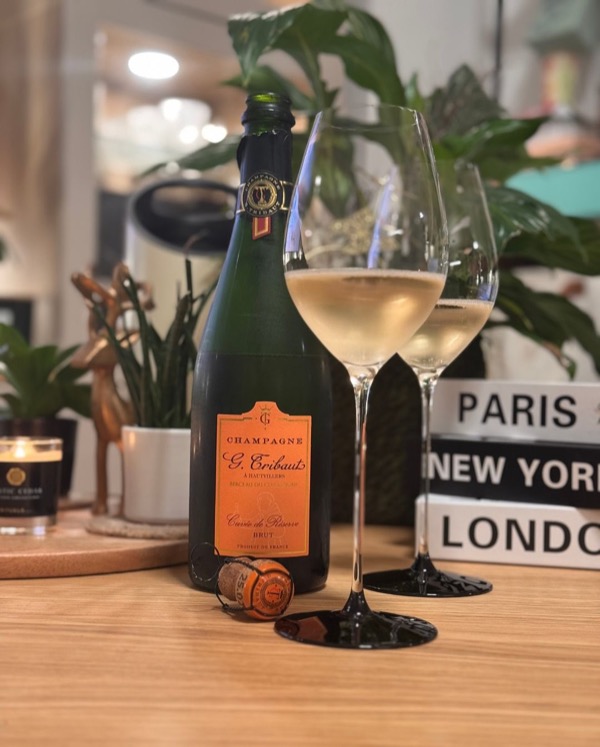
Sonntagabend, alles vorbereitet für die neue Woche – und zum Abschluss eine Flasche, die schon beim Öffnen nach Geschichten riecht:…
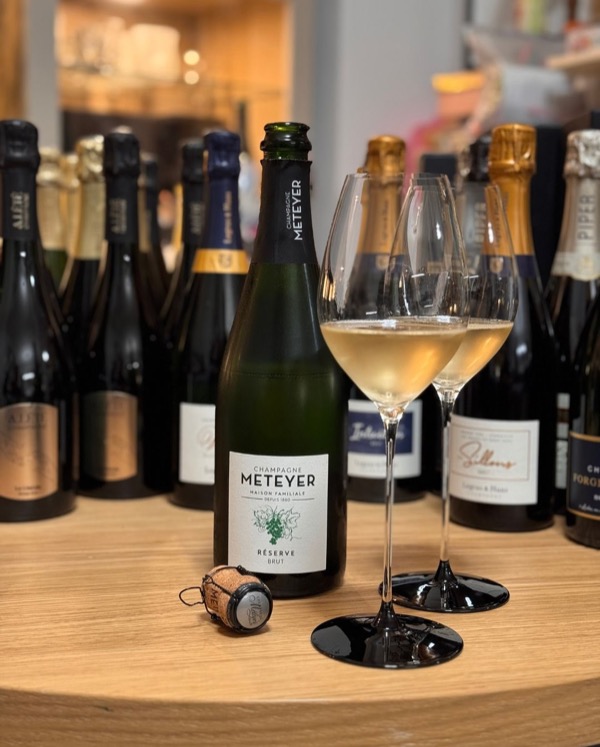
Gestern mal kein Experiment, sondern ein gemütlicher Abend, an dem ich die vielen Neuankömmlinge in meinem Weinkeller durchgeschaut habe – dazu ein…
Conclusion: The Palate as Truth-Finder
The Bouche is for me the ultimate truth-finder with champagne. While the nose can seduce, the palate ruthlessly exposes weaknesses. A great champagne must master all three phases and harmoniously unite the five evaluation criteria.
Training the palate is a lifelong process that expands with every bottle