Enough with "Just for Toasting"
Champagne is not an aperitif drink that you put away after the appetizer. It's one of the most versatile food companions of all. The combination of acidity, perlage, and complexity makes it the perfect partner for dishes where still wines fail.
I say this with complete conviction: If I could only drink one wine with a complete menu at a restaurant, it would be champagne. Not Burgundy, not Bordeaux, not Riesling. Champagne. And not as a compromise, but because it simply covers the broadest range of dishes.
Why Champagne Works with Food
- Acidity — Cuts through fat and creaminess
- Perlage — Cleanses the palate between bites
- Versatility — From Blanc de Blancs to Rosé de Saignée: The right style for every dish
- Umami-friendly — Champagne harmonizes with umami better than most wines
These four properties together make champagne something special. The acidity works like a squeeze of lemon on a fatty dish — it brings freshness and lifts the flavors. The perlage does something no still wine can: it wipes the palate clean, like a reset button between each bite. And the umami-friendliness — a result of autolysis — means champagne works where red wine fails: with soy sauce, Parmesan, aged meat, mushrooms.
The Champagne Food Guide
| Dish | Best Champagne Style |
|---|---|
| Oysters | Brut Nature / Extra Brut, Blanc de Blancs |
| Sashimi | Extra Brut, Blanc de Blancs |
| Seafood | Brut, Blanc de Blancs |
| Smoked Salmon | Rosé |
| Soft Cheese | Brut, Vintage |
| Hard Cheese | Blanc de Noirs, Vintage |
| Poultry | Vintage, Prestige Cuvée |
| Lamb | Rosé de Saignée, Blanc de Noirs |
| Asian Cuisine | Demi-Sec, Rosé |
| Fruit Desserts | Demi-Sec |
| Chocolate | Rosé de Saignée |
The Classics in Detail
Oysters and Blanc de Blancs
The dream couple. The salty sea breeze of the oyster meets the chalky minerality of a Blanc de Blancs from the Côte des Blancs — that's pure Champagne. An Extra Brut or Brut Nature works best because the absence of dosage doesn't mask the salinity of the oysters. Too sweet a champagne kills the oyster.
Cheese: The Underrated Pairing
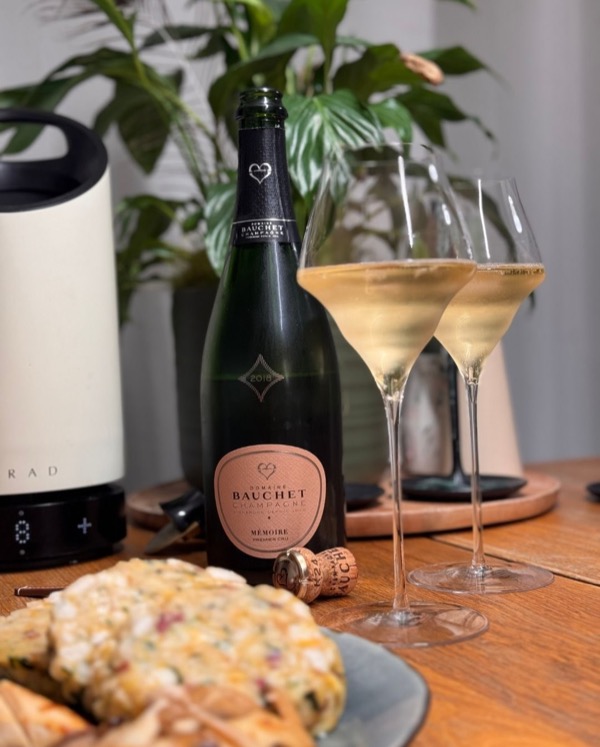
Der Mémoire 2018 von @domainebauchet schien mir ein Champagner zu sein, der ein passendes Pairing verdient hat. Daher habe ich ihn gestern zu…
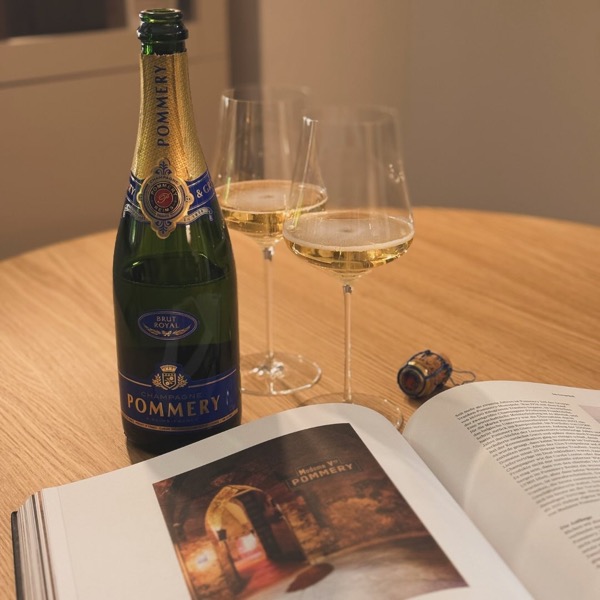
Manchmal sind es die spontanen Ideen, die die besten Genussmomente schaffen. Heute habe ich den @champagnepommery Brut Royal geöffnet – ein…
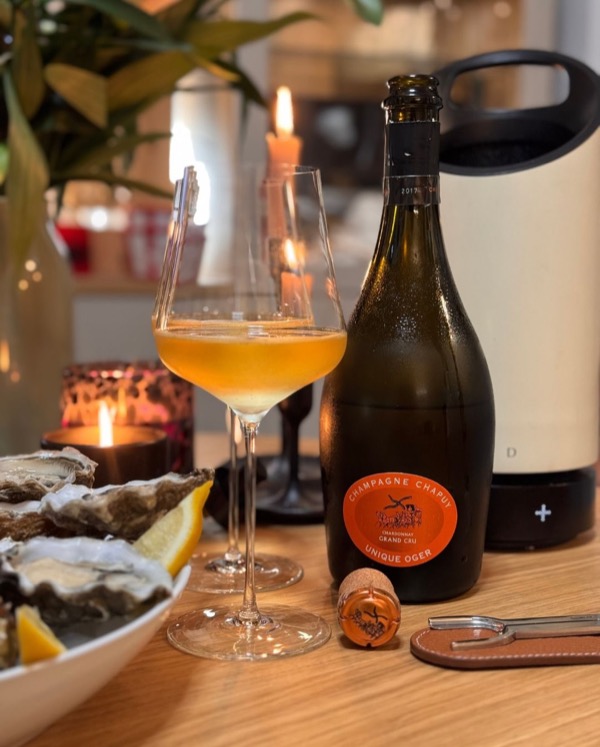
Wenn es um die Kombination mit frischen Austern geht, ist Reinheit für mich mittlerweile das oberste Gebot. Heute im Glas: Der…
In France, they drink champagne with cheese — and that's no coincidence. Soft cheese like Brie or Chaource (which even comes from Champagne) harmonizes beautifully with a Brut NV. The creamy richness of the cheese is broken up by the acidity and perlage. Harder cheese like Comté or Parmigiano demands a more robust champagne — Blanc de Noirs or an aged vintage.
Asian Cuisine
This is where it gets really exciting. Most red wines fail with soy sauce, ginger, and chili — but champagne doesn't. A Demi-Sec with spicy Thai curry is a revelation: the residual sweetness balances the heat, the perlage cools the palate, the acidity keeps everything in balance. With sushi and dim sum, champagne is also a dream.
Poultry and Prestige Cuvées
A Poulet de Bresse with an aged vintage or Prestige Cuvée — that's gastronomy at the highest level. The creaminess of the champagne envelops the tender meat, the autolysis aromas (toast, brioche) harmonize with the roasted flavors of the poultry.
What Doesn't Work
Despite all its versatility, champagne has its limits:
- Heavy roasts with dark sauce — Too much power for most champagnes
- Heavily spiced dishes — Garlic and champagne are not friends
- Vinegar-heavy salads — The acidity multiplies unpleasantly
- Very sweet desserts — Except for Demi-Sec, no champagne has enough sugar to keep up
My Personal Ritual
When I have guests, I always serve champagne throughout the entire meal. I start with a fresh Brut as an aperitif, move to a Blanc de Blancs for the appetizer, open a vintage or Blanc de Noirs for the main course, and finish with a rosé for cheese. This isn't luxury — it's a different way to experience wine with food.
Champagne with food is not an extravagance — it's a revelation. Anyone who has experienced a well-chosen champagne with a dish will never drink "just" still wine with it again.
Posts
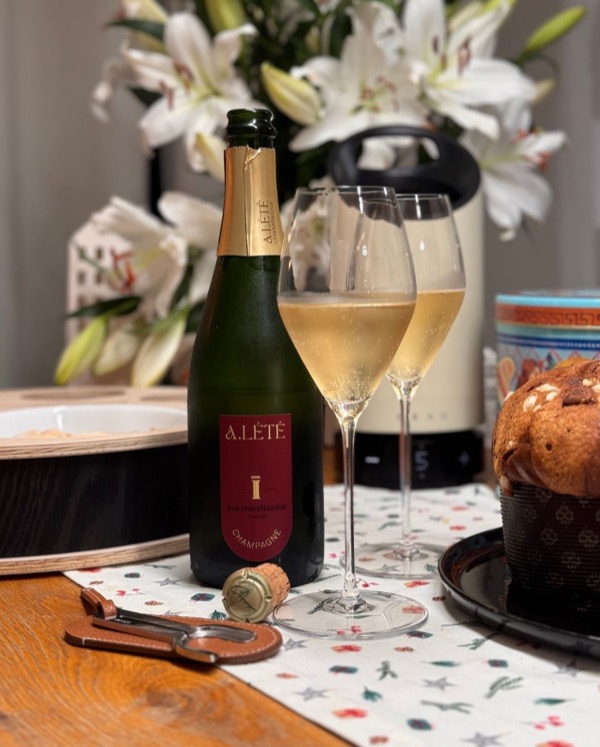
Wie jedes Jahr bemühe ich mich, über die Feiertage eine gute Panettone im Haus zu haben. Dieses Jahr selbstverständlich mit einem passenden Pairing…
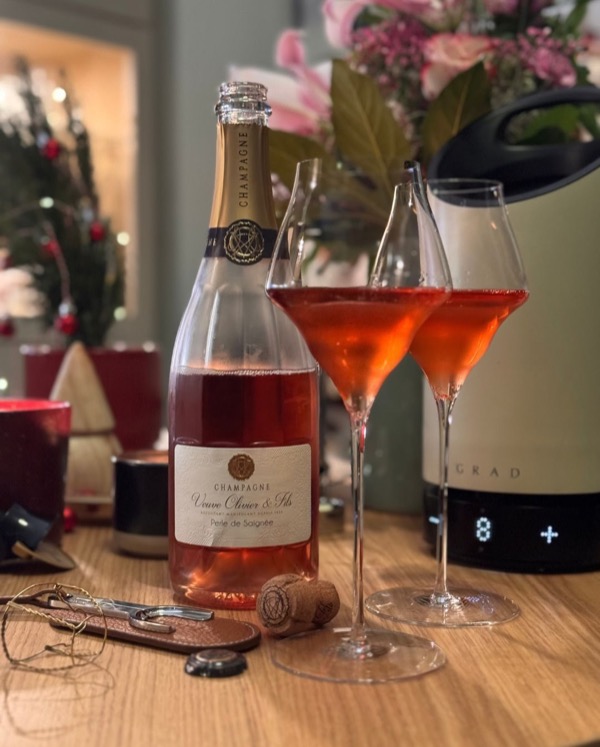
Die Farbe verrät’s schon: Rosé de Saignée – 14 Stunden Maischekontakt. Mehr Struktur, mehr Saft, ein kleines bisschen Tannin – und genau das macht…
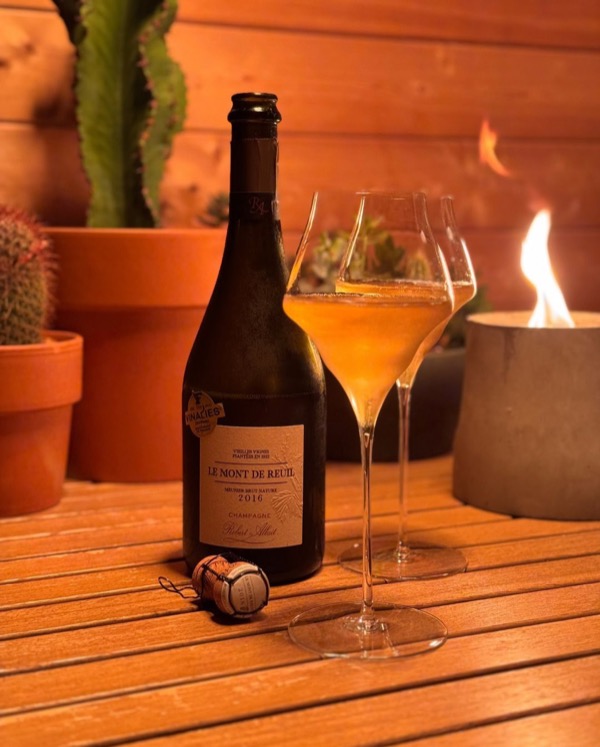
Manche Flaschen begleiten einen immer wieder – egal ob drinnen oder draußen, allein oder mit Freunden. Der Le Mont de Reuil 2016 von…