A Tradition Returns
Before the invention of the steel tank, all Champagne base wines were fermented and aged in wooden barrels. Then came the steel tank — clean, controllable, neutral. The oak barrel almost completely disappeared.
Today it's experiencing a renaissance. More and more winemakers are deliberately returning to oak barrels — not out of nostalgia, but because wood contributes something to champagne that steel cannot.
The story is actually ironic. In the 1960s and 70s, the oak barrel was considered backward. Modern champagne production meant steel tanks — hygienic, temperature-controlled, repeatable. The major houses invested millions in steel tank facilities. The oak barrel became a symbol of the past. And today? Today it's once again a sign of quality and craftsmanship.
What Oak Barrel Aging Achieves
- Micro-oxygenation — Oxygen reaches the wine through the wood's pores, promoting complexity
- Texture — Creamier, denser, fuller mouthfeel
- Aromas — Vanilla, toast, spices (with new barrels), nutty notes (with old barrels)
- Tannin — Minimal tannin release provides structure
- Aging potential — Oak barrel champagnes are often more age-worthy
The most important effect is micro-oxygenation. Wood is porous — it allows tiny amounts of oxygen to reach the wine at a controlled, slow pace. This contact promotes chemical reactions that make the wine more complex. Tannins polymerize (become softer), aromas develop, texture becomes more supple. This doesn't happen in steel tanks — there the wine ages reductively, without oxygen.
The Different Barrel Types
Not every barrel is the same. Various formats are used in Champagne:
- Barrique (225 liters) — The Bordeaux barrel. Small volume, high surface-to-wine ratio. Strong oak influence.
- Pièce (205 liters) — The Burgundy barrel. Slightly smaller than the barrique, traditionally used in Champagne.
- Demi-Muid (500-600 liters) — Twice as large as a barrique. Less oak influence, more texture.
- Foudre (1000-5000 liters) — Large barrel. Minimal oak flavor, mainly texture and micro-oxygenation. Krug and Bollinger work with these barrels.
The choice of format is a matter of style. Those wanting distinct oak character use the barrique. Those seeking only textural benefits without changing the flavor use large old foudres.
New vs. Old
| New Barrel (1-3 years) | Old Barrel (5+ years) |
|---|---|
| Distinct oak notes | Barely any oak flavor |
| Vanilla, toasted aromas | Nutty, oxidative |
| Risk of over-oaking | Purely textural |
| Small houses, Prestige Cuvées | Krug, Bollinger (large old barrels) |
The distinction between new and old wood is crucial. A new barrique releases massive amounts of aromatic compounds in its first years: vanillin, eugenol (clove), lactones (coconut), furfural (toast). After three to five years of use, these compounds are largely extracted, and the barrel only works texturally — providing micro-oxygenation and creaminess without dominating the flavor.
Who Works with Wood?
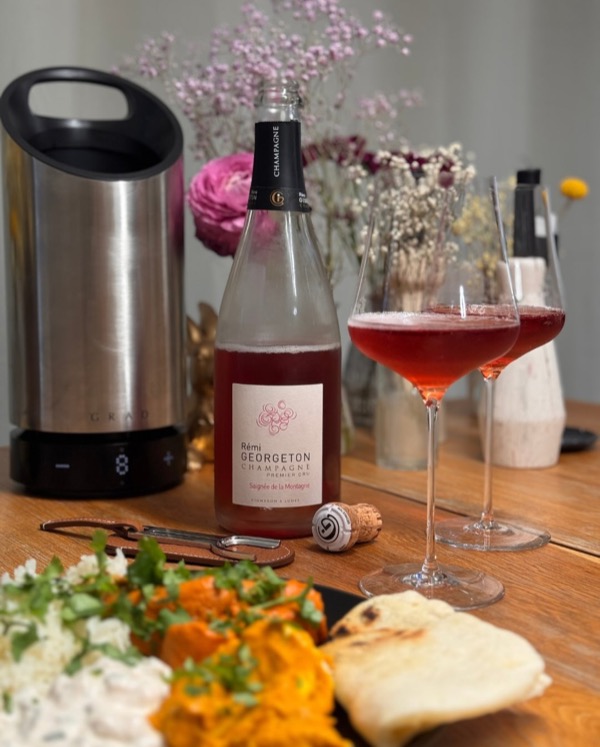
Bei uns kommt ja regelmäßig indisch auf den Tisch, und dieses Mal gab es das volle Wohlfühl-Programm: Butter Chicken, Royal Paneer, erfrischendes…
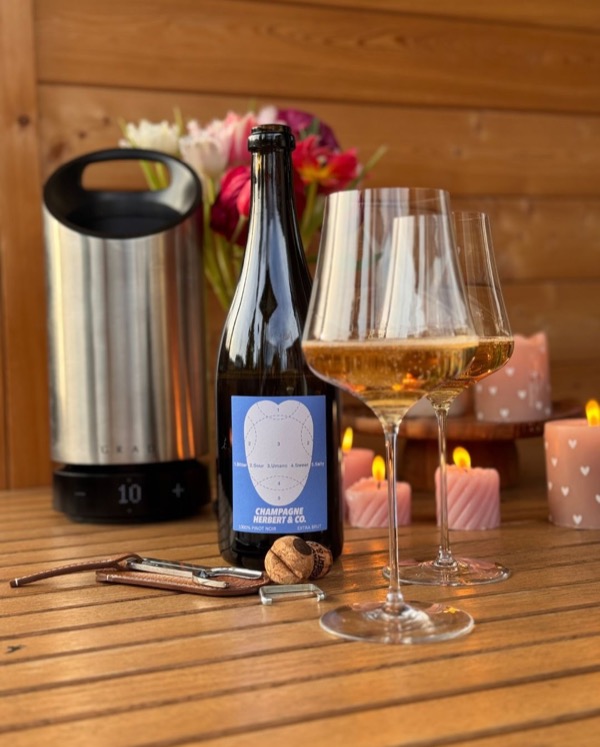
Heute gibts den 1000% Pinot Noir von @champagne_herbertandco . Von diesem kleinen, feinen Haus (geführt von @thomas___herbert und @charlottehbrt_ in…
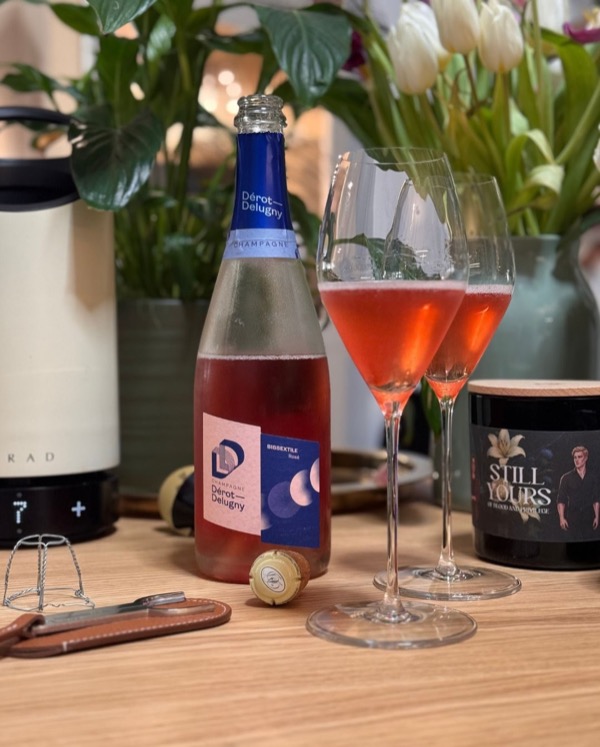
Hier habe ich einen ganz besonderen Rosé göffnet: den „Bissextile“ von @derotdelugny . Der Name ist hier Programm, denn dieser Rosé d’Assemblage…
The most famous oak barrel advocates in Champagne:
- Krug — All base wines are fermented in small old oak barrels. You don't taste the wood explicitly, but it gives the Krug style its unique texture.
- Bollinger — Fermentation and aging in old barrels. The Bollinger character — broad, nutty, substantial — is unthinkable without wood.
- Alfred Gratien — One of the few houses that never switched to steel tanks. All base wines in oak barrels.
- Anselme Selosse — The winemaker who virtually single-handedly triggered the oak barrel renaissance in Champagne. His champagnes from Avize, fermented in new barrels in Burgundian style, have influenced the entire industry.
When Wood Disrupts
Oak barrels are not an automatic guarantee of quality. In the wrong hands, they produce champagnes that taste like vanilla extract and sawdust. This happens especially when:
- Too much new wood is used
- The base wine is too thin to carry the oak influence
- Barrel fermentation isn't properly controlled
- Barrels aren't maintained cleanly (Brettanomyces risk)
I've tasted champagnes where the oak overwhelmed the wine. The perlage was almost irrelevant because you could only taste vanilla and smoke. That's not champagne artistry, that's wood extraction.
Wood and Terroir
The most intriguing question is: Does oak obscure terroir or enhance it? The answer depends on the measure. Subtle oak use — old barrels, large formats — can refine texture and give terroir an additional dimension. Aggressive oak use — new barriques, small formats — covers everything with vanilla and toast.
Oak barrels in Champagne are a double-edged sword. In the right hands, they bring depth and complexity. In the wrong hands, they transform champagne into perfumed oak extract. The art lies in the measure.
Posts
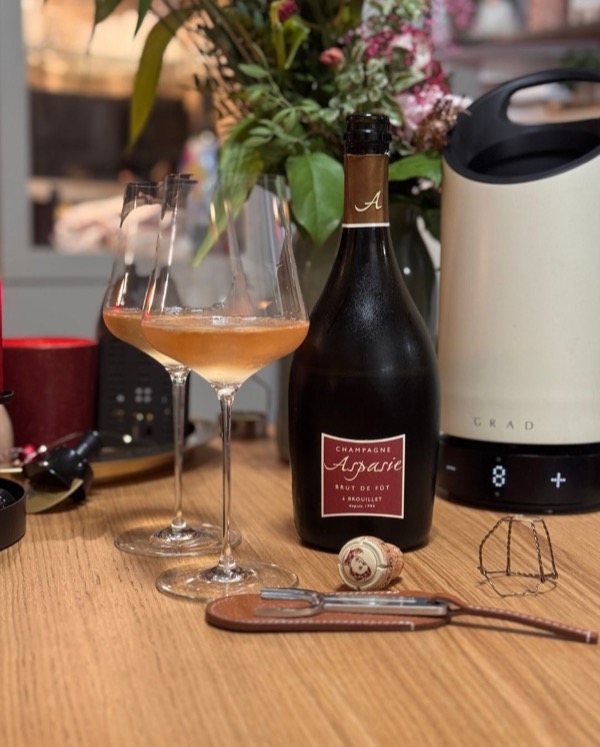
Der Brut de Fût von @champagneaspasie , den wir gestern geöffnet haben, ist warm, strukturiert, leicht würzig, mit dieser typischen Fassnote, die…
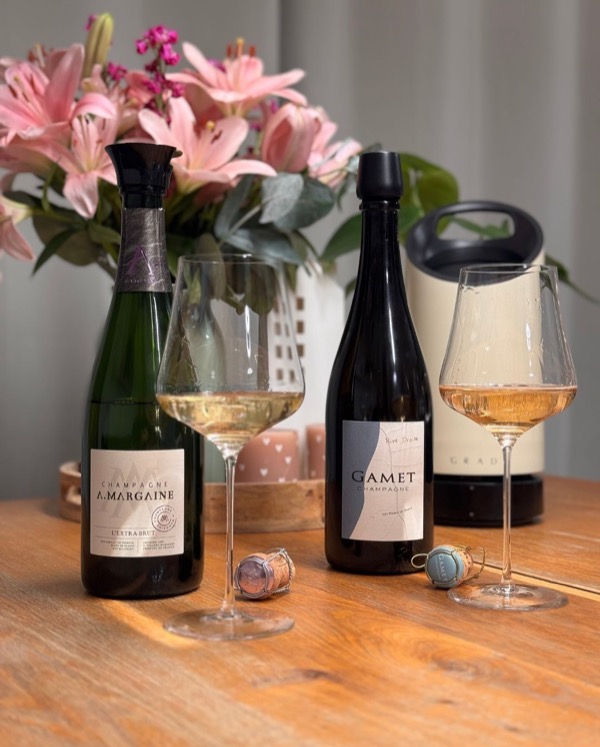
Manchmal ist es spannend, zwei Welten direkt nebeneinander zu erleben – ganz ohne Filter, ganz ohne Show. Vorgestern Abend, bei der…
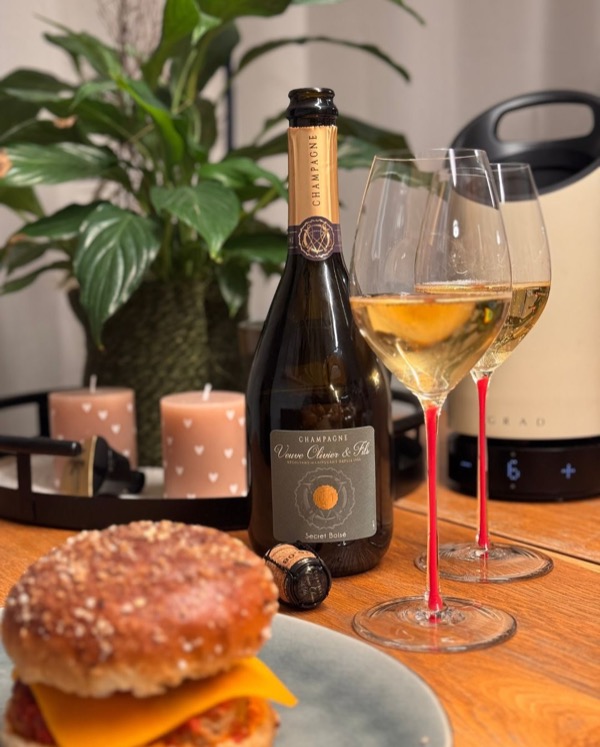
Aus den übrig gebliebenen Fleischbällchen vom Mittagessen wurden gestern Abend spontane Burger gebaut – mediterrane Meatballs, eine Scheibe Cheddar,…