When I tasted my first truly great champagne years ago, I was fascinated by the spectacle in the glass: Countless tiny bubbles rose elegantly to the surface, forming perfect pearl chains and transforming the golden beverage into a living work of art. What I didn't know then: This perlage reveals more about the quality of a champagne than most wine lovers realize.
What makes a perfect perlage?
I recognize high-quality perlage by three crucial characteristics: It is fine, consistent, and persistent. The ideal champagne bubbles are as tiny as pinpricks – about 0.5 to 1 millimeter in diameter. They don't rise chaotically, but form regular, almost hypnotic chains from the bottom of the glass to the surface.
Persistence is the third quality marker: With a great champagne, I can observe the perlage for 10 to 15 minutes without it diminishing. Coarse, irregular, or quickly disappearing bubbles, however, are warning signs of inferior quality or improper storage.
Why bubble size is a quality indicator
The size of the bubbles is directly related to production. During the traditional Méthode Champenoise, tiny CO₂ bubbles form during the second fermentation in the bottle, dissolving slowly and evenly in the wine. The longer the lees aging lasts and the more carefully the process is monitored, the finer the resulting perlage becomes.
Large, coarse bubbles often indicate:
- Too short aging time on the lees
- Improper temperature control
- Inferior tank fermentation method instead of bottle fermentation
- Too warm serving temperature
The crucial influence of the glass
This is where the moussing point comes into play – a term I know from my reading about the Champagne region. These are tiny imperfections or scratches on the glass bottom that serve as nucleation sites for the CO₂ bubbles. Without these points, even the best champagne would stand almost bubble-free in the glass.
The right glass choice for optimal perlage:
My posts about this
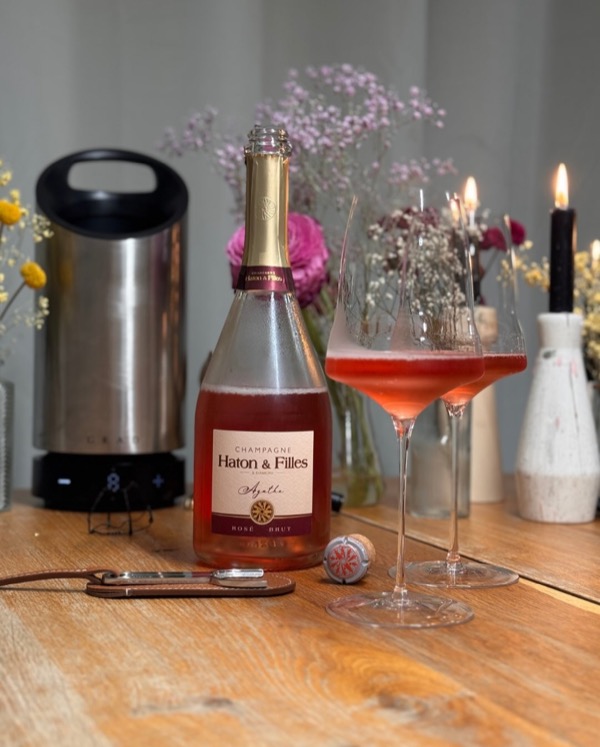
Nach den fantastischen Menüs und Restaurant-Besuchen der letzten Tage tut es auch mal wieder gut, es sich in den eigenen vier Wänden gemütlich zu…
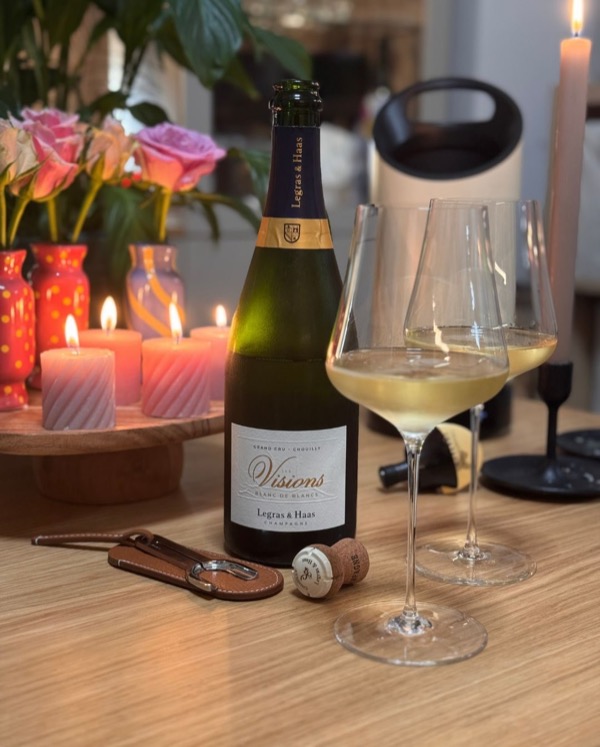
Chouilly ist in der Côte des Blancs oft für seine etwas „großzügigeren“ und cremigeren Chardonnays bekannt. Aber @legras_haas zeigt mit dem „Les…
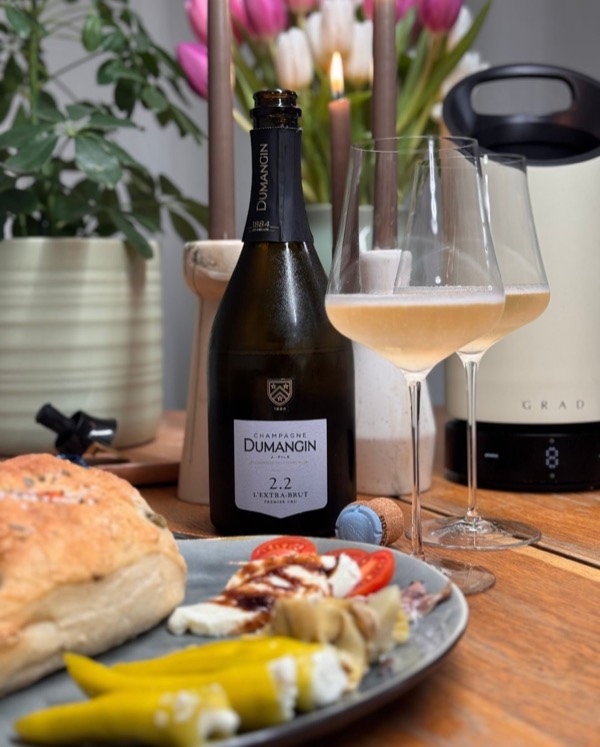
Heute mal ein mediterraner Kurzurlaub mit Oliven-Focaccia, Sardellen, eingelegten Artischocken, gefüllten Paprika und dieser Mix aus Tomate,…
| Glass type | Perlage quality | Why? |
|---|---|---|
| Flûte | Excellent | Slender shape concentrates bubbles, little surface area |
| Tulip glass | Very good | Ideal for aroma protection and perlage observation |
| Coupe | Poor | Too much surface area, CO₂ escapes too quickly |
| White wine glass | Satisfactory | Functional, but not optimal |
The cleanliness of the glass is crucial: detergent residues or lip traces can completely destroy the perlage. I always rinse my champagne glasses only with hot water and dry them with lint-free cloths.
Perlage, mousse, and cordon – the subtle differences
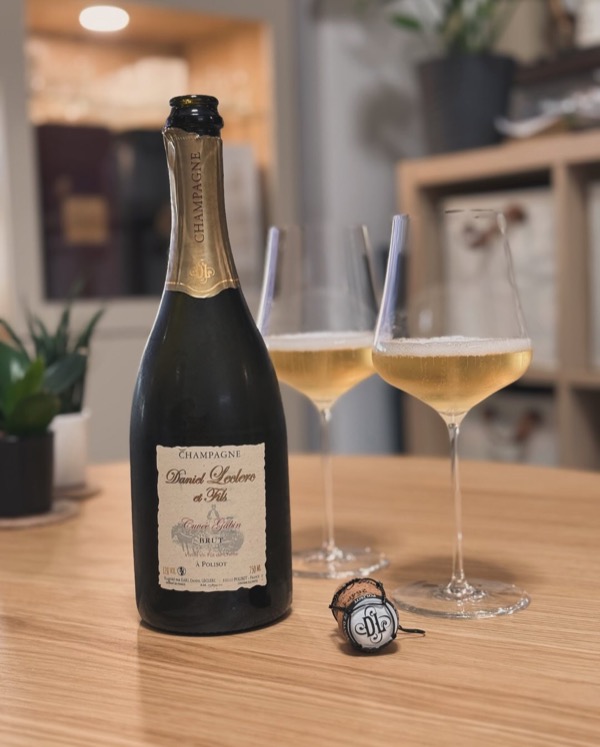
Manchmal öffnet man eine Flasche und weiß sofort: Das passt. Genau das hatte ich gestern mit der Cuvée Gabin Brut von @champagne.daniel.leclerc . Ein…
Alles beginnt jetzt! 🥂 Wirklich begonnen hat alles aber vor rund drei Jahren, als ich zum ersten Mal bewusst einen Champagner genießen durfte. Wie…
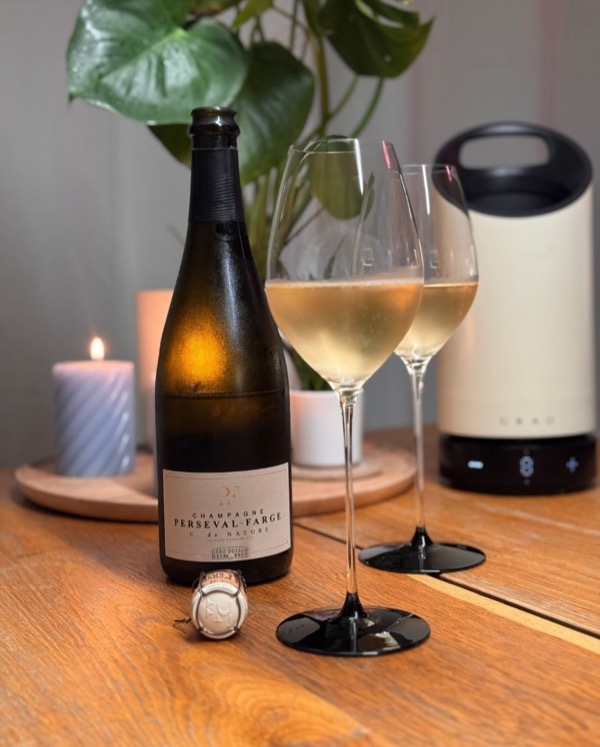
Das große Finale: Station 10 von 10. 🥂✨ Heute schließe ich ein Kapitel, das mich über die letzten Monate intensiv begleitet hat. Mit der Cuvée de…
These three terms describe different aspects of carbon dioxide in champagne:
Perlage: The rising CO₂ bubbles in the glass Mousse: The foam that forms on the surface Cordon: The foam ring at the glass rim
A fine mousse should be creamy and long-lasting, not coarse or quickly collapsing. The cordon appears as a stable ring of fine bubbles at the glass rim – a sign of high quality and optimal serving temperature.
What can be read from the perlage
What I've learned so far is that you can discover surprisingly much about a champagne from the perlage:
Age and maturity
- Young champagnes: Lively, very fine perlage
- Aged champagnes: More elegant, slightly less intense perlage
- Over-aged wines: Weak, irregular perlage
Production quality
A perfect perlage tells me that the winemaker:
- Practiced sufficiently long lees aging
- Performed riddage carefully
- Used optimal tirage dosage
- Stored the bottles correctly
Service conditions
The perlage is also a temperature gauge: at too warm temperatures (over 8°C), the bubbles become coarser and rise faster. Perfect serving temperature is 6-8°C.
My conclusion about perlage
Perlage is far more than just optical entertainment – it's a fascinating indicator of quality, craftsmanship, and service competence. A champagne with perfect perlage shows me that everyone involved – from winemaker to sommelier – understands their craft.
The next time you have a glass of champagne, take a moment: observe the little bubbles, how they dance and rise. They tell a story of tradition, skill, and passion – and you can taste that in every sip.