Powerful and Inconsistent
A hot, dry summer promised much — but rain at harvest time threw many winemakers' plans into disarray. Those who harvested early had excellent material. Those who waited risked rot. Quality varied dramatically between producers.
Character and Development
The best champagnes from 1983 were powerful, extract-rich, and had a robust structure that aged well. Pinot Noir from the Montagne de Reims particularly benefited from the summer heat — the wines had color, body, and dark fruit.
The weaker lots suffered from the harvest rain: diluted aromas, botrytis problems, rapid oxidation. As is often the case with inconsistent vintages: The producer makes the difference. A Krug 1983 or Bollinger Grande Année 1983 were excellent. A simple Brut from the cooperative, however, was often disappointing.
The vintage teaches an important lesson: In Champagne, it's not only the weather that determines quality — but the harvest timing, selection rigor, and cellar technique. Two winemakers in the same village can produce completely different wines in a year like 1983.
No Personal Tastings Yet
I have not yet tasted any champagne from the 1983 vintage. This is partly due to availability, partly because not every vintage comes to market as a Millésimé. Many producers primarily use the base wines from 1983 for their non-vintage assemblages — which doesn't mean the quality was poor. A vintage doesn't need to be declared as a Millésimé to be good.
Should the opportunity arise to open a 1983, this post will be supplemented with personal impressions.
Posts
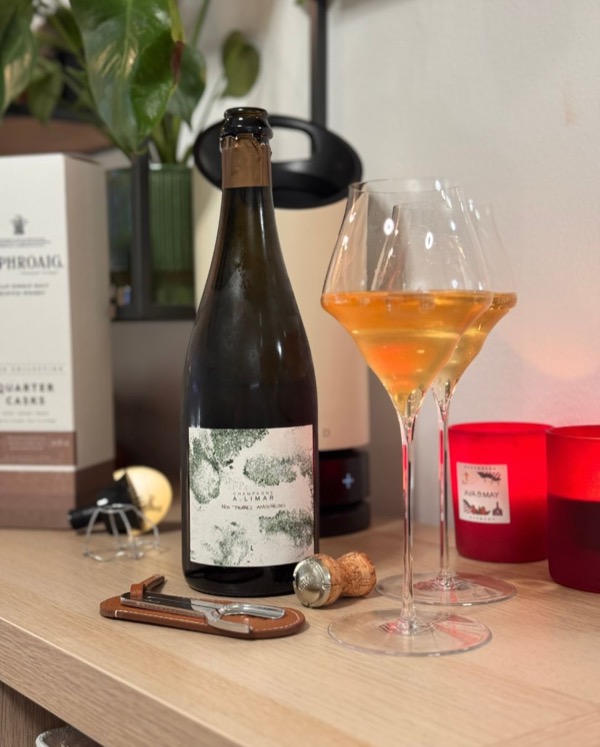
Der @domainealimar – Nos Terres Amoureuses war irgendwie besonders. Besonders gut, aber auch nicht ganz „einfach“. Alexis (und Jeanne) Limar…
| Vintage | 1983 |
| Character | Powerful and inconsistent |
| Champagnes Tasted | 0 |