Anyone who has ever had a truly great champagne in their glass knows this fascinating phenomenon: at the upper rim of the glass, a delicate ring of tiny pearls forms - the so-called Cordon. This elegant pearl necklace is far more than just a visual highlight. It is the silent calling card of champagne and reveals surprisingly much about what we are drinking.
What exactly is the Cordon?
The term "Cordon" comes from French and literally means "cord" or "band." In the champagne context, it describes the characteristic ring of fine carbon dioxide pearls that forms at the meniscus - the liquid surface at the glass rim.
These tiny bubbles arise from the special surface tension of champagne in combination with the glass. They arrange themselves as if on an invisible pearl necklace and create this distinctive ring, often several millimeters wide, around the entire glass.
Why is the Cordon considered a quality indicator?
As an experienced champagne lover, I watch for the Cordon at every tasting - and for good reason. A pronounced, uniform Cordon is actually a reliable indicator of champagne quality.
The science behind it
The formation of a stable Cordon depends on several factors:
Carbon dioxide integration: High-quality champagne is characterized by perfectly integrated carbon dioxide. The CO₂ molecules are optimally dissolved in the wine through the long second fermentation and maturation. This harmonious integration enables the formation of a uniform Cordon.
Alcohol content and residual sugar: The ratio of alcohol, acid, and residual sugar influences the surface tension of champagne. Premium champagnes with their balanced harmony create ideal conditions for a stable pearl crown.
Winemaking: Carefully crafted champagnes with long lees aging develop more complex proteins and polyphenols that contribute to Cordon stability.
The influence of glass quality
Not only the champagne itself, but also the glass plays a crucial role in Cordon formation. This shows why true champagne enthusiasts place so much value on the right glass.
Glass surface and wetting
My posts about this
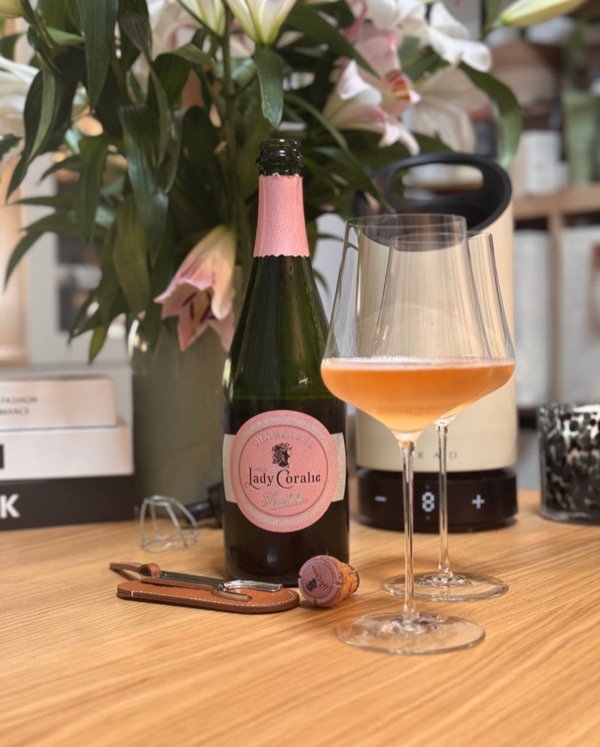
Heute habe ich eine echte Besonderheit aus der „Collector“ Linie von @champagne_mathelin im Glas: Die Cuvée „Lady Coralie“. Das Spannende an diesem…
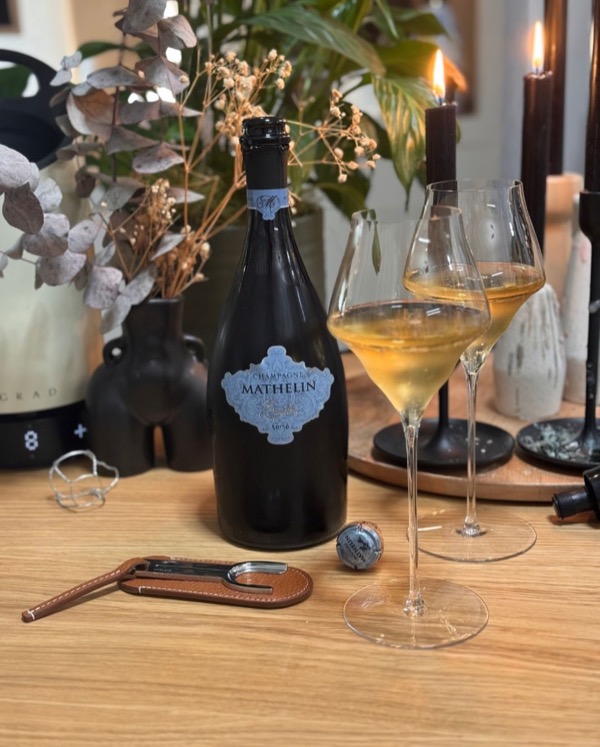
Manchmal sagt ein minimalistisches Etikett schon alles: Beim „Équilibre“ von @champagne_mathelin ist der Name absolutes Programm! Auf der Flasche…

Das perfekte Match für unser heutiges, maritimes Festmahl! 🌊🥂 Bei uns gab es heute ein absolut grandioses, spontanes Seafood-Lineup: Kurz…
| Glass Quality | Cordon Formation | Characteristics |
|---|---|---|
| Machine-made glass | Irregular | Micro-roughness disturbs the pearls |
| Mouth-blown glass | Very good | Smooth surface, optimal wetting |
| Lead crystal | Excellent | Perfect surface tension |
A high-quality, mouth-blown champagne glass with its smooth surface allows champagne to form a perfect Cordon. Cheap glasses with rough surfaces, however, disturb uniform pearl formation.
What the Cordon reveals about age and quality
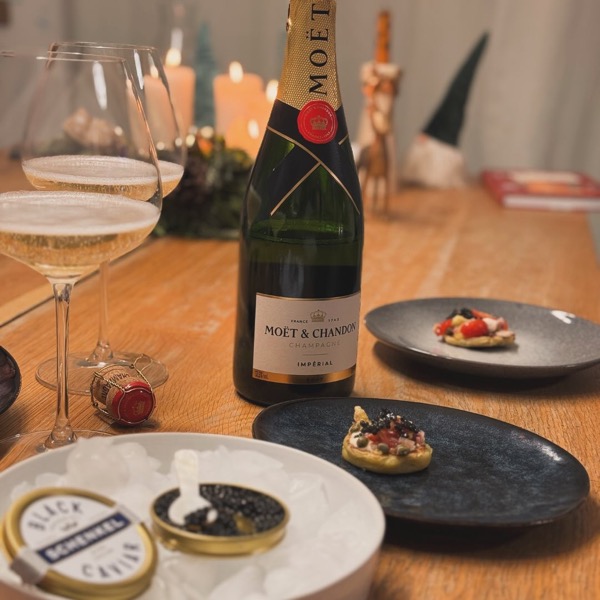
Manchmal braucht es keine große Inszenierung, um echten Luxus zu erleben – nur einen guten Black Imperial Stör Kaviar von @schenkeldelikatessen ,…

Der Vincent Bliard – Les Fondamentaux, den wir gestern geöffnet haben, ist genau die Art Champagner, die man nicht zwingend analysieren muss, während…
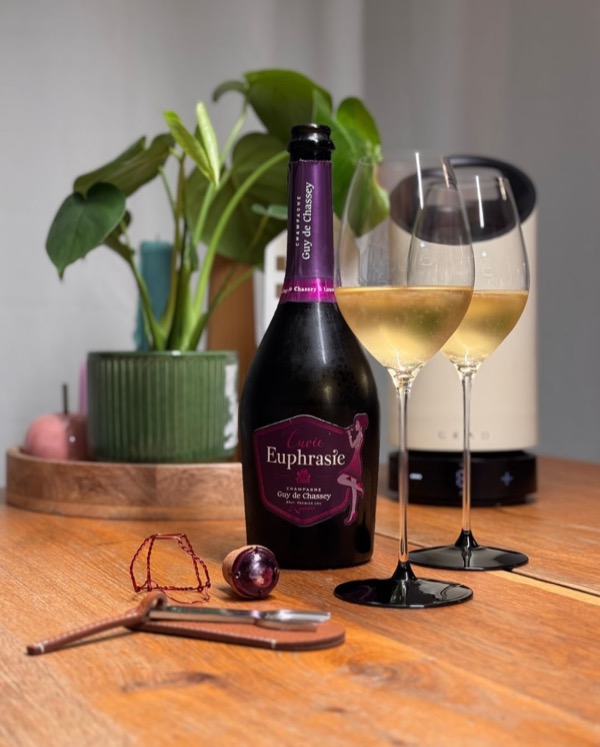
In meiner Journey merke ich jetzt nach fast einem Jahr immer wieder, wie normal es für mich geworden ist, Champagner zu trinken. Deswegen probiere…
Young champagnes vs. Mature vintages
In young champagnes, the Cordon is often particularly pronounced and persistent. The high carbon dioxide concentration ensures continuous pearl formation. However, as champagne ages, the picture changes:
Young champagnes (0-3 years):
- Intense, stable Cordon
- Uniform, lively pearls
- High CO₂ concentration
Mature champagnes (5-10 years):
- Finer, more elegant Cordon
- Less intense but persistent pearls
- Harmoniously integrated carbon dioxide
Very old champagnes (15+ years):
- Delicate, often intermittent Cordon
- Very fine pearls
- Low but noble CO₂ concentration
Practical observation tips
How do I recognize a quality Cordon?
At your next champagne enjoyment, you should watch for these characteristics:
- Uniformity: A high-quality Cordon extends uniformly around the entire glass
- Persistence: The pearls form continuously, even after swirling
- Size: Fine, uniformly sized pearls are a quality marker
- Stability: The Cordon should remain stable for several minutes
Common misconceptions
Many believe that a missing or weak Cordon automatically means inferior quality. This is not always true. With very old champagnes or those with low pressure, the Cordon can be weaker without diminishing quality.
The Cordon as a pleasure ritual
For me, observing the Cordon has long become an integral part of champagne tasting. Those few seconds when the pearl necklace forms at the glass rim are like a silent dialogue between champagne and taster.
The Cordon tells the story of champagne: from the care in production through years of maturation to the perfect moment of enjoyment. It is a fascinating example of how physics, chemistry, and craftsmanship unite in a single, elegant detail.
Next time you have champagne, take a moment to observe the Cordon. This small pearl necklace at the glass rim will tell you more about your champagne than you might have expected.