Canard-Duchêne
I've tasted 3 champagnes from Canard-Duchêne -- a house that makes quite ambitious champagnes with its Charles VII line. Based in the Côte des Blancs and Montagne de Reims, the house has access to first-class Chardonnay and Pinot Noir vineyards. The question is: Does it use this potential?
Terroir and Location
The combination of Côte des Blancs and Montagne de Reims offers the best of both worlds: mineral elegance from Chardonnay and powerful structure from Pinot Noir. The chalk soils of both regions give the base wines a precision and depth that shows in the glass -- at least in the more premium cuvées.
Philosophy and Style
Canard-Duchêne operates somewhere between a large house and an ambitious producer. The Charles VII line shows that quality is definitely possible here, while the Grand Rosé is more positioned in the entry-level range. The style tends toward accessibility -- friendly, inviting champagnes that don't overwhelm. That's not a criticism: not every champagne needs to be an intellectual exercise.
The Range
Three cuvées: two from the Charles VII line (Blanc de Blancs and Grande Cuvée) and the Grand Rosé as an entry-level product. The range shows different levels of ambition.
The Cuvées in Detail
Charles VII Blanc de Blancs
Soft, creamy and floral with fresh citrus notes and elegant bubbles. Not a challenging champagne, but pleasant and inviting. It works excellently with salty appetizers, cheese and olives. The 100% Chardonnay shows itself here from its accessible side -- no chalky-mineral austerity, but charming lightness.
Compared to varietal Blanc de Blancs from the Côte des Blancs, the Charles VII lacks some depth and complexity, but for relaxed enjoyment this is a solid champagne.
My tip: Perfect as an aperitif with a cheese board featuring mild varieties.
Type: Rosé | Grape varieties: Chardonnay
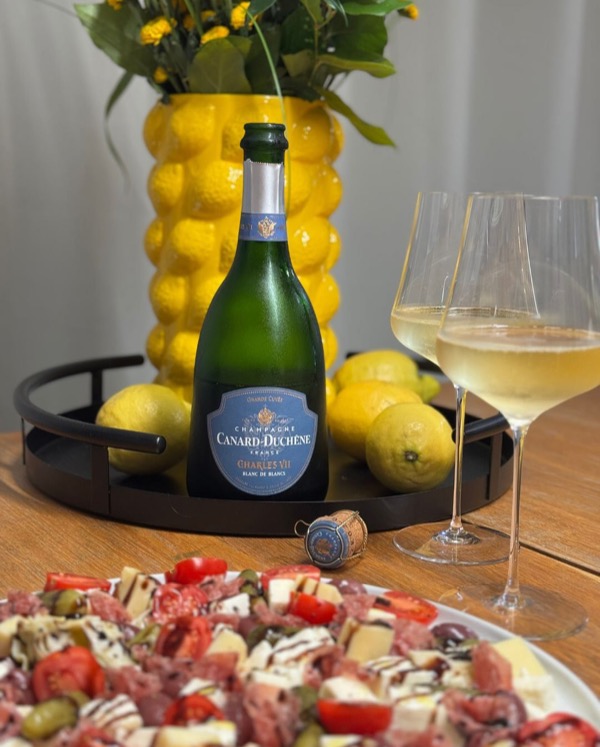
Manchmal braucht es gar nicht viel: Ein entspannter Abend, ein kleiner Hunger – und ein Kühlschrank, der gut vorbereitet ist. Gestern gab’s eine…
Grand Rosé
Fruity notes of strawberries and raspberries with pleasant freshness -- this is the uncomplicated entry point at Canard-Duchêne. Light, accessible and without great ambitions. It works well as a summer aperitif or with a light salad, but shouldn't be overrated. For the price, there are admittedly alternatives with more character.
Type: Rosé
Charles VII Grande Cuvée Brut
A balanced cuvée of Pinot Noir, Pinot Meunier and Chardonnay with notes of fresh fruit and a hint of brioche. The most ambitious champagne in the range, showing what Canard-Duchêne can do when the three grape varieties come together harmoniously. More elegant than the Grand Rosé and more complex than the Blanc de Blancs.
My tip: The Grande Cuvée is the champagne that best represents the house. Anyone wanting to give Canard-Duchêne a chance should start here.
Type: Brut | Vintage: 2025 | Grape varieties: Chardonnay, Pinot Noir, Pinot Meunier
What makes Canard-Duchêne special?
Honestly: Canard-Duchêne is not a house that completely convinced me. The champagnes are solid and accessible, but they lack that final spark that makes good into great. The Charles VII line shows potential, the Grand Rosé level is rather average. For newcomers to the champagne world, however, the house is an acceptable option.
My Tastings
Manchmal braucht es gar nicht viel: Ein entspannter Abend, ein kleiner Hunger – und ein Kühlschrank, der gut vorbereitet ist. Gestern gab’s eine…
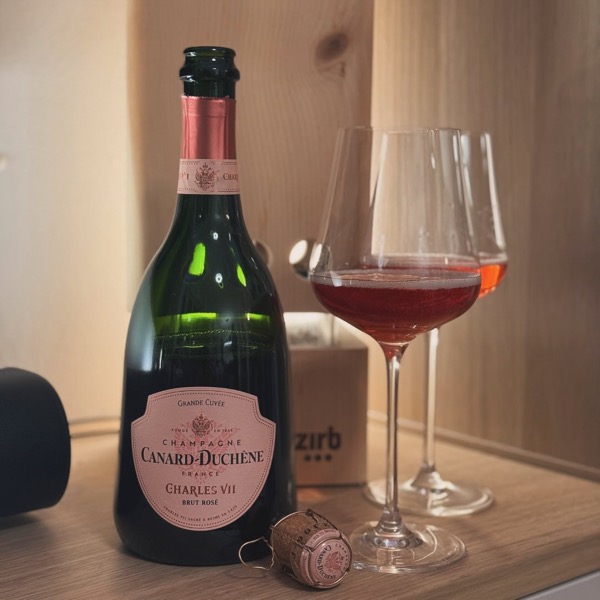
Ein ganz normaler Abend, ein ganz unkomplizierter Champagner – heute habe ich den @canardduchene - Grand Rosé geöffnet. 🍾 Fruchtige Noten von…
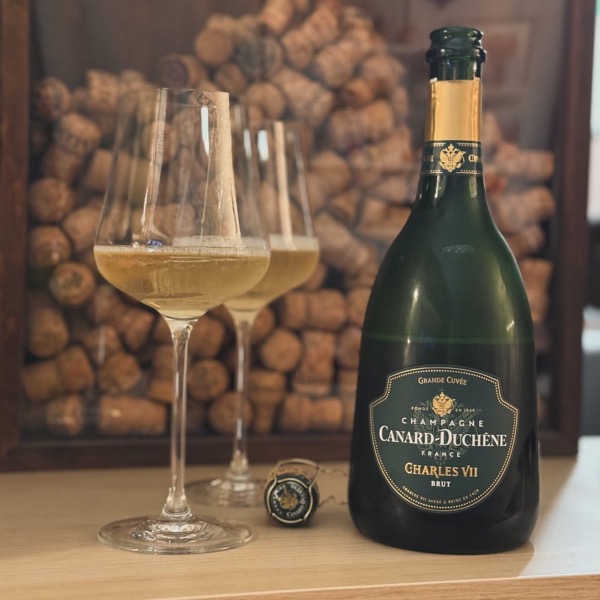
Der Christbaum ist rausgeflogen, und so langsam kehrt der Alltag wieder ein. Nächste Woche geht es los – der Business-Alltag ruft. 💼 Aber bevor es…
Conclusion
| Region | Côte des Blancs, Montagne de Reims |
| Grape varieties | Chardonnay, Pinot Noir, Pinot Meunier |
| Styles | Rosé, Vintage champagne |
| Vintages | 2025 |
| Champagnes tasted | 11 |