White from Black
Blanc de Noirs — "White from Black" — means: This champagne was made exclusively from red grapes. Pinot Noir, Pinot Meunier, or both together. The art: Creating a white wine despite red grape skins.
How does this work? Through immediate pressing. The red grapes are harvested and pressed directly — the must has only minimal contact with the color-giving skins. The result: A golden-white wine with the power and structure of red grapes, but without their color.
The pressing is truly precision work. Traditionally, the grapes are processed in a flat Coquard press, which allows for a large surface area with low pressure. The faster and more gently the grapes are pressed, the lighter the must. The first press fractions — the so-called cuvée — are the lightest and finest. The taille, the second pressing, already brings more color and coarser aromas.
Why Blanc de Noirs Fascinates
Where Blanc de Blancs emphasizes elegance and finesse, Blanc de Noirs brings:
- Body — More volume, broader mouthfeel
- Red fruit notes — Subtle cherry, strawberry, raspberry
- Structure — More tannin, more grip
- Vinous character — Champagne that feels like wine
- Food-friendly — Pairs with heartier dishes
For me personally, Blanc de Noirs is one of the most exciting champagne styles. There's this tension between what you see — a light, golden wine — and what you taste: power, substance, sometimes almost a hint of tannin. This is champagne that doesn't hide behind elegance, but shows character.
The Color: Not Always Snow White
A common misconception: Blanc de Noirs doesn't have to be crystal clear. Most have a noticeably deeper golden tone than a Blanc de Blancs, some even tend toward coppery. This isn't a flaw, but a characteristic. The red grapes leave traces despite rapid pressing — and these traces are exactly what you see in the glass.
Some winemakers deliberately play with longer skin contact to achieve even more extraction. The result are so-called "Blanc de Noirs rosés" — not officially rosé, but with a pink shimmer that blurs the line between styles. Legally, these champagnes move in a gray area, but flavor-wise they are fascinating.
100% Pinot Noir vs. 100% Meunier
Not every Blanc de Noirs tastes the same:
| 100% Pinot Noir | 100% Meunier |
|---|---|
| Structured, powerful | Fruity, soft |
| Dark fruit | Bright fruit |
| Age-worthy | Immediately appealing |
| Montagne de Reims / Aube | Vallée de la Marne |
The differences are really striking. A Blanc de Noirs from the Montagne de Reims made from 100% Pinot Noir — say from Ambonnay or Bouzy — has almost Burgundian traits: taut, structured, with dark cherry and a mineral depth reminiscent of grand cru. A 100% Meunier from the Vallée de la Marne, on the other hand, is a completely different animal: juicy, fruit-forward, with ripe pear and a creamy softness that invites immediate drinking.
And then there are the blends of both varieties. Pinot Noir provides the backbone, Meunier the fruit — together they create champagnes that unite power and drinkability.
Blanc de Noirs from the Côte des Bar
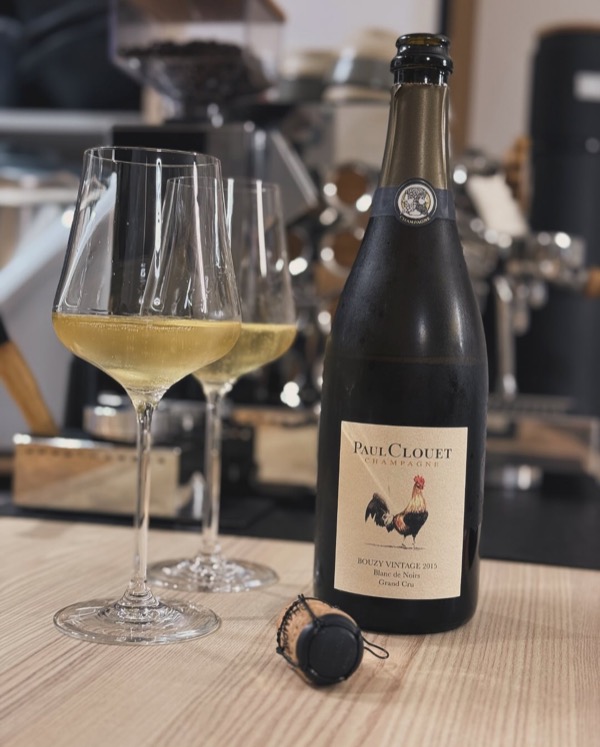
Nach dem eleganten, mineralischen Bonnaire – Cramant Vintage 2016 musste ich gestern noch einen ganz anderen Charakter ins Glas holen: Paul Clouet –…
Hier am Tisch herrscht gerade kreatives Chaos der schönsten Sorte: @autorin.olive.wilson bereitet akribisch und mit wahnsinnig viel Liebe ihre…
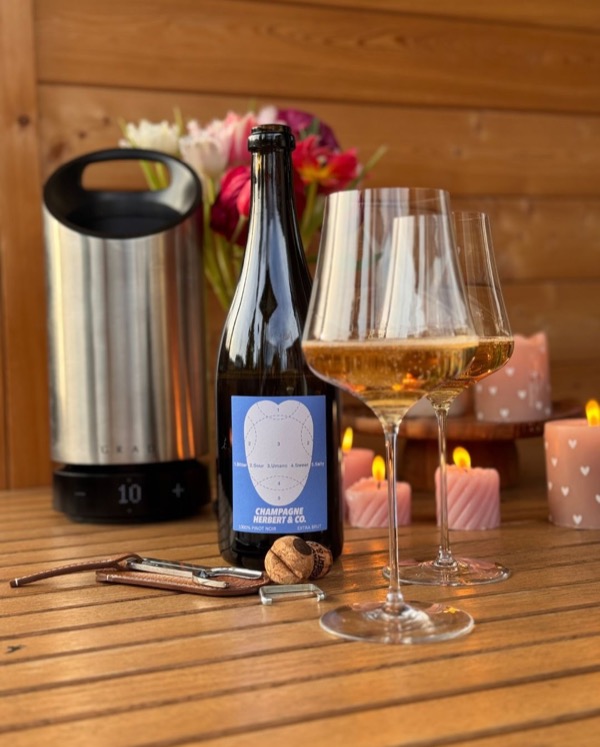
Heute gibts den 1000% Pinot Noir von @champagne_herbertandco . Von diesem kleinen, feinen Haus (geführt von @thomas___herbert und @charlottehbrt_ in…
One region deserves special mention: The Côte des Bar in the south of Champagne. Here, on Kimmeridge marl, Pinot Noir grows on over 80% of the vineyard area. The Blanc de Noirs from this region have a distinctive character — juicier, fruitier, less austere than those from the Montagne de Reims. For beginners, often the more accessible path into the world of Blanc de Noirs.
Food Pairing
Blanc de Noirs is the champagne for the dinner table. Where a Blanc de Blancs reaches its limits with heartier dishes, Blanc de Noirs is just getting started. Poultry, pork, mushroom dishes, aged cheese — all harmonize beautifully with the structure and body of a good Blanc de Noirs. I once drank a 100% Pinot Noir with Coq au Vin — it was a revelation.
My Recommendation
Anyone who doesn't yet have Blanc de Noirs on their radar should definitely start. It's the champagne style that surprises the most, challenges the most, and rewards the most. And it shows a side of Champagne that often disappears behind the omnipresent Blanc de Blancs.
Blanc de Noirs is the champagne for everyone who wants more substance in their glass. Anyone who only knows Blanc de Blancs is missing half of Champagne.
Posts
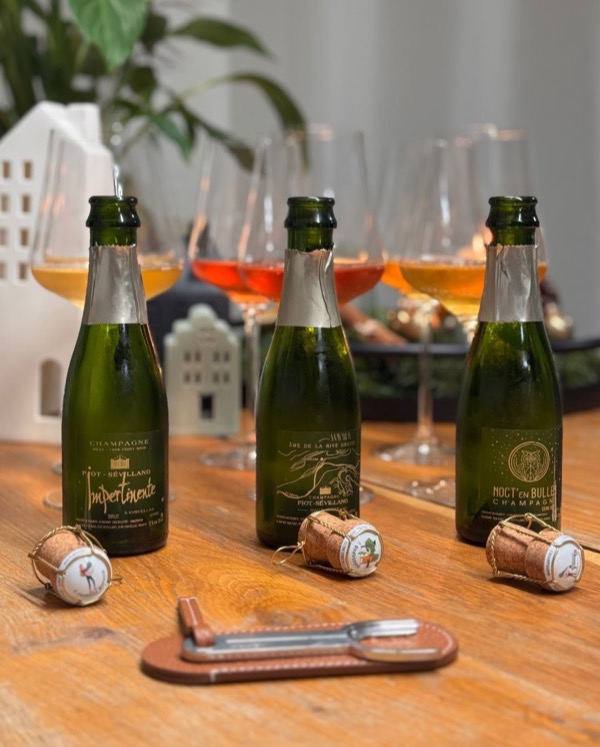
Der 3. Flight mit den drei letzten Flaschen aus dem @piotsevillano Adventskalender war der lockerste aber rückblickend auch der emotionalste und…
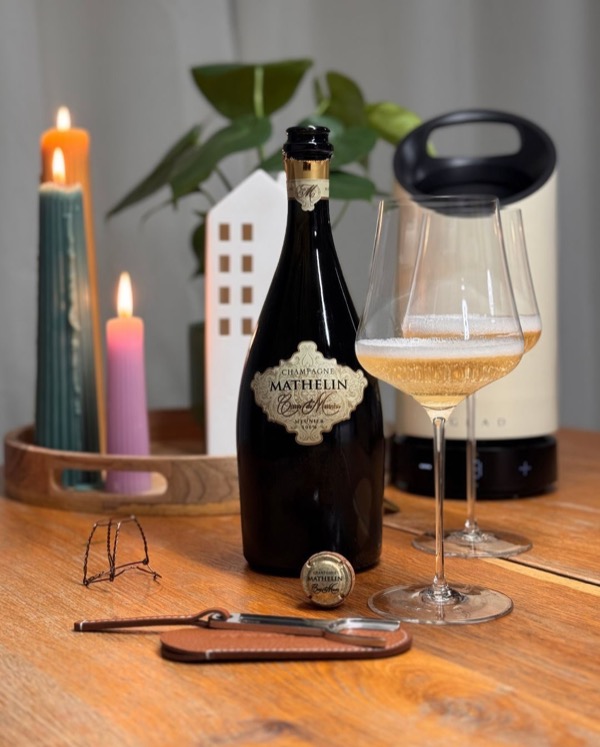
Wie stark lässt du dich von der Optik einer Flasche beeinflussen? Ich versuche es eigentlich komplett auszublenden. Meine Frau – Designerin –…
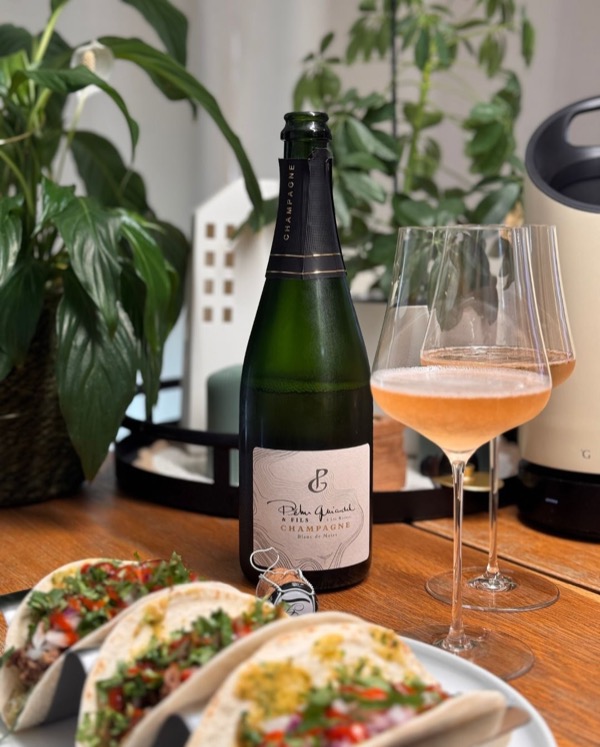
Manchmal stimmt einfach alles. Gestern Tacos – würzig, scharf, aromatisch – und dazu der Blanc de Noirs von @champagnepehuguiardeletfils . Ein…