Rémi Georgeton
I've tasted 4 champagnes from Rémi Georgeton — enough to form a solid impression. The house is located in Grand Cru, Montagne de Reims, Premier Cru, Aube / Côte des Bar, works with Pinot Noir, Chardonnay, Pinot Meunier and shows a clear signature in their range.
Remi Georgeton is one of the growers who has impressed me most in Champagne. What makes him special: He works biodynamically and according to Demeter guidelines — this is still the exception in Champagne, not the rule. Biodynamics here doesn't mean esoteric gimmicks, but a radical commitment to quality in the vineyard. No herbicides, no synthetic fertilizers, instead preparations from cow horn and yarrow that are meant to keep the soil alive.
Verzy is Georgeton's home village — a Grand Cru location on the Montagne de Reims, known for its ancient beech trees (the so-called Faux de Verzy) and its first-class Pinot Noir sites. The chalk-limestone soils of Verzy give Pinot Noir a mineral depth that differs from the more fruit-driven style of the southern Montagne de Reims villages like Bouzy or Ambonnay. In Verzy, it's less about opulence and more about tension — and that's exactly what you feel in Georgeton's champagnes.
Besides his Grand Cru sites in Verzy, Georgeton also has access to Premier Cru parcels and even plots in the Aube. He uses this diversity skillfully: The Cuvée Mes 4 Terroirs combines grapes from four different terroirs into a champagne that represents the entire range of his holdings. A grower who doesn't just represent one village, but a vision of Champagne as a whole.
Terroir and Location
Rémi Georgeton's champagnes come from Grand Cru, Montagne de Reims, Premier Cru, Aube / Côte des Bar. The Montagne de Reims is known for powerful Pinot Noir and structured champagnes. The house has access to Grand Cru sites, which is reflected in the quality of the base wines. Premier Cru sites give the champagnes additional depth and complexity.
The soils in Verzy consist of chalk with deposits of belemnite fossils and flint. This geological diversity noticeably shapes the champagnes: the chalk minerality meets a smoky, almost flinty note that makes Georgeton's Verzy wines unmistakable. Combined with biodynamic farming that keeps the soil alive, this creates a terroir expression that you find with only a few growers in Champagne.
The Range
Rémi Georgeton offers 4 different cuvées that I was able to try. In the program: Blanc de Blancs, Blanc de Noirs, vintage champagnes. A focused range that puts quality over quantity.
The Cuvées in Detail
Verzy Grand Cru 2020
Mineral power from Verzy with light cocoa notes on the finish. Incredible length and calm, perfectly balanced with great breadth and depth. Highlights: mineral, cocoa notes, long finish, 100% Pinot Noir.
The Verzy Grand Cru is for me one of the most impressive champagnes I've had so far. 100% Pinot Noir from biodynamic Grand Cru farming — that alone sounds promising. But what happens in the glass exceeds expectations: the mineral power unfolds slowly, almost meditatively. The cocoa notes on the finish are subtle and noble, the length seems endless. This isn't a champagne you drink casually — this is one where you pause and reflect.
Type: Blanc de Noirs | Vintage: 2020 | Grapes: Pinot Noir
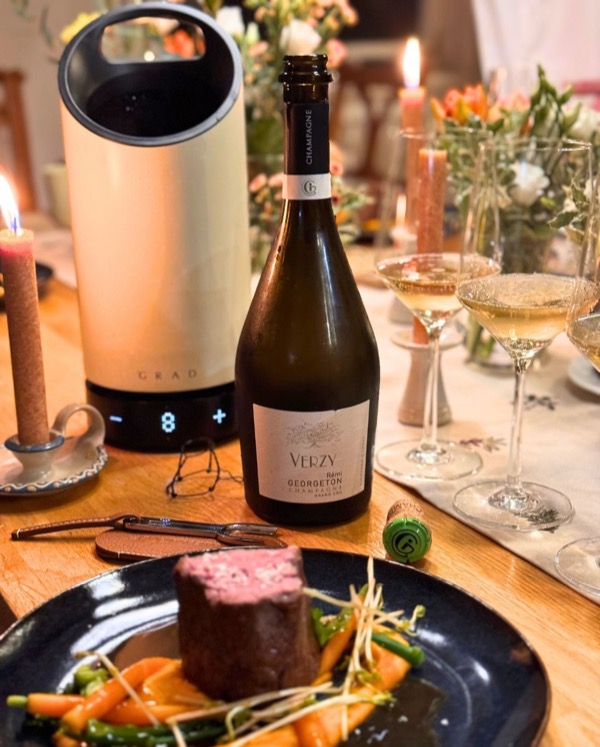
Nach der grandiosen Tom Kha gab es als Hauptgang nun Rinderfilet mit Karotten-Ingwercreme, wildem Brokkoli und Thymianjus. Hier braucht es Struktur,…
Mes 4 Terroirs
On the nose, biscuity with fresh bread, hazelnut and raspberry. On the palate creamy-silky with salty energy from the chalk soils, taut from low dosage. Highlights: biodynamic, biscuity, creamy-silky, salty minerality.
Mes 4 Terroirs is a fascinating concept: four different terroirs in one bottle, all three grape varieties, biodynamically farmed. The champagne shows how differently chalk can taste — depending on location, exposure and grape variety. The biscuity notes and hazelnut come from lees aging, the salty energy from the chalk soils. A champagne that invites contemplation, but is accessible enough to simply be enjoyable.
My tip: Anyone wanting to understand what biodynamic champagne can do should start with Mes 4 Terroirs. It's the perfect introduction to Georgeton's philosophy.
Type: Extra Brut | Vintage: 2020 | Grapes: Chardonnay, Pinot Noir, Pinot Meunier
Blanc de la Montagne
On the nose lime, green apple and herbal freshness with chalky touches. On the palate surprisingly soft and fleshy with cooked fruit, hazelnut and salty, chalky texture on the finish. Highlights: Chalky texture, Soft and fleshy, Organic & Demeter, Blanc de Blancs.
The Blanc de la Montagne shows Chardonnay from the Montagne de Reims — not from the Côte des Blancs where most Blanc de Blancs come from. The result is a completely different character: softer, fleshier, less mineral-cool than Côte des Blancs representatives. The chalky texture on the finish connects both worlds and reminds us that the Montagne de Reims also sits on chalk. A champagne that shows Chardonnay can be great not just on the Côte des Blancs.
Type: Blanc de Blancs | Vintage: 2023 | Grapes: Chardonnay
Verzy Grand Cru Millésime 2020
Reserved on the nose at first, on the palate bready-yeasty depth with fine chalk, hardly any fruit. Texture, energy and salty tension define this precise champagne. Highlights: bready-yeasty, chalk, salty tension, organic.
The Verzy Grand Cru Millésime differs from the regular Verzy Grand Cru through even more precision and restraint. Hardly any fruit, instead texture, energy and tension. This is champagne that foregoes everything superfluous and only shows what the terroir provides. For beginners this might take some getting used to, for advanced drinkers it's a celebration. The salty tension on the finish reminds me of the best Brut Nature from the Côte des Blancs — but with the power and depth of Grand Cru Pinot Noir.
Type: Extra Brut | Vintage: 2020 | Grapes: Pinot Noir
More Posts
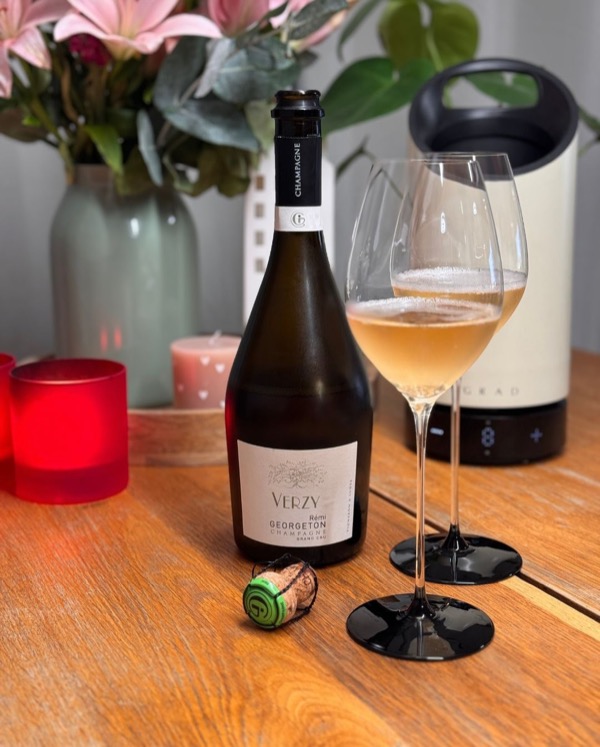
Gestern Abend habe ich den @remi_georgeton – Verzy Grand Cru Millésime 2020 geöffnet. Von allen Flaschen im Sortiment schien mir dieser Jahrgang der…
My Tastings
Nach der grandiosen Tom Kha gab es als Hauptgang nun Rinderfilet mit Karotten-Ingwercreme, wildem Brokkoli und Thymianjus. Hier braucht es Struktur,…
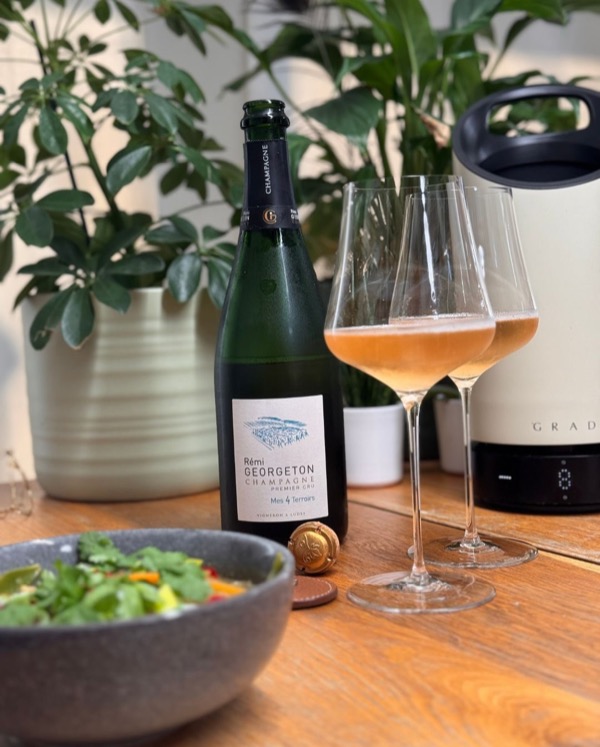
@remi_georgeton hat eine klare Vision: Das Terroir so pur wie möglich ins Glas zu bringen. Beim Mes 4 Terroirs schmeckt man diese Reise förmlich. Der…
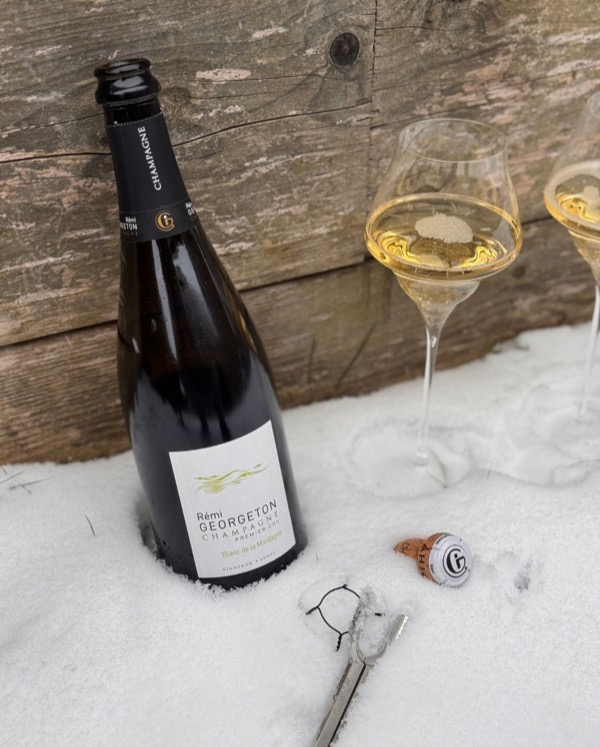
Schnee ist doch eine tolle Sache. Und wenn es bei uns endlich mal welchen gibt, der nicht nach wenigen Stunden wieder wegschmilzt, dann nutzen wir…
Gestern Abend habe ich den @remi_georgeton – Verzy Grand Cru Millésime 2020 geöffnet. Von allen Flaschen im Sortiment schien mir dieser Jahrgang der…
Conclusion
Remi Georgeton belongs for me among the most exciting growers in Champagne. The combination of biodynamic farming, Grand Cru terroir in Verzy and uncompromising vinification results in champagnes that are simultaneously earthy and elegant, powerful and precise. Compared to other biodynamic champagne growers like Leclapart or Larmandier-Bernier, Georgeton has his own style that focuses less on opulence and more on tension. One of the growers whose entire range I want to try in the future.
| Region | Grand Cru, Montagne de Reims, Premier Cru, Aube / Côte des Bar |
| Grapes | Pinot Noir, Chardonnay, Pinot Meunier |
| Styles | Blanc de Blancs, Blanc de Noirs, Vintage champagnes |
| Vintages | 2020, 2023 |
| Champagnes Tasted | 12 |