Taittinger
I've tasted 3 Champagnes from Taittinger — enough to form a solid impression. A house from Champagne that works with Chardonnay, Pinot Noir and shows a clear signature in its range.
Taittinger belongs to the few large houses that are still family-owned. While most of the well-known brands have long since belonged to LVMH or other corporations, the Taittinger family bought back their house after a brief sale to Starwood in 2006. That alone makes them likeable. Because whoever buys back their house doesn't do it for calculation, but from conviction.
What sets Taittinger apart from many other large houses is the consistent focus on Chardonnay. While most Champagne houses build their assemblage around Pinot Noir, at Taittinger Chardonnay is the supporting pillar. You can feel this in every glass: The Champagnes are more elegant, brighter and more delicate than at comparable houses. Less pomp, more precision. Less power, more finesse.
The house owns around 288 hectares of vineyards — one of the largest ownerships in Champagne. A large part of this lies in the Côte des Blancs, the epicenter for Chardonnay. The chalk cellars under Reims, where the bottles mature, belong to UNESCO World Heritage and give the Champagnes time and peace for their development.
The house's Prestige Cuvée, the Comtes de Champagne Blanc de Blancs, is considered one of the best Blanc de Blancs in the world. Exclusively vinified from Grand Cru Chardonnay from the Côte des Blancs and aged over ten years on the lees, it stands in a league with Krug Clos du Mesnil or Salon. I haven't had it in my glass yet, but the Millésimes I was able to try give a hint of where the journey is going.
The Range
Taittinger offers 3 different Cuvées that I was able to try. In the program: vintage Champagnes. A focused range that puts quality over quantity.
The Cuvées in Detail
Millésime 2016
A cool, clear and precise Champagne with fine citrus fruit, subtle chalk and honest structure. Stainless steel aging provides clarity without wood influence. Highlights: citrus fruit, cool minerality, chalk, precise structure.
The 2016 shows the typical Taittinger signature in pure form: reduction, precision, clarity. Not a Champagne that imposes itself, but one that unfolds slowly. The chalk minerality in the finish is almost salty and runs like a red thread through the entire palate. For me a Champagne that invites contemplation — best enjoyed solo, without distracting food.
Type: Millésimé | Vintage: 2015 | Grape varieties: Chardonnay, Pinot Noir
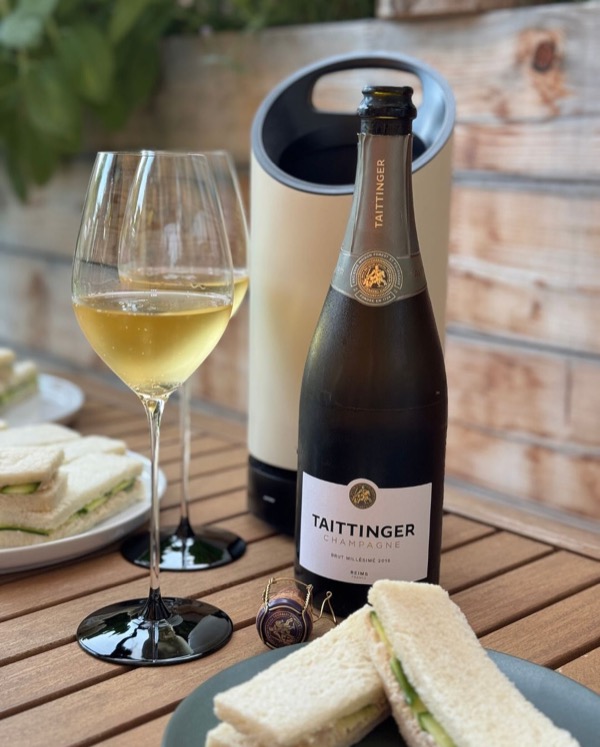
Nach dieser Woche war klar: heute wird angestoßen. Nicht einfach so, sondern weil meine Frau ab Herbst wieder Studentin ist. Ein mutiger Schritt,…
Millésime 2015
A mature but not heavy Champagne with aromas of citrus, almonds, honey and brioche. Fresh enough for herb-rich dishes, but powerful enough for roasted flavors. Highlights: citrus, almonds, honey & brioche, fine perlage.
The 2015 is the warmer counterpart to the 2016. Where the 2016 is cool and linear, the 2015 shows more volume and maturity. The almond notes and honey reveal the longer lees aging and the more mature vintage character. Nevertheless, it remains elegant and never becomes heavy. That's the art at Taittinger: Even in warm vintages, they preserve this lightness that's so typical for the house.
Type: Brut | Vintage: 2015 | Grape varieties: Chardonnay, Pinot Noir
Brut Réserve
A classic that paired perfectly with family breakfast with tangerines and fresh cookies and created an Advent mood. Highlights: classic, festive, sparkling.
The Brut Réserve is Taittinger's calling card — and a damn good one. Compared to other large houses, you notice how much Chardonnay is in this blend. That makes it lighter and fresher than, say, a Moët Imperial or Veuve Clicquot Yellow Label. For me one of the best entry-level Champagnes from the large houses, because it doesn't try to be everything, but concentrates on elegance.
My tip: Those coming from the big brands and wanting to move toward grower Champagnes will find a good stepping stone in Taittinger. The Chardonnay emphasis prepares the palate for the mineral Blanc de Blancs from the Côte des Blancs.
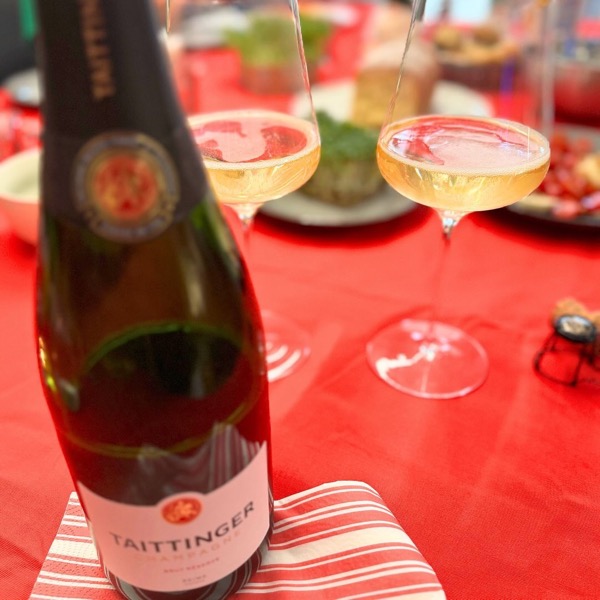
🌟 1. Advent, 1. Dezember – @champagnetaittinger Brut Réserve 🍾 Die Adventszeit mit einem Klassiker einzuläuten, könnte nicht schöner sein: Der…
Posts about Taittinger
More Posts
🌟 1. Advent, 1. Dezember – @champagnetaittinger Brut Réserve 🍾 Die Adventszeit mit einem Klassiker einzuläuten, könnte nicht schöner sein: Der…
My Tastings
Nach dieser Woche war klar: heute wird angestoßen. Nicht einfach so, sondern weil meine Frau ab Herbst wieder Studentin ist. Ein mutiger Schritt,…
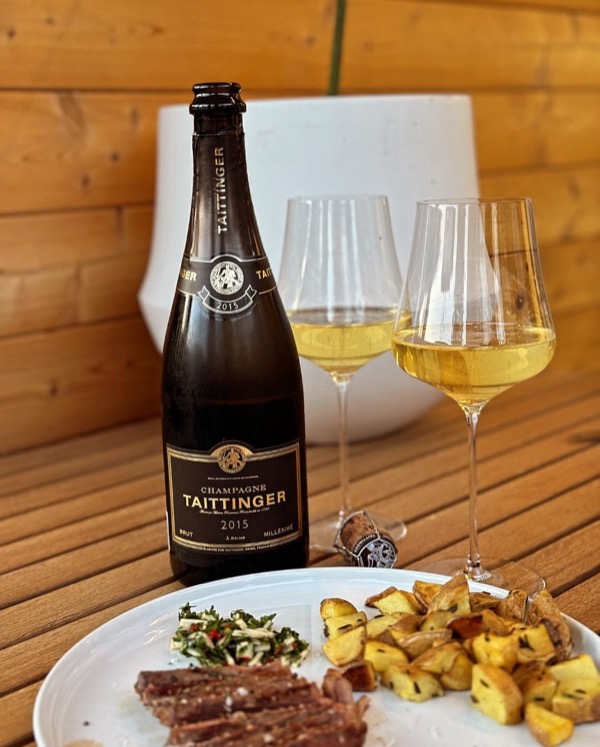
Heute Abend ging’s ums Wesentliche: Ein ordentliches Ribeye, schnell & heiß bei 900° im Oberhitzegrill karamellisiert. Dazu Rosmarinkartoffeln,…
🌟 1. Advent, 1. Dezember – @champagnetaittinger Brut Réserve 🍾 Die Adventszeit mit einem Klassiker einzuläuten, könnte nicht schöner sein: Der…
Conclusion
Compared to other large houses, Taittinger is the most elegant for me. No house of this size focuses so consistently on Chardonnay and finesse. Anyone who finds Veuve Clicquot or Moët too broad and fruit-driven should try Taittinger. And whoever gets the Comtes de Champagne in their glass at some point — please let me know.
| Region | Champagne |
| Grape varieties | Chardonnay, Pinot Noir |
| Styles | Vintage Champagnes |
| Vintages | 2015 |
| Tasted Champagnes | 15 |