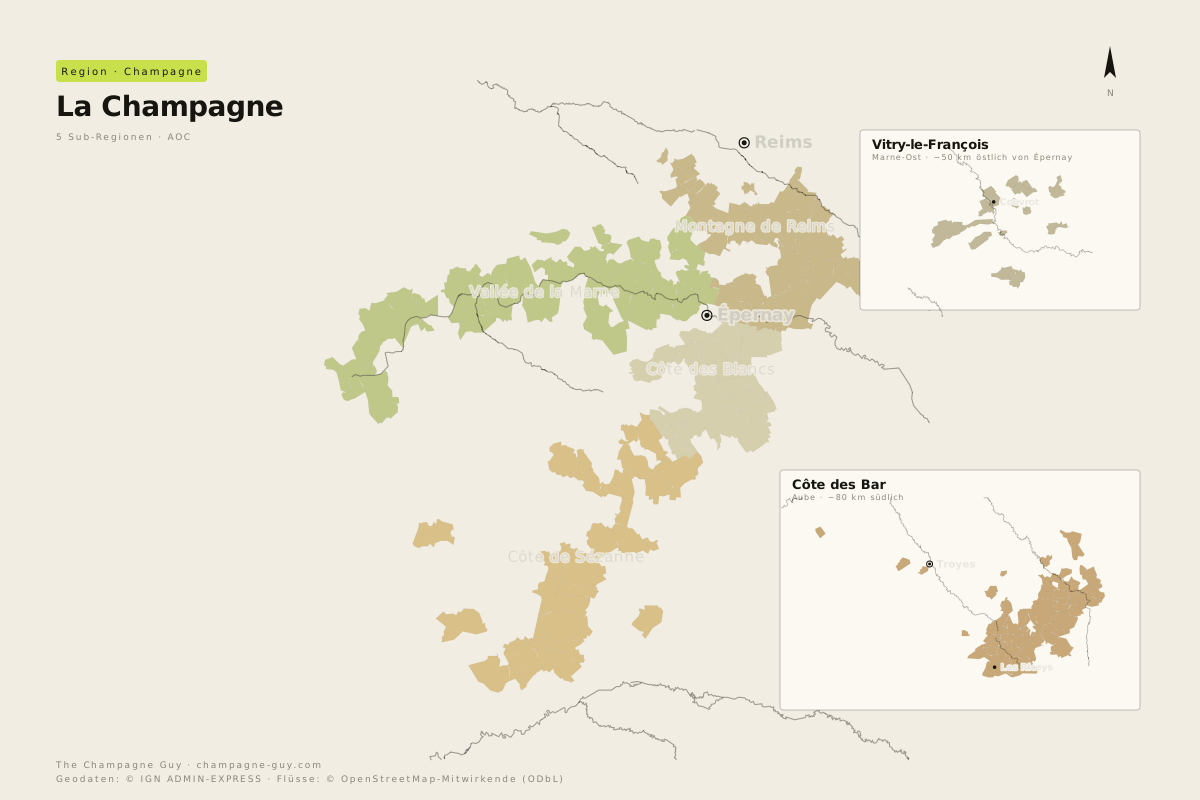
Champagne as a Map
Champagne isn't one region, but six. Five connected subregions around Reims and Épernay plus an eastern outpost near Vitry-le-François. Then there's the southern Aube, the Côte des Bar, over 80 kilometers further south, actually closer to Burgundy than to the Marne.
Each of these subregions has its own grape variety hierarchy, its own soil types, its own style direction. Anyone who takes Champagne seriously doesn't think in terms of "the Champagne region," but in Aÿ-Champagne or Cramant, Bouzy or Le Mesnil-sur-Oger, Trélou-sur-Marne or Les Riceys. The commune decides more than the label.
The Six Subregions
Montagne de Reims
Pinot Noir heartland between Reims and Épernay. Grand Cru villages like Aÿ-Champagne, Bouzy, Ambonnay, Verzenay, Verzy, Mailly-Champagne. This is where the most powerful, structured Pinot Noirs in Champagne grow. When a Blanc de Noirs needs depth, it usually comes from here.
Vallée de la Marne
Pinot Meunier country along the Marne River, west of Épernay extending beyond Château-Thierry. Hautvillers (home of Dom Pérignon), Cumières, Damery, Châtillon-sur-Marne. Meunier dominates here because it's resistant to late frost, and delivers fruity, approachable Champagnes with characteristic creaminess.
Côte des Blancs
Chardonnay paradise, narrow ridge south of Épernay. Grand Cru villages Cramant, Avize, Le Mesnil-sur-Oger, Chouilly, Oger, Oiry. Pure belemnite chalk beneath the vines, from which come the most mineral, longest-lived Blanc de Blancs in the world.
Côte de Sézanne
Little Chardonnay sister of the Côte des Blancs, southwest of it. Sézanne, Bethon, Villenauxe-la-Grande, Vert-Toulon. Warmer, fruitier, less austere than the Côte des Blancs, entry-level Chardonnay from real chalk.
Côte des Bar
The Aube, 80 km south, almost in Burgundy already. Les Riceys, Celles-sur-Ource, Urville, Essoyes, Mussy-sur-Seine. Kimmeridgian soil (like Chablis), Pinot Noir dominance, long scorned as a supplier to the big houses. Today the most exciting grower Champagnes in France come from here.
Vitry-le-François
Eastern outpost of the AOC, ~50 km east of Épernay. Small, little-known region. Couvrot, Bassuet, Soulanges. Mainly supplies grapes for the assemblages of the big houses.
What I've Tasted
To date 432 Champagnes from over 200 maisons. Nearly half of them (about 205) can be attributed to a specific commune, the rest come from Reims or Épernay (négociants who process grapes from multiple crus).
Communes with the Most Tastings
- Chamery, 18 cuvées (3 maisons)
- Écueil, 18 cuvées (4 maisons)
- Aÿ-Champagne, 15 cuvées (11 maisons)
- Trélou-sur-Marne, 11 cuvées
- Verzenay, 10 cuvées
- Ludes, 10 cuvées
→ Complete list of all tasted communes can be found on the regions overview.
How I Read the Region
For me, Champagne isn't a brand business, but a terroir business. The most exciting bottles usually don't come from Reims or Épernay, but from the 320 AOC communes between them, and in the Aube. Anyone who once places a Blanc de Blancs from Le Mesnil next to one from Vertus understands why six kilometers of soil change creates a complete stylistic break.
This series of posts is my attempt to map Champagne as granularly as possible, each commune as its own page, with the maisons located there and my tastings. Where I haven't been yet, the page is missing. It grows with every new bottle.