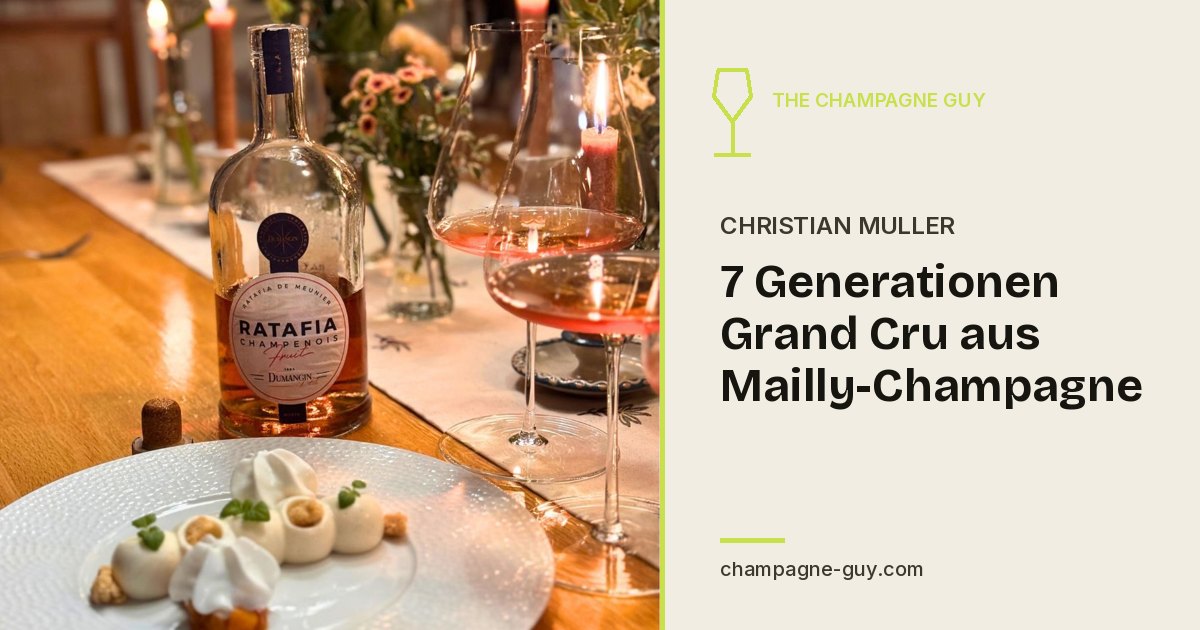
Champagne Christian Muller: 7 Generations of Grand Cru from Mailly-Champagne
Champagne Christian Muller is a Récoltant-Manipulant from Mailly-Champagne in the Montagne de Reims. The maison has been led since 2015 by Hugues Muller Pereira, in the 7th generation since Henri Muller came from Luxembourg to the village in 1870 and married into a local family. Today the family cultivates 15 hectares exclusively in Mailly-Champagne, 100% classified as Grand Cru.
The legal structure is an EARL (Exploitation Agricole à Responsabilité Limitée), registered in Reims under SIREN D 380 860 833.
History
Henri Muller left Luxembourg in 1870 and settled in Mailly-Champagne, where he married into a winegrowing family. For over a century the estate remained in the family before Christian Muller founded his own champagne brand in 1980. Christian was among the pioneers of viticulture raisonnée in Champagne and thus laid the foundation for the maison's current sustainability approach.
In 1991 his daughter Hedwige took over management and opened the estate to wine tourism and hospitality. In 2015 Hugues Muller Pereira, who had studied red winemaking in Burgundy and viticulture in Alsace, took over. He continues his grandfather's philosophy: strict environmental standards, late harvest at full ripeness, and aging wines in the hand-dug cellar at a constant 12°C.
Vignoble & Soil
The 15 hectares are distributed across nearly 70 parcels, all in Mailly-Champagne. The grape variety distribution is 80% Pinot Noir and 20% Chardonnay. What's special is the variety of micro-terroirs: all four cardinal directions are represented, and the soils vary in composition and elevation from parcel to parcel.
Particularly noteworthy is the Les Côtes vineyard, the only south-facing parcel in Mailly-Champagne. Other notable sites include Les Baraquines (east), Les Longues raies (west), Les Croyats (west), Les Voies de Ludes (west with sunset exposure), Le Godat (east), Les Roses (north), and Le Chalois (northeast).
Viticulture & Sustainability
Christian Muller was already practicing viticulture raisonnée in the 1980s, farming that limits environmental impact and protects the terroir for future generations. Today the maison is HVE (Haute Valeur Environnementale) and VDC (Viticulture Durable en Champagne) certified.
Insecticides are prohibited, herbicides are not used; instead, soils are worked mechanically. The parcels have cover crops, and in some sites synthetic products are completely avoided. Soil is analyzed before any fertilization, pest control is done through natural mating disruption. Fauna and flora are actively protected, biodiversity has priority.
Vinification
Grapes are harvested exclusively at full ripeness and gently pressed. Vinification takes place in stainless steel tanks, with a portion aged in oak barrels depending on the cuvée: 15% for the Tradition, 25% for the Millésime 2021. The Ratafia ages one year in wood.
Malolactic fermentation is performed on Pinot Noir but blocked on Chardonnay, handled differently depending on the cuvée. Dosage ranges from 0 g/l (Nature) to 8 g/l (Tradition). All champagnes age at least 36 months in the hand-dug cellar at a constant 12°C. The philosophy is: "No pain, no gain", high standards from vine to bottle, long aging as a basic requirement for expressing the Grand Cru terroir.
The Cuvées in Detail
Tradition Brut
The base cuvée combines 30 different parcels from multiple vintages. Malolactic fermentation on Pinot Noir, 15% barrel aging. The color is pale gold, the nose fresh and fruity with lemon, cherry, and violet. Regularly awarded: Gault & Millau 2026 with 91/100, Gold at Mondial Bruxelles 2025, Gold annually at Gilbert & Gaillard since 2020.
80% Pinot Noir, 20% Chardonnay · 8 g/l · 36 months · 100% Mailly-Champagne Grand Cru
Rosé Extra-brut
A single-varietal Pinot Noir from a single parcel, a single vintage. No malolactic fermentation. Vinified using the Oeil de perdrix method, which gives the color a delicate pale pink hue. Exotic fruits, spices, red fruits, and lychee notes.
100% Pinot Noir · 4 g/l · 36 months · Single vineyard Mailly-Champagne Grand Cru
Nature Extra-brut
Zero dosage, but 50% grapes from the 2021 vintage, the rest from multiple harvests. Malolactic fermentation on Pinot Noir and the vintage fruit give the cuvée structure and natural sweetness. Golden yellow with green reflections, lemon, white flowers, citrus fruits, jasmine, mineral structure.
80% Pinot Noir, 20% Chardonnay · 0 g/l · 48 months · 100% Mailly-Champagne Grand Cru
Millésime 2021 Brut
A pure 2021, bottled one year after dégorgement. 25% barrel aging, malolactic fermentation on Pinot Noir. Clear golden yellow with amber reflections, dried fruits (hazelnut), ripe fruits (quince), vanilla, nutmeg, toast.
80% Pinot Noir, 20% Chardonnay · 6 g/l · 36 months · 100% Mailly-Champagne Grand Cru
Ratafia champenois
Grape must blended with old Marc de Champagne and brandies, aged in oak barrels. One year wood aging, 18% vol, 70 cl. Amber colored, aromas of dried plum and gingerbread, notes of honey, gingerbread, and caramel.
100% Pinot Noir · 12 months wood · 100% Mailly-Champagne Grand Cru
My Tastings
- Tradition Grand Cru · 07.22.2025 · subtle, round, balanced, structure and texture come through particularly well in the Josephinenhütte No.4 glass
Facts
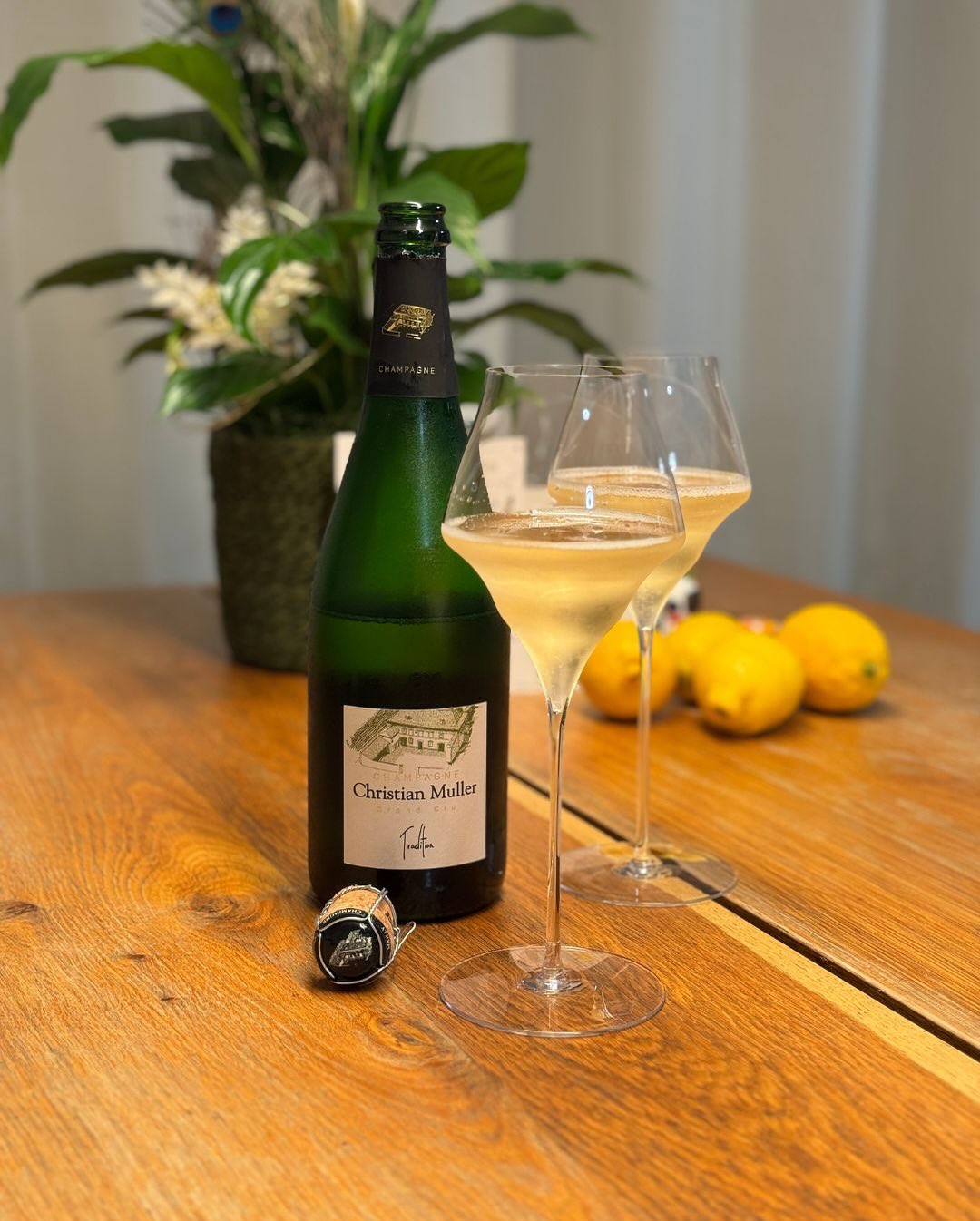
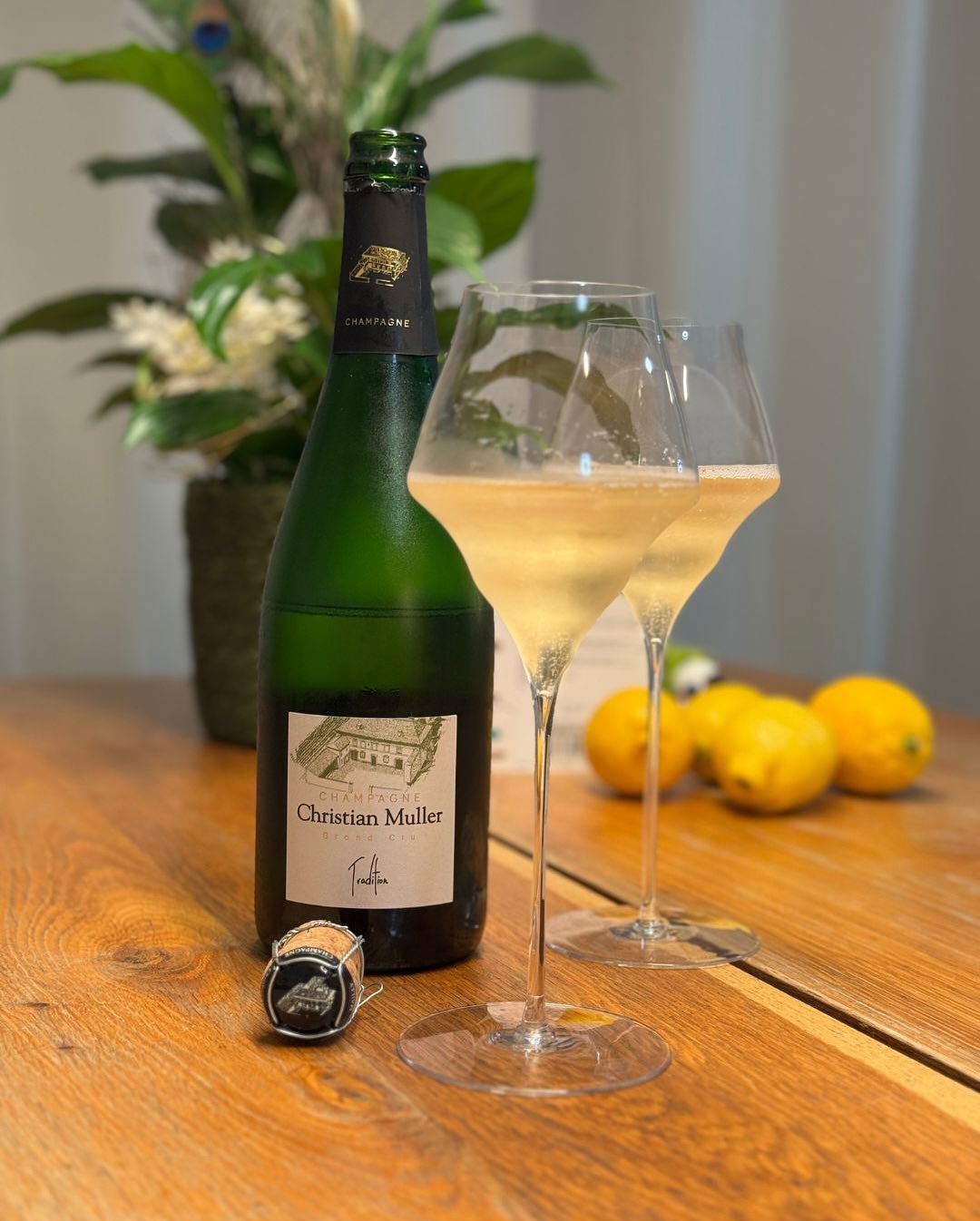
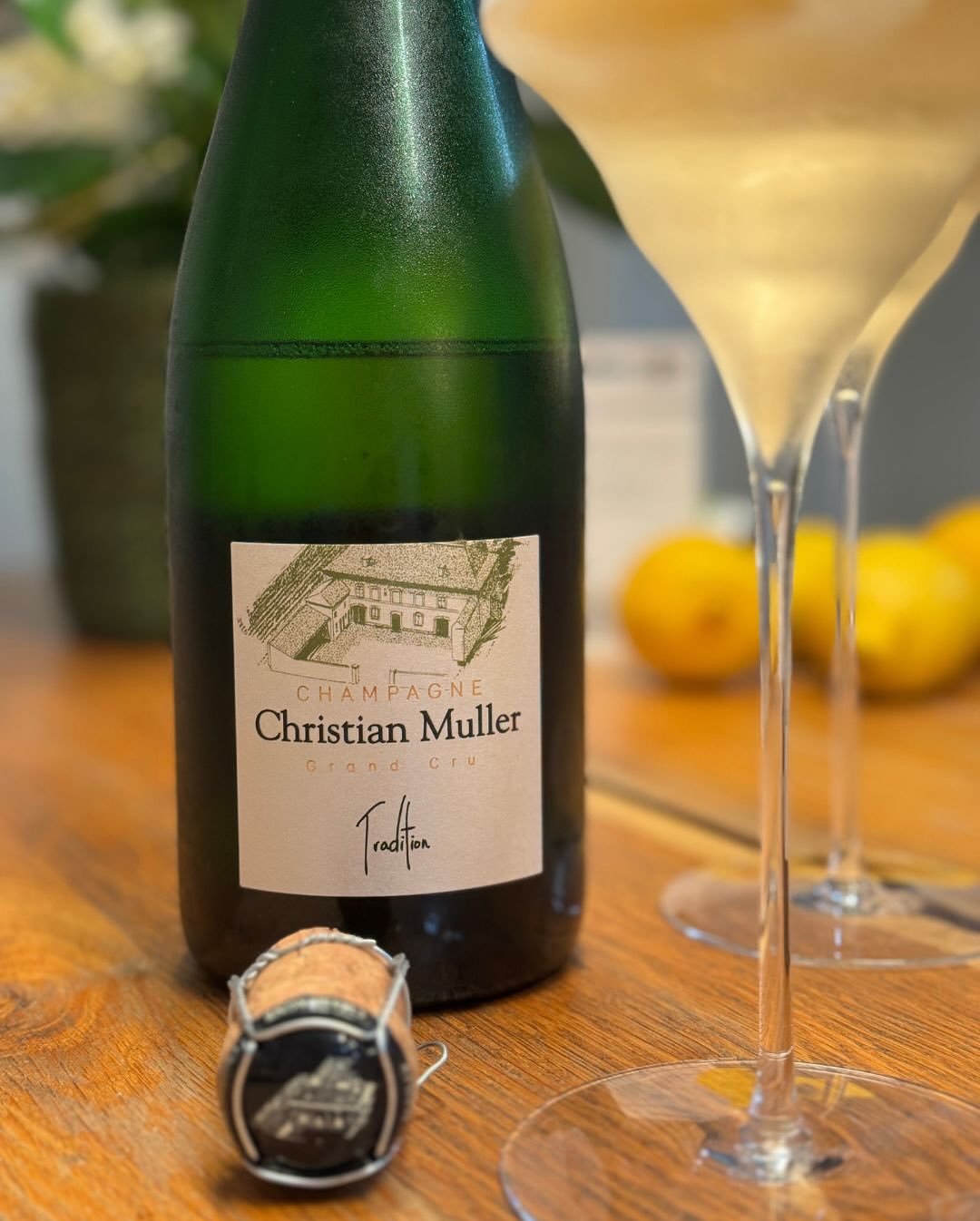
the_champagne.guy @champagnechristianmuller – Tradition – Grand Cru. Wie der Name schon sagt: Diese Cuvée steht für die Tradition der Champagne. Erzeugt aus 30 verschiedenen Parzellen in Mailly – und damit ein echtes Abbild des Grand-Cru-Dorfes. 🍇 80 % Pinot Noir | 20 % Chardonnay 📍 100 % Mailly-Champagne – Grand Cru 🌱 HVE & VDC-zertifizierte Parzellen 🛢️ 15 % im Holz, malolaktisch auf dem Pinot ⏳ 3 Jahre Reifezeit ⚖️ Dosage: 8 g/l Getrunken habe ich ihn im @josephinenhutte No. 4 – und das war die richtige Wahl. Das Glas bringt vor allem Struktur und Textur schön zur Geltung, ohne zu übertreiben. Ich fand die Flasche wirklich stark – subtil, rund, ausgewogen. Und jetzt bin ich umso gespannter auf das, was da noch kommt. Vor allem ein Jahrgang von Christian Muller würde mich reizen. #TheChampagneGuy #ChristianMuller #TraditionGrandCru #JosephinenhütteNo4 #MaillyChampagne #PinotNoirLiebe #GrandCruStyle #ChampagneEntdeckung #Winzerchampagner #ChampagneCurious #NeugierTrifftHandwerk
Auf Instagram weiterlesen →| Category | Récoltant-Manipulant (RM) |
| Founded | 1870 (Henri Muller); brand since 1980 (Christian Muller) |
| Owner | Muller family (7th generation) |
| Management | Hugues Muller Pereira (since 2015) |
| Vineyard area | 15 ha (ca. 70 parcels) |
| Vineyards | 100% Mailly-Champagne (Grand Cru) |
| Cru status | 100% Grand Cru |
| Region | Montagne de Reims |
| Grape varieties | 80% Pinot Noir, 20% Chardonnay |
| Certifications | HVE, VDC |
| Dosage range | 0-8 g/l |
| Aging | Stainless steel + wood (15-25% depending on cuvée) |
| Aging time | Min. 36 months |
| Address | 35 rue de la Libération, 51500 Mailly-Champagne |
| Website | champagnechristianmuller.fr |
| @champagnechristianmuller |
Sources for this portrait: Maison website, my own tastings, CRM data and cross-checks. Fields without sufficient verification remain open.