Armand de Brignac: Prestige Champagne from Chigny-les-Roses
Armand de Brignac is a prestige brand from Chigny-les-Roses in the Montagne de Reims, created in 2006 by Jean-Jacques Cattier. The brand is now run by the 12th and 13th generation of the Cattier family, Jean-Jacques and his son Alexandre. The family has been growing grapes in Champagne for over 250 years and farms 33 hectares of their own vineyards, supplemented by purchased grapes from Premier and Grand Cru sites, a classic Négociant-Manipulant profile.
History
The name Armand de Brignac has an unusual backstory: Nelly Cattier, Jean-Jacques's mother, discovered the name "M. De Brignac" in a novel in 1950 and registered it for possible future use. Over 50 years later, in 2006, her son Jean-Jacques drew upon it and created a new Tête de Cuvée in her honor, the first release was the Brut Gold, which would become the most iconic cuvée in the range.
In 2015, the Blanc de Noirs Assemblage No. 1 debuted, launching a series of highly limited Assemblage bottlings. 2024 saw the Blanc de Noirs Vintage 2015, the house's first vintage cuvée, only 1,258 numbered bottles, disgorged on February 8, 2024. That same year, Assemblage No. 5 was released (8,165 bottles, disgorged on August 21, 2024).
Vignoble & Terroir
The Cattier family owns 33 hectares of vineyards in the Montagne de Reims, spread across Chigny-les-Roses (Premier Cru), Rilly-la-Montagne, and Ludes. For their cuvées, they additionally purchase grapes from other Premier and Grand Cru sites, including Verzenay, Verzy, Mailly Champagne, and Ville-sur-Arce in the south of Champagne (Aube).
The Blanc de Blancs cuvée combines Chardonnay from the Côte des Blancs with nearly half from the Montagne de Reims, a blending strategy that marries minerality with smoothness and roundness.
Viticulture & Sustainability
Sustainability is a core principle for the Cattier family. Their own vineyards are certified HVE niveau 3, France's highest environmental certification for agricultural operations. The Maison states that environmental protection for future generations is at the center of their vineyard management.
Vinification
Armand de Brignac works with a distinctive winemaking signature: Only the very first and freshest portion of the cuvée pressing is used. The standard cuvées are assemblages from three vintages, the Maison speaks of the "Trio of Vintages," bringing together different characters.
The dosage is prepared from the best base wine of the vintage and aged for one year in new French oak barrels. This gives the cuvées subtle complexity with notes of baked pastry, vanilla, and toasted aromas.
The Cuvées in Detail
Brut Gold (Ace of Spades)
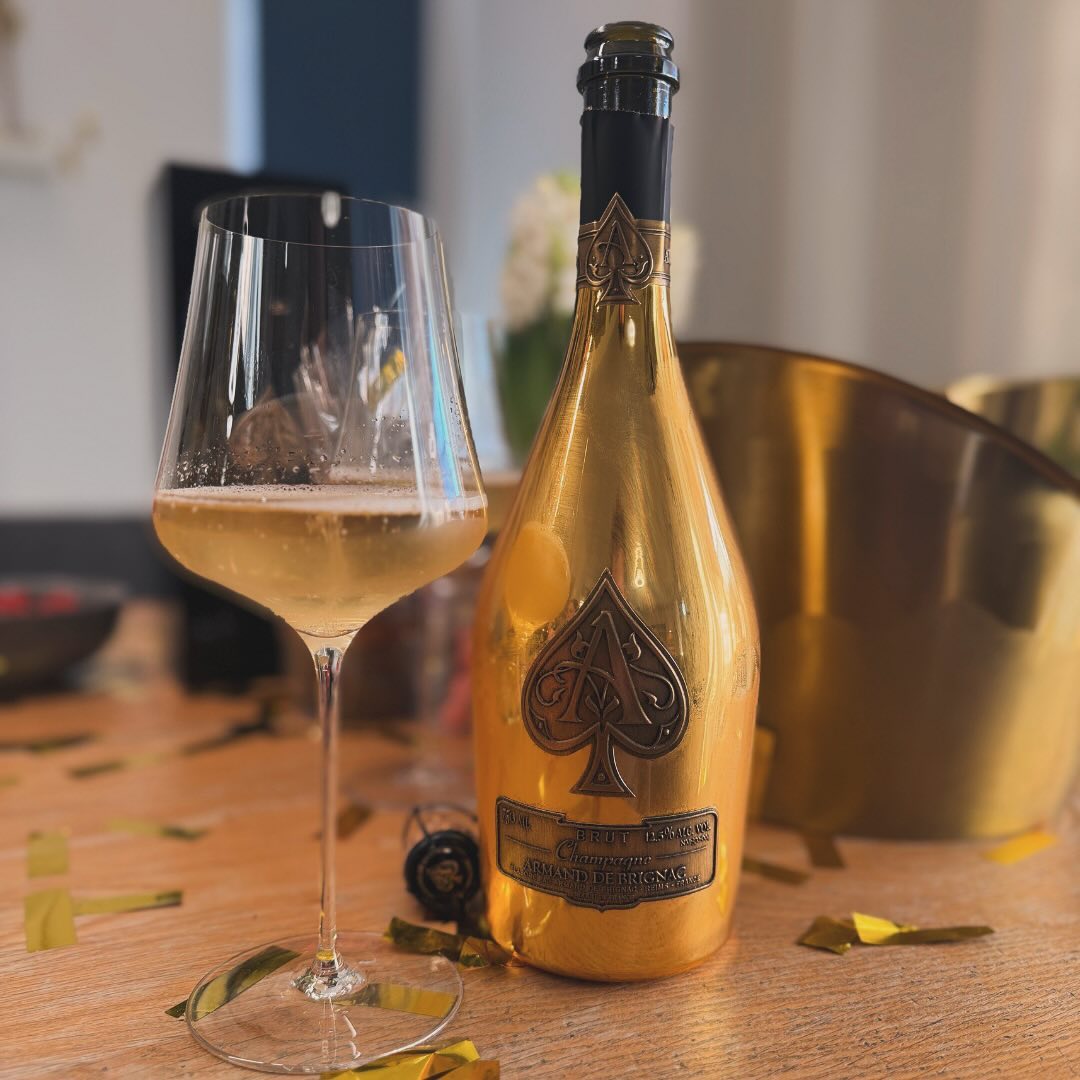
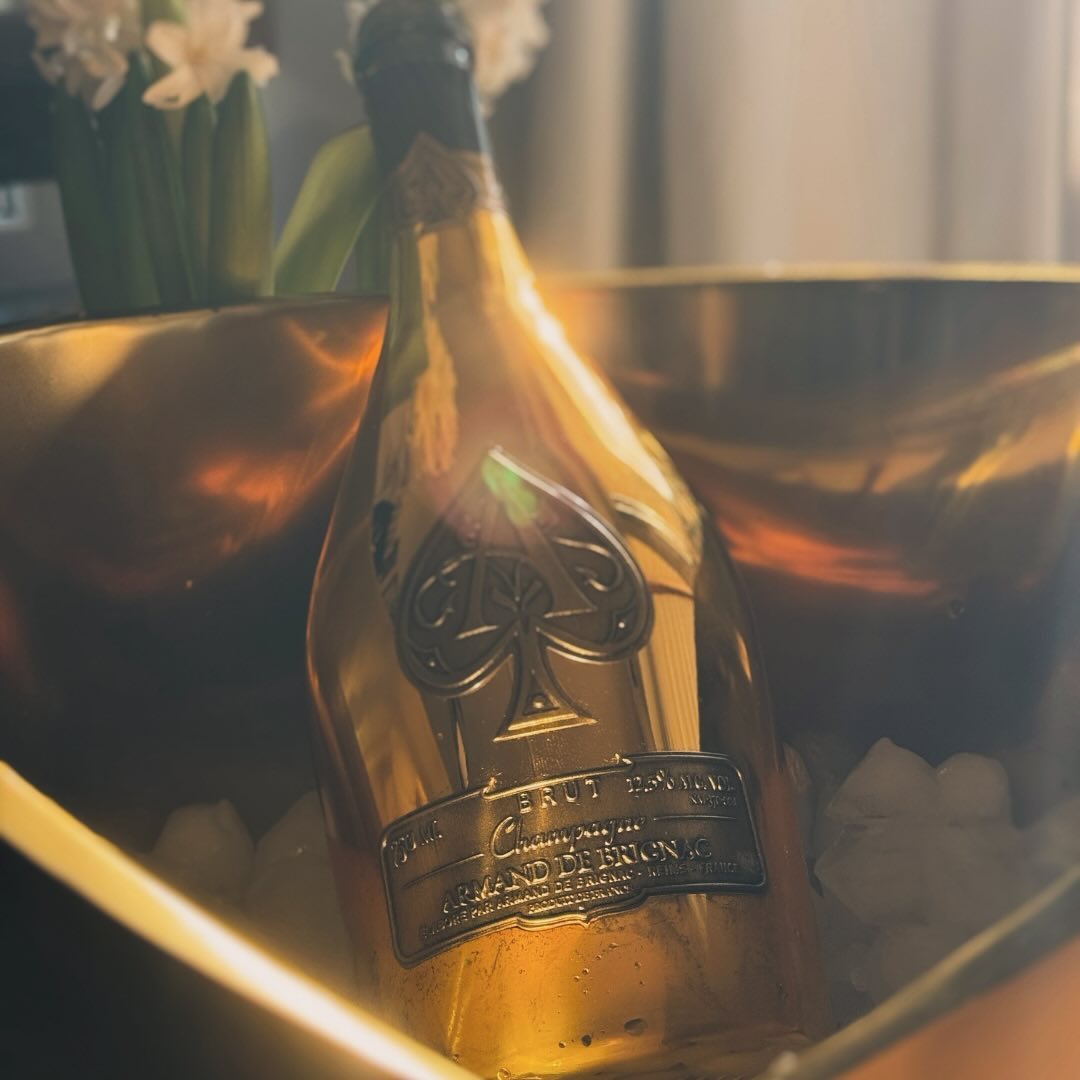
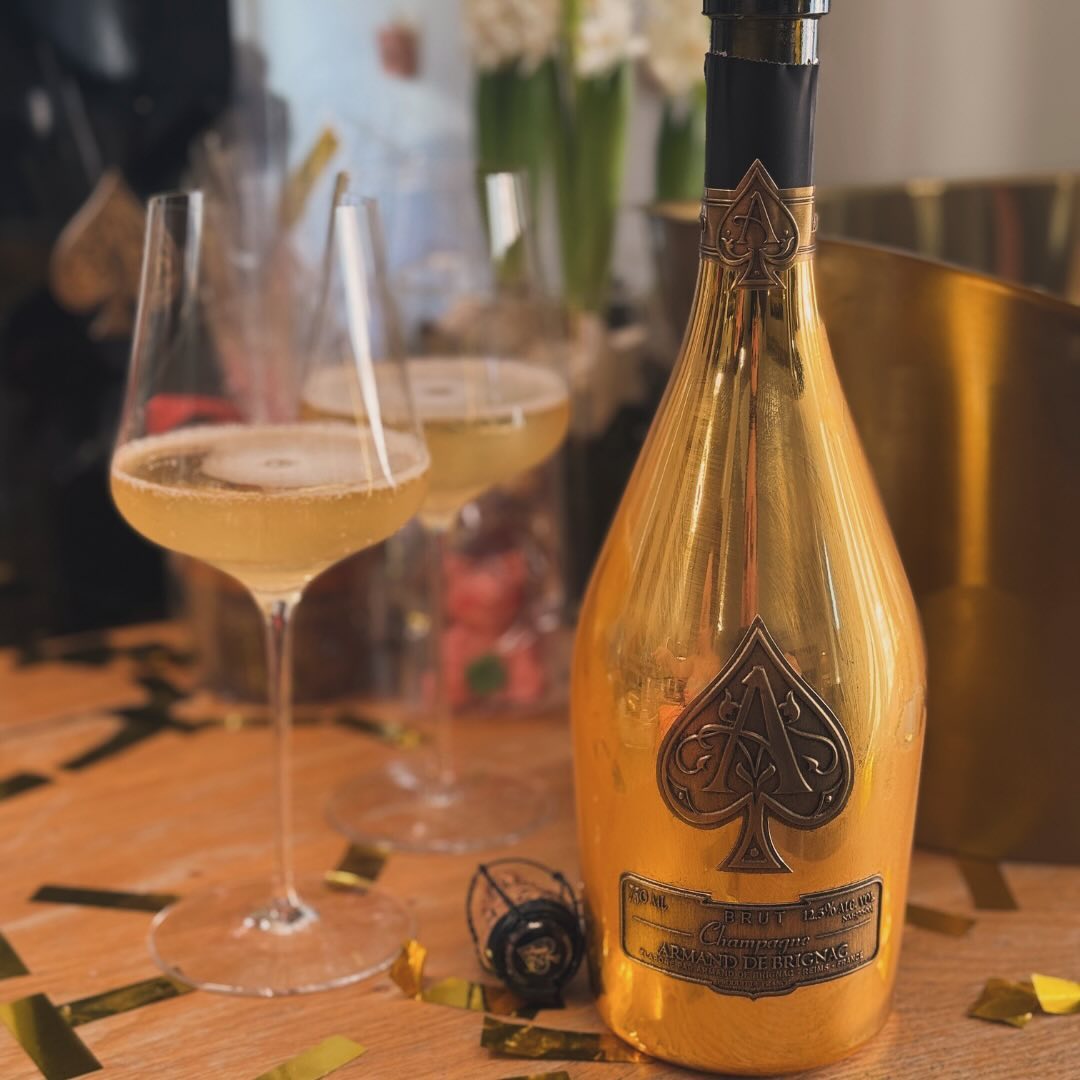
the_champagne.guy Das Jahr 2025 haben wir heute auf eine etwas andere Art eingeläutet: Mit dem @armanddebrignac Gold - „Ace of Spades“ – und zwar zum Frühstück. 🍾🥂 Ja, nicht um Mitternacht, nicht im Trubel, sondern ganz entspannt am Morgen, bei einem genussvollen Start in den Tag. Zu unklassisch? Vielleicht. Aber ich war noch nie jemand, der immer mit dem Strom schwimmt – und das passt irgendwie perfekt zu Silvester, oder? 😄 Was macht den Armand de Brignac Gold so besonders? - Ein Meisterwerk der Cuvée: 40% Pinot Noir, 40% Chardonnay und 20% Pinot Meunier – eine perfekte Balance aus Frische, Eleganz und Fruchtigkeit. - Handwerkskunst: Jede Flasche wird von Hand gefertigt, von der ikonischen goldenen Hülle bis hin zu den Zinnetiketten. - Geschmack: Aromen von Blumen und Früchten, begleitet von einem Hauch Brioche – lebhaft, weich und absolut luxuriös. Manchmal ist es eben der unkonventionelle Moment, der eine Flasche Champagner noch besonderer macht. Heute früh war genau so ein Moment. 🥂✨ Wie habt ihr das neue Jahr begonnen? Klassisch oder vielleicht auch ein bisschen anders? 🎉 #ArmandDeBrignac #AceOfSpades #ChampagneLover #SilvesterFrühstück #NeuesJahr #2025Cheers #TheChampagneGuy
Auf Instagram weiterlesen →The most iconic cuvée in the range, vibrant and fresh fruit character with soft texture, aromas of flowers and fruits, plus brioche notes. Assemblage from three vintages, built on a balance of Pinot Noir and Chardonnay, complemented by Meunier.
40% Pinot Noir · 40% Chardonnay · 20% Meunier · Montagne de Reims
Rosé
18% still red wine from old Pinot Noir vines in the Montagne de Reims is added. Light and vibrant with complex layers, red fruit nuances, baked pastry notes, and deeper texture. Assemblage from three vintages.
Pinot Noir (old vines) · 18% still red wine · Montagne de Reims
Demi-Sec
The only prestige Demi-Sec cuvée worldwide, according to the Maison. The dosage sits at the lower end of the Demi-Sec spectrum, with bold fruit flavor balanced by complexity from additional lees aging. Only the first portion of the cuvée pressing.
Assemblage from three vintages · Dosage at lower Demi-Sec range
Blanc de Blancs
Very small production. Chardonnay from the Côte des Blancs and nearly half from the Montagne de Reims, a combination that marries minerality with smoothness, roundness, and lightness. Great aging potential.
100% Chardonnay · Côte des Blancs & Montagne de Reims · Assemblage from three vintages
Blanc de Noirs Assemblage No. 4
Only 7,328 bottles worldwide. 100% Pinot Noir from Premier and Grand Cru sites: Chigny-les-Roses, Verzenay, Rilly-la-Montagne, Verzy, Ludes, Mailly Champagne, and Ville-sur-Arce (Aube). The first release came through the La Collection Set.
100% Pinot Noir · Premier & Grand Cru · 7,328 bottles
Blanc de Noirs Assemblage No. 5
Evolution of Assemblage No. 1 (debuted 2015). Balance between intensity and lightness of aromas, finest Pinot Noir of Champagne. Disgorged on August 21, 2024, only 8,165 numbered bottles.
100% Pinot Noir · Disgorgement 08.21.2024 · 8,165 bottles
Blanc de Noirs Vintage 2015
Armand de Brignac's first vintage cuvée. 100% Pinot Noir, disgorged on February 8, 2024. Only 1,258 numbered bottles worldwide.
100% Pinot Noir · Vintage 2015 · Disgorgement 02.08.2024 · 1,258 bottles
Brut Gold Limited Edition Green
Golfer's Limited Edition in green jacket, elegant and vibrant style. Delivered in a lacquered wooden box with French pewter labels.
Golfer's Edition · Green jacket · Wooden box
My Tastings
- Gold (Ace of Spades) (2025) · 2025-01-01
Facts
| Category | Detail |
|---|---|
| Official Name | Armand de Brignac |
| Status | NM (Négociant-Manipulant) |
| Founded | 2006 (name registered since 1950) |
| Founder | Jean-Jacques Cattier |
| Generation | 12th and 13th (Jean-Jacques & Alexandre Cattier) |
| Village | Chigny-les-Roses (Premier Cru) |
| Region | Montagne de Reims |
| Vineyard Area | 33 hectares (own vineyards) |
| Sites | Chigny-les-Roses, Rilly-la-Montagne, Ludes, Verzenay, Verzy, Mailly Champagne, Ville-sur-Arce |
| Certification | HVE niveau 3 |
| Specialty | Dosage aged one year in new French oak |
| Website | armanddebrignac.com |
| @armanddebrignac |
Sources for this profile: Maison website, personal tastings, CRM data, and cross-checks. Fields without sufficient verification remain open.