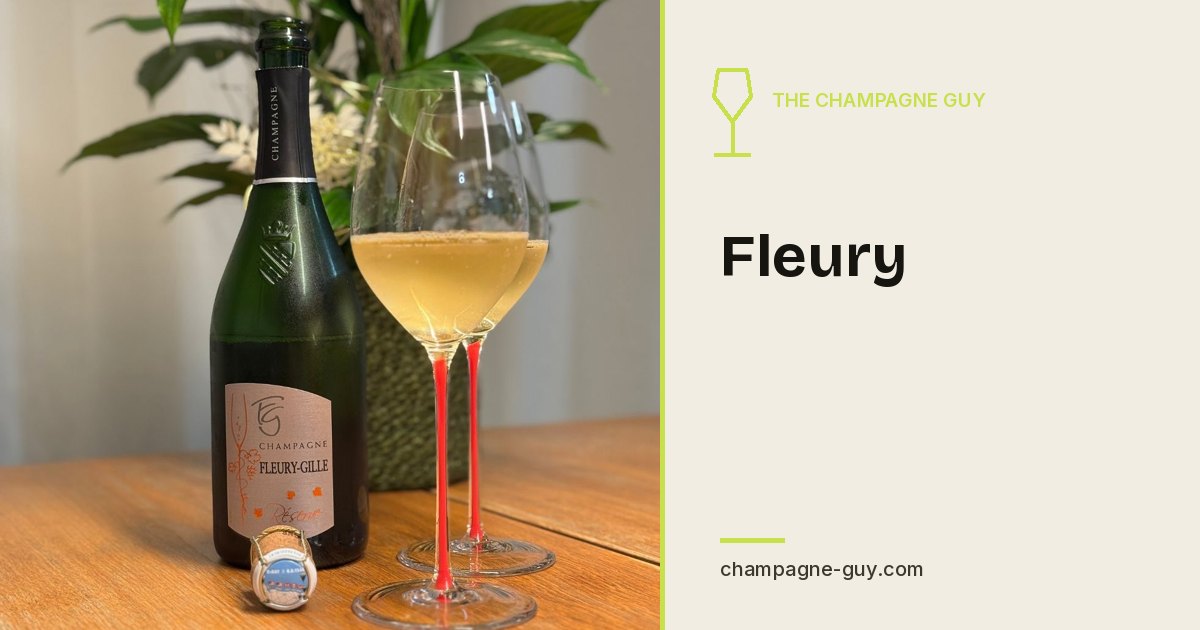
Champagne Fleury: Biodynamic Since 1989
Champagne Fleury is a Récoltant-Manipulant maison from Courteron in the Aube département, in the heart of the Côte des Bar in the southern Champagne. Founded 1895 as a family house, the maison now in its fourth generation manages around 15 hectares. At the helm is Jean-Sébastien Fleury, one of the Fleury siblings.
The maison is one of the true biodynamic pioneers of Champagne: Jean-Pierre Fleury converted to biodynamics in 1989 as one of the very first in the region, initially partially, then completely from 1992, at a time when this was an absolute exception. The work is certified by Demeter and Biodyvin.
History
The Fleury family founded the champagne house in 1895. For nine decades they worked conventionally, until Jean-Pierre Fleury made the decisive step in 1989: converting to biodynamic viticulture. This makes Fleury one of the first maisons in Champagne to take this path, long before biodynamics became a topic for the broader winegrowing community. The family was courageous even before, Emile Fleury planted some of the region's first Pinot Noir vines after the phylloxera catastrophe.
Vignoble & Soil
The maison manages around 15 hectares in the Côte des Bar. The focus is on about 85 percent Pinot Noir, which thrives beautifully here on Kimmeridgian soils, plus around 10 percent Chardonnay and a small remainder of other grape varieties like Pinot Blanc, Pinot Meunier and Pinot Gris, the latter reintroduced in 2010.
Viticulture & Sustainability
Biodynamic methods have been used since 1989. The certifications Demeter and Biodyvin prove that the maison doesn't just use the name, but adheres to the strict guidelines of the biodynamic associations. For Champagne this was a courageous step in 1989, today Fleury is a reference for winegrowers who want to take this path.
Vinification
The maison works with reserve wines that are aged in wood. In the cuvée Fleur de l'Europe, reserve wines make up 34 percent of the assemblage. The biodynamic philosophy extends into the cellar: working with natural yeasts, minimal intervention, precise dosage, with Fleur de l'Europe a Brut Nature without added sugar.
The Cuvées in Detail
Fleur de l'Europe: Brut Nature
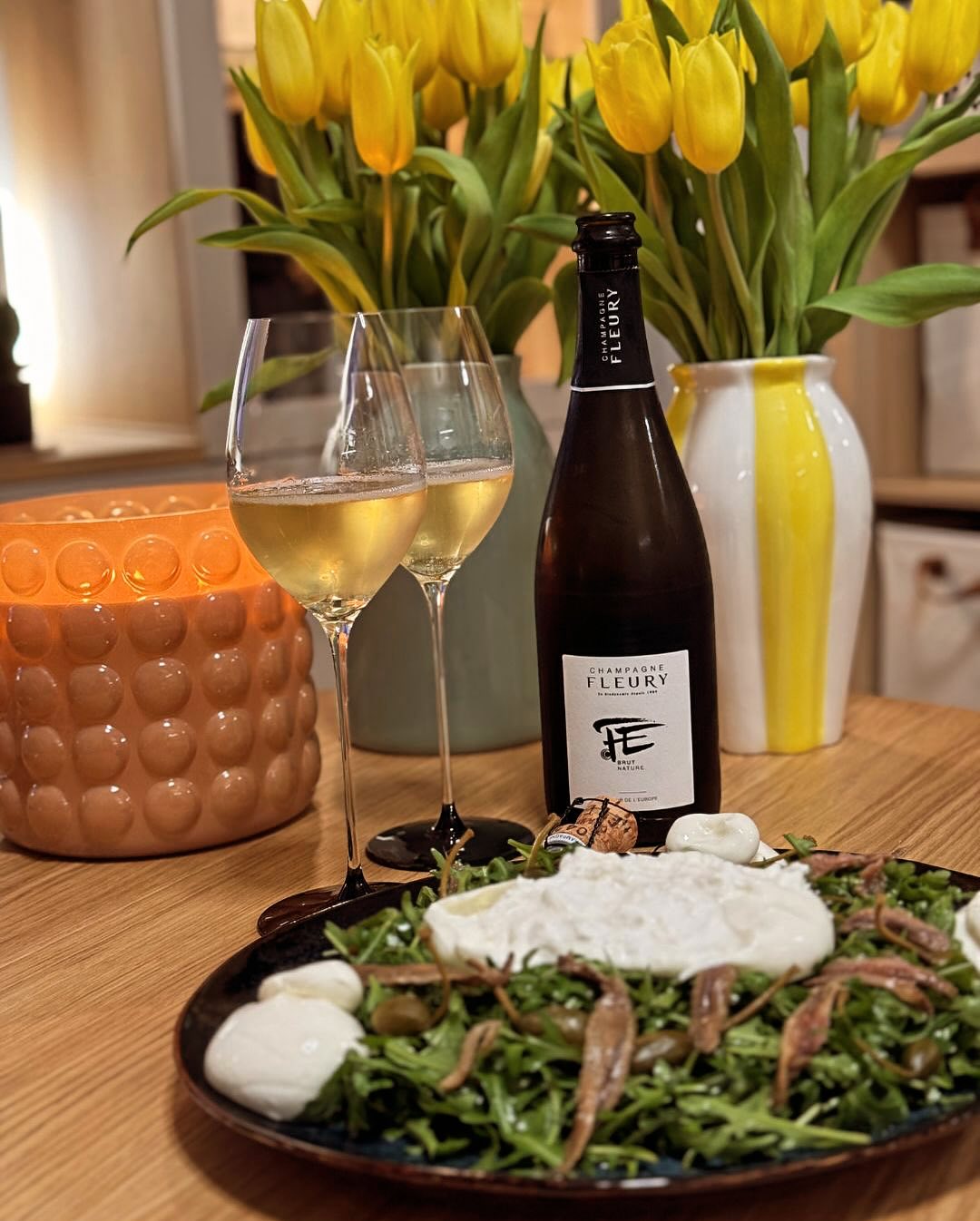
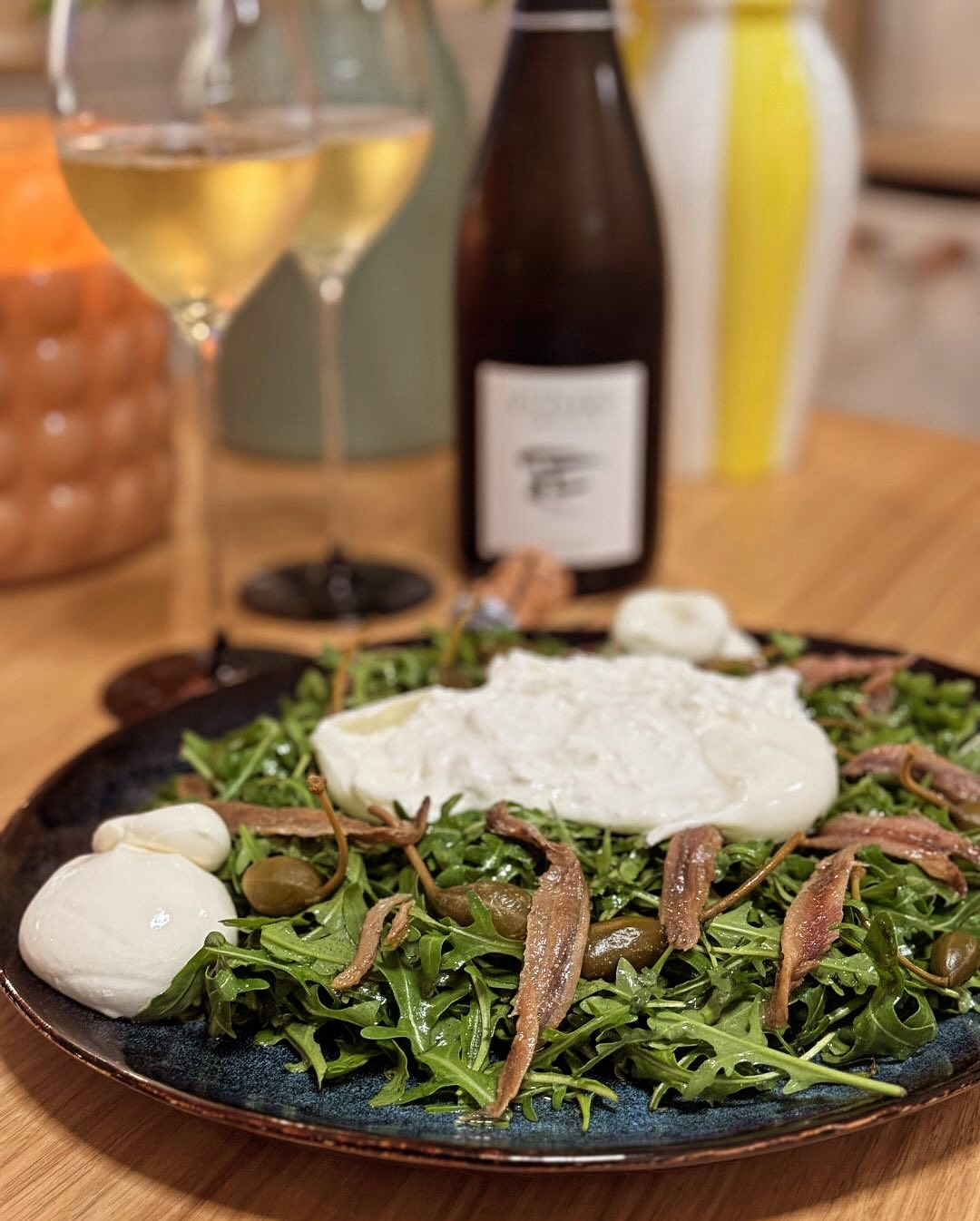
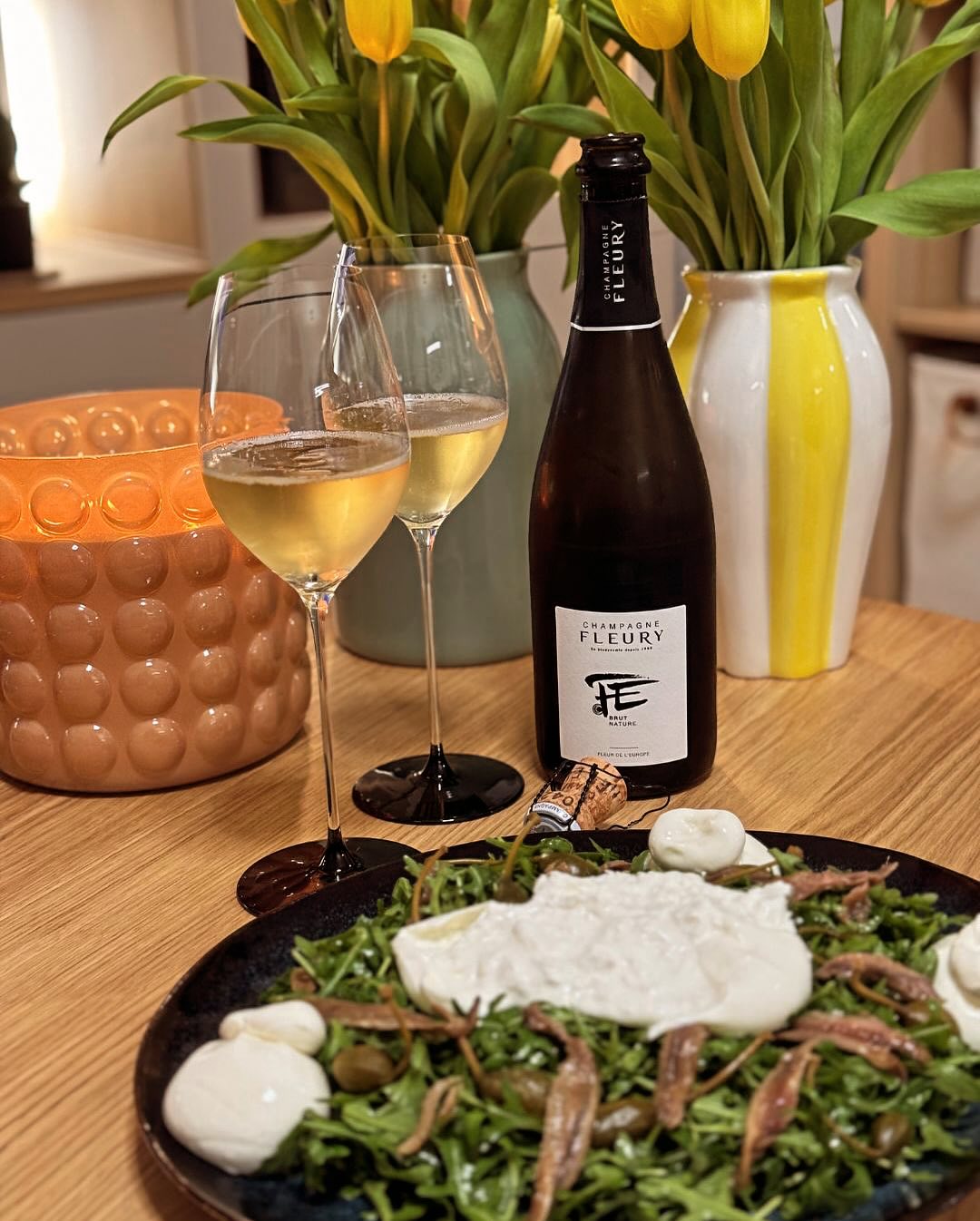
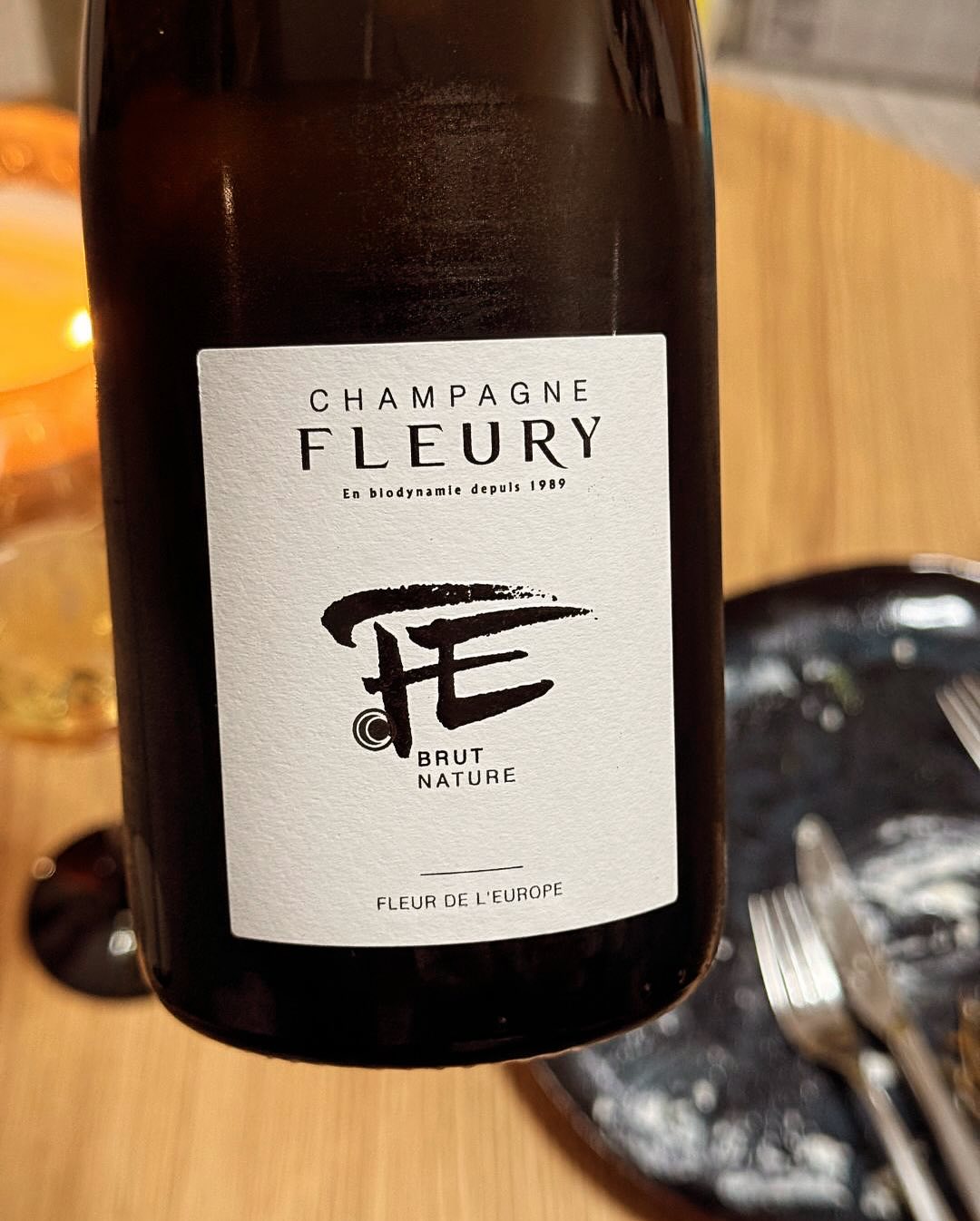
the_champagne.guy Gestern: 22 Uhr. Die Kids schlafen. Und nach drei Runden Sauna bei 90 °C braucht’s nochmal einen kleinen Snack. Etwas Gutes. Etwas Leichtes. Ohne Aufwand – aber mit Stil. ✨ Also: 🥬 Rucola, geschwenkt in Zitronensaft, bestem Olivenöl und grobem Meersalz – frisch, würzig, lebendig. On top: ein großer Burrata Pugliese, begleitet von drei kleinen Trüffel-Burrata – pur, cremig, intensiv. 🐟 Dazu feinste Anchovis in Olivenöl von @schenkeldelikatessen – salzig, aber nicht dominant, sondern geschmacklich perfekt ausbalanciert. 🌿 Ein paar Kapernbeeren dazu – für die herbe Tiefe. Und weil der Moment danach gerufen hat: 🍾 @champagne_fleury – Fleur de l’Europe – Brut Nature Die Flasche war natürlich nicht eingekühlt. Aber @mybeezer regelt das in 7 Minuten – zuverlässig, wie immer. ⚡🥂 Im Glas: ✨ 85 % Pinot Noir ✨ 15 % Chardonnay ✨ Brut Nature – 0 g Dosage ✨ Biodynamisch vinifiziert (seit 1989 – echte Pioniere) ✨ 34 % Reserveweine, im Holz ausgebaut ✨ Aromen von 🍏 Apfelschale, Hefe, herber Kräuterwürze ✨ Struktur, Spannung, leise Tiefe. Der Burrata bringt Cremigkeit, der Trüffel-Burrata nochmal mehr Tiefe – und der salzig-zitronige Rucola setzt den Akzent. Die Sardellen? Nicht einfach nur Salzlieferant, sondern feine Würze mit Charakter. Selbst ein ganzer Anchovi auf der Gabel bleibt im Gleichgewicht – dank Qualität & Komposition. Hinweis: Normalerweise trinke ich vor und nach dem Saunieren keinen Alkohol – der Fokus liegt ganz auf dem Körper. Aber gestern? Da hat alles gepasst. Und mein Kreislauf war bereit für diesen späten, stillen Champagner-Moment. ✨ Fazit: Keine große Vorbereitung. Kein Plan. Nur ein ruhiger Abend – und ein Glas - natürlich @riedel_official Fatto a Mano Black Tie ❤️, das ihn veredelt. #TheChampagneGuy #FleuryChampagne #BrutNature #LateNightChampagne #BeezerNights #BiodynamischUndEhrlich #AnchovisVonSchenkel #TrüffelUndBurrata #Zitronenrucola #ChampagnerOhneAnlass #PinotPur
Auf Instagram weiterlesen →The assemblage relies on 85 percent Pinot Noir and 15 percent Chardonnay. One third of the cuvée consists of reserve wines that were aged in wood. Aromas of apple skin, yeast and bitter herbal spice. The structure is clear, the tension present, the depth quiet. No dosage, no concessions to crowd-pleasing, a champagne that shows character.
85% Pinot Noir, 15% Chardonnay · Brut Nature (0 g/l) · 34% Reserve wines, wood aging · Côte des Bar
My Tastings
- Fleur de l'Europe Brut Nature, April 14, 2025
Facts
| Category | Récoltant-Manipulant (RM) |
| Founded | 1895 |
| Currently led by | Jean-Sébastien Fleury |
| Vignoble | 15 hectares in the Côte des Bar |
| Village | Courteron, Aube (10) |
| Viticulture | Biodynamic since 1989 |
| Certifications | Demeter, Biodyvin |
| Website | champagne-fleury.fr |
| @champagne_fleury |
Sources for this portrait: Maison website, my own tastings, CRM data and cross-checks. Fields without sufficient verification remain open.