Champagne Henriet-Bazin: Chalk, Parcels, Solera
Champagne Henriet-Bazin is a Récoltant-Manipulant from Villers-Marmery in the Montagne de Reims, founded in 1890 by Gaston Henriet. Since 1991, Marie-Noëlle Henriet-Bazin has led the 5th generation together with Nicolas and is responsible for the assemblage. The family name Henriet-Bazin emerged in 1968, when Daniel Henriet married Micheline Bazin, daughter of a winemaking family from Villers-Marmery.
History
Gaston Henriet began his own vinification in Villers-Marmery in 1890. His son Robert took over in 1930 and built up the clientele through presence at trade shows in Paris, Lille, and Lyon. In 1962, Daniel Henriet joined the estate at age 16 and studied viticulture. In 1968, he married Micheline Bazin, creating the current name Henriet-Bazin. That same year, Daniel laid the foundation for the Solera reserve wines, which remain part of the assemblage to this day.
Marie-Noëlle joined the Maison in 1991 and made a defining decision: the entire harvest would henceforth be vinified in-house, with no more grapes sold. In 1994, the family purchased 1.75 hectares of Meunier vineyards in Faverolles and Coëmy to expand their terroir spectrum. From the early 2000s, Marie-Noëlle, together with Nicolas, went beyond traditional Viticulture Raisonnée and converted to sustainable, nature-friendly methods.
Vignoble & Soils
The estate cultivates 7.75 hectares across five villages: Villers-Marmery, Verzenay, Verzy, Faverolles, and Coëmy. Six hectares are spread across 34 parcels in the Montagne de Reims, with 1.75 hectares in the Vallée de l'Ardre. Villers-Marmery is classified as Premier Cru and is 99 percent planted with Chardonnay; Verzenay and Verzy hold Grand Cru status and are mainly planted with Pinot Noir. Meunier dominates in Faverolles and Coëmy.
The soils are chalk, but each with specific characteristics: Villers-Marmery has fragmented chalk that allows roots to anchor deeply. Verzenay shows hardened chalk, while Verzy has deeper clay-rich loams over chalk bedrock. Faverolles and Coëmy offer fossil limestone, geologically older, with distinctive minerality.
Viticulture & Sustainability
Since the early 2000s, the Maison has worked according to sustainable farming principles with respect for nature as a partner. Herbicides are not used. Instead, the vineyards are cover-cropped, plants are sown rather than synthetic fertilizers applied, and work follows lunar cycles. The goal is living, oxygen-rich soil that allows vines deep root penetration and thus resilience. Insects are respected, not fought.
Vinification
Henriet-Bazin vinifies parcel-specifically in 27 enameled stainless steel tanks. Aging follows the gravity principle without pumps to avoid mechanical stress. After pressing, the must clarifies for at least 24 hours without filtration. The wines age nine months on lees in tanks before being assembled. Special cuvées like Hypolite mature in oak barrels from the Villers-Marmery forest.
The Solera has been running since 1968 and is used as a reserve component for some cuvées. Dosage is consistently minimal: Extra Brut or Brut Nature, so the wine can express itself, not the sugar solution. Base cuvées age at least three years on the bottle, vintage champagnes over six years, before being disgorged.
The Cuvées in Detail
Blanc de Blancs Premier Cru Villers-Marmery Extra Brut
Pure Chardonnay from the fragmented chalk soils in Villers-Marmery. The assemblage contains reserve wines from the Solera, which has been running since 1968. Mineral, precise, with the characteristic depth of Premier Cru terroir.
100% Chardonnay · Extra Brut · Solera since 1968 · Premier Cru Villers-Marmery
Blanc de Noirs Grand Cru Verzy & Verzenay Extra Brut
Pinot Noir from two Grand Cru sites: Verzenay with hardened chalk, Verzy with deeper clay-rich loams. Structure, power, clear fruit without detours.
100% Pinot Noir · Extra Brut · Grand Cru Verzy & Verzenay
Meunier Faverolles et Coëmy Mono Parcelle Brut
Single-vineyard Meunier from the Sente au Beurre parcel on fossil limestone. Purchased in 1994, farmed according to the same sustainable principles as the Montagne parcels. Meunier with substance, grounding, without the usual easy-drinking lightness.
100% Meunier · Brut · Single vineyard Sente au Beurre, fossil limestone · Faverolles et Coëmy
Sélection de parcelles Premier Cru Brut
Equal parts assemblage of Pinot Noir and Chardonnay, exclusively from Premier Cru parcels. Balanced, with depth and drinking flow.
50% Pinot Noir, 50% Chardonnay · Brut · Premier Cru
Gaston & Louise Premier Cru Brut Nature Zéro Dosage
Homage to the founding generation: Gaston Henriet and his wife. Equal parts Pinot Noir and Chardonnay, Zéro Dosage, Premier Cru parcels. Clean line, no compromise.
50% Pinot Noir, 50% Chardonnay · Brut Nature, 0 g/l · Premier Cru
Marie-Amélie Premier Cru Blanc de Blancs Millésime 2014 Brut Nature
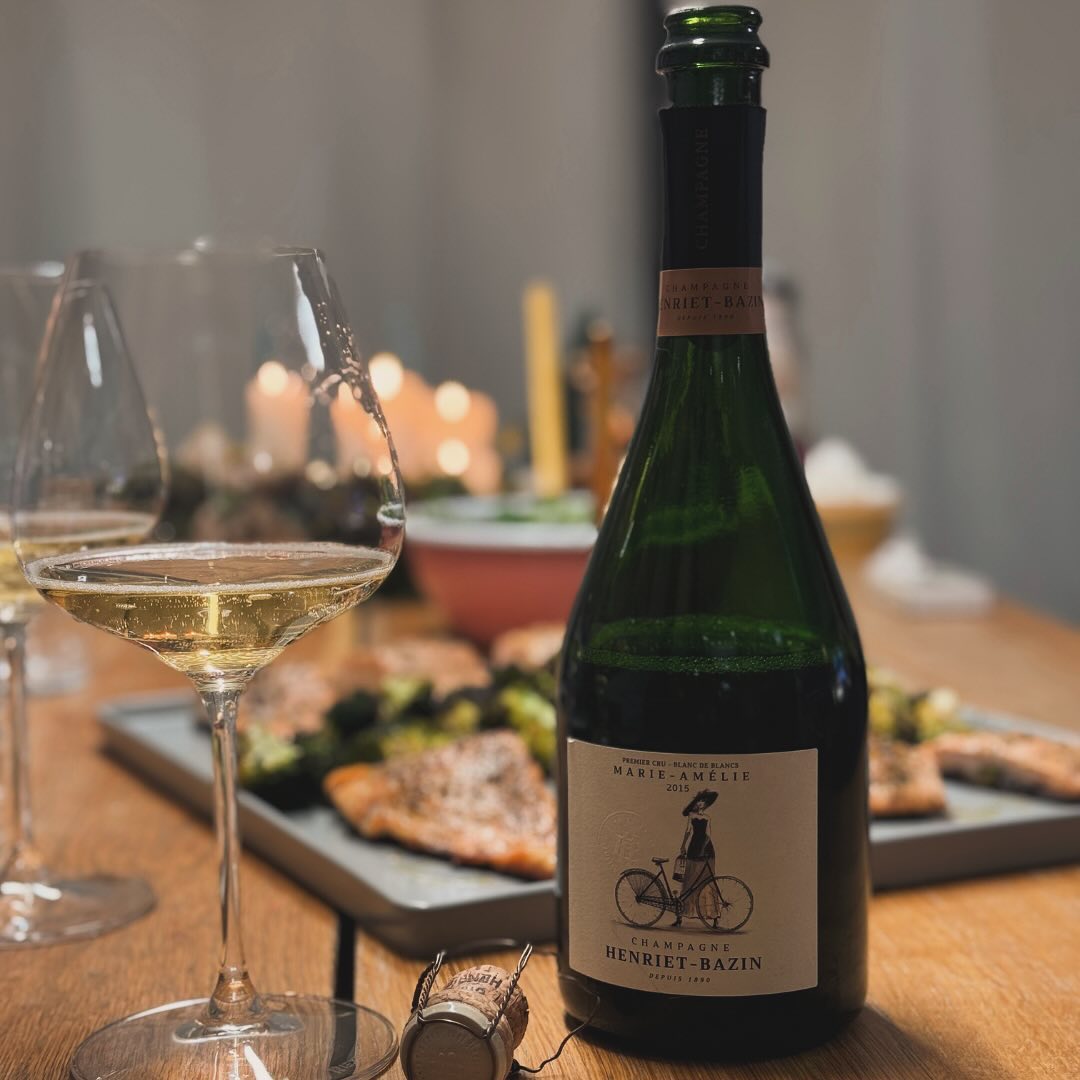
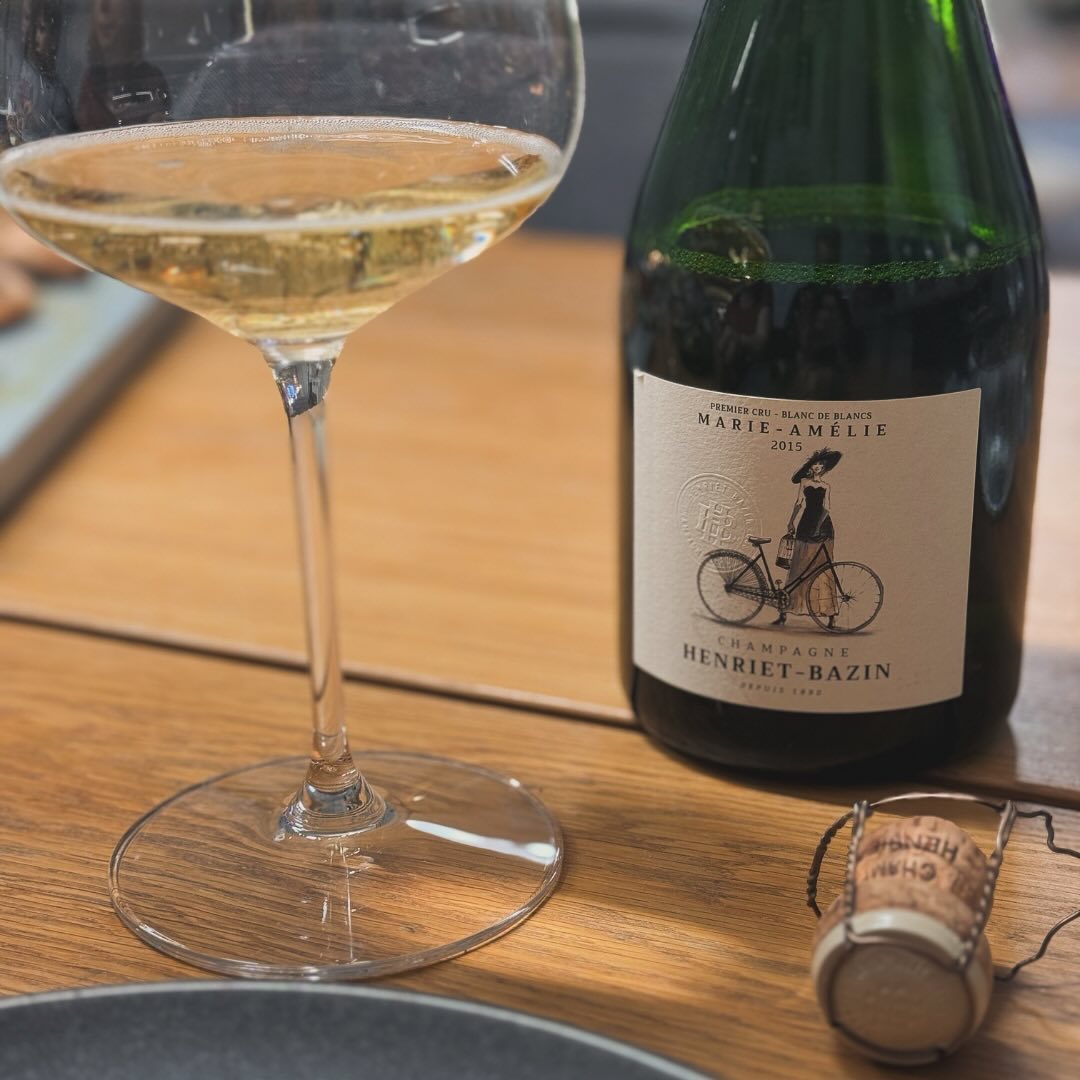
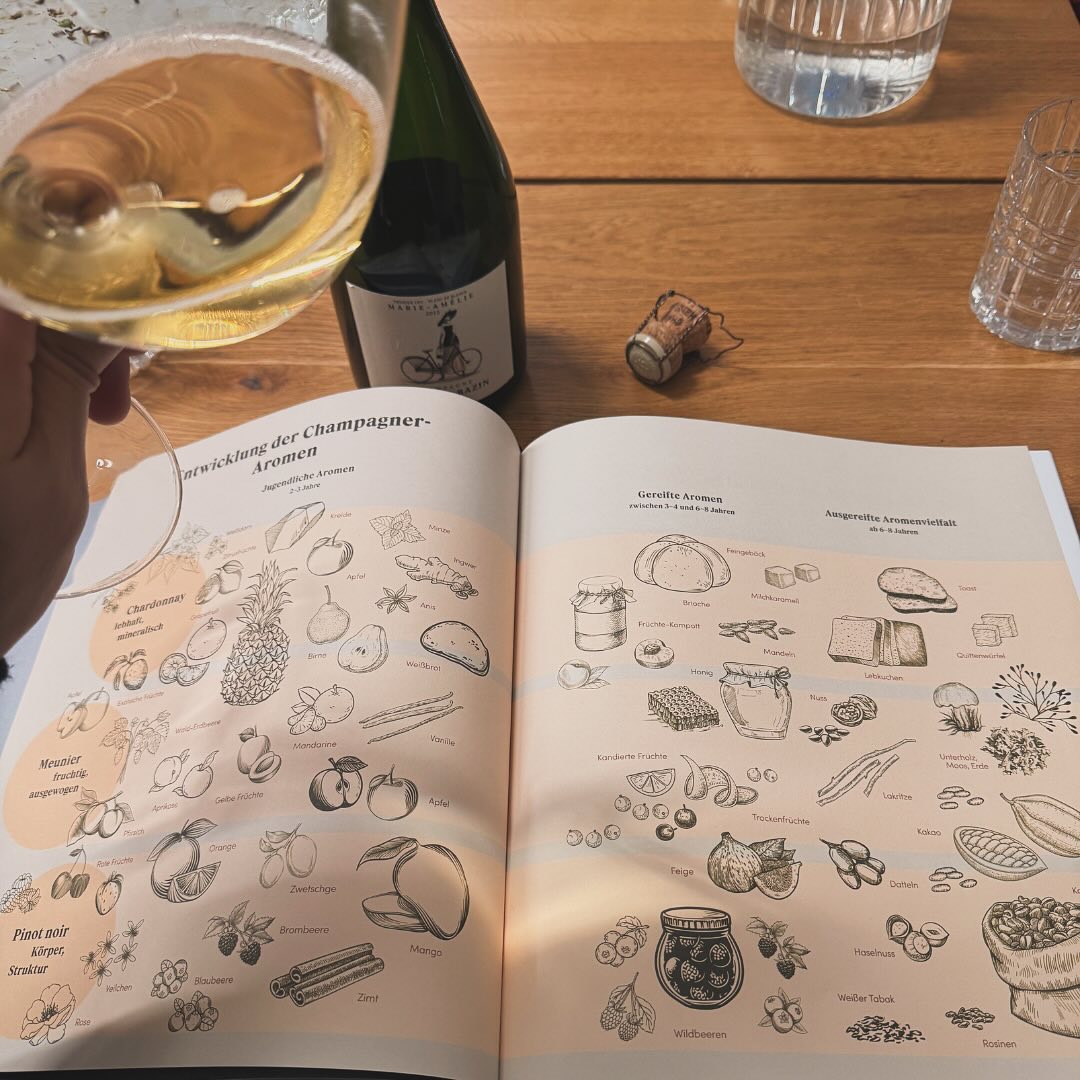
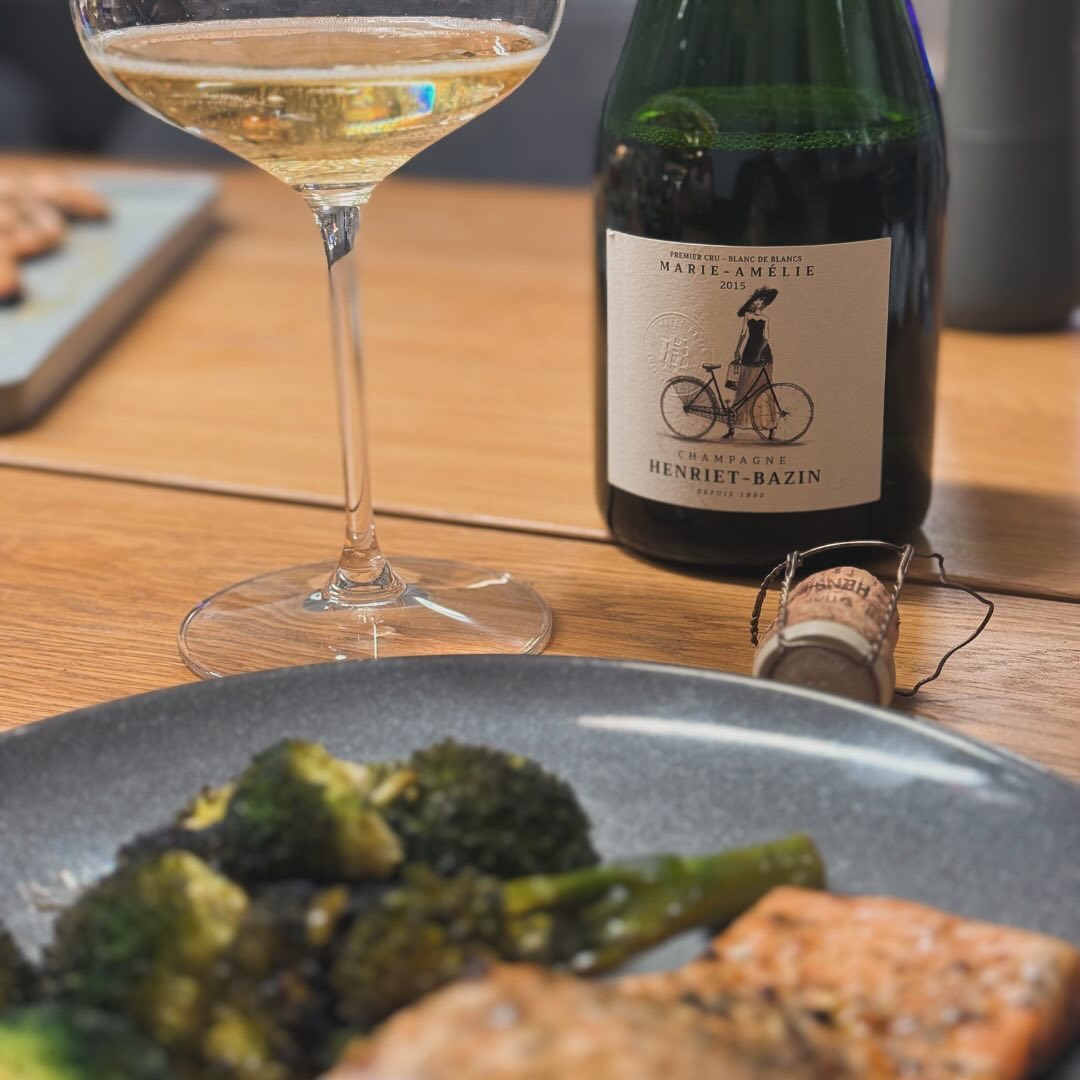
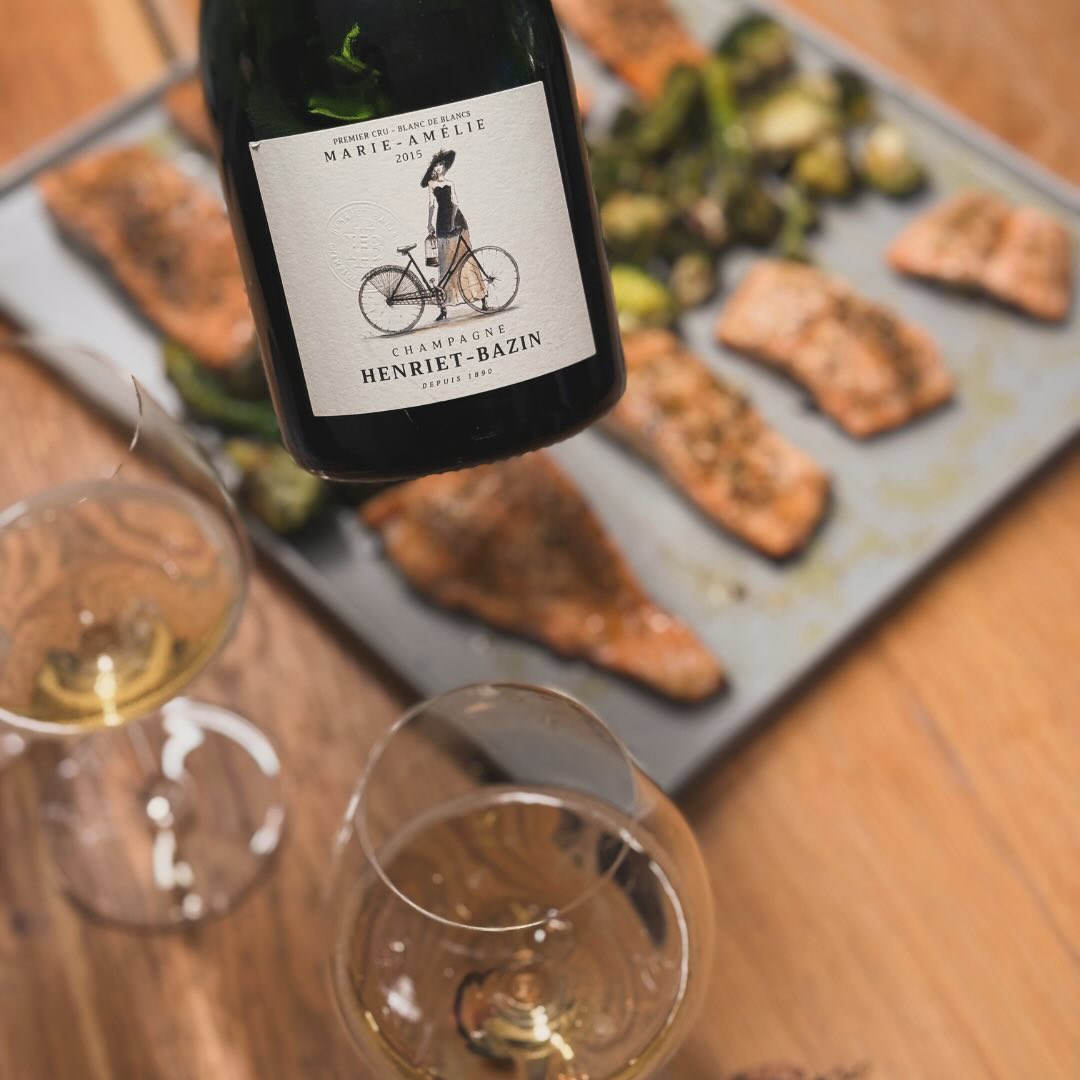
the_champagne.guy Mit nur noch 28 Flaschen im Kühler war die Wahl heute schnell getroffen: der @champagne_henriet_bazin - Marie-Amélie 2015, ein Blanc de Blancs, der sich als perfekter Begleiter zu diesem Gericht erwies. Der gegrillte Lachs, buttrig und leicht rauchig, der knackige Brokkoli mit einem Hauch Schärfe – und der Champagner, frisch, elegant und mit subtiler Mineralität, der alles miteinander verbindet. 🍽️🍾 Aber das bringt mich zu einer Frage: Ist es meine Unerfahrenheit, die mich glauben lässt, dass fast jedes Pairing passt? Oder ist es einfach diese wunderbare Subjektivität, die beim Genuss von Essen und Champagner immer mitspielt? Manchmal denke ich, dass der perfekte Match mehr mit Stimmung und Erfahrung zu tun hat als mit starren Regeln. Vielleicht liegt der Zauber darin, zu probieren, zu lernen und jeden Moment auf neue Weise zu genießen – egal, ob man nur eine Flasche griffbereit hat, 28 Flaschen im Kühler oder einen ganzen Weinkeller voll. 🥂✨ 💡 Was denkst Du? Ist Geschmack eine Frage von Erfahrung, oder einfach nur von persönlichem Empfinden? Und wie geht ihr an Pairings heran – nach Regeln, Zufall oder Bauchgefühl? #ChampagneAndFood #HenrietBazin #BlancDeBlancs #ChampagneMoments #PairingErlebnisse #GenussMomente #GegrillterLachs #ChampagnerLiebe #SubjektivitätDesGenusses #TheChampagneGuy
Auf Instagram weiterlesen →Vintage champagne from Chardonnay, Premier Cru sites in Villers-Marmery. Brut Nature, so without dosage. Over six years aging on the bottle before being disgorged.
100% Chardonnay · Brut Nature, 0 g/l · Vintage 2014 · Premier Cru
Arsène Grand Cru Vintage 2015 Extra Brut
Vintage champagne from Pinot Noir and Chardonnay, exclusively Grand Cru terroir. Extra Brut, long aging, precise expression of Verzenay and Verzy.
Pinot Noir & Chardonnay · Extra Brut · Vintage 2015 · Grand Cru
Hypolite Premier Cru Blanc de Blancs Elevage en fût de chêne
Chardonnay, aged in oak barrels from the Villers-Marmery forest. Wood as texture, not as flavor carrier, the chalk remains present.
100% Chardonnay · Premier Cru · Aged in oak barrels from Villers-Marmery
My Tastings
- Marie-Amélie 2015 (2015) · 23.12.2024
Fresh elegance, subtle minerality. The 2015 vintage shows itself approachable, without missing the depth. Clear Chardonnay expression, Premier Cru precision, Brut Nature without harshness.
Facts
| Category | Value |
|---|---|
| Official Name | Champagne Henriet-Bazin |
| Champagne Category | RM (Récoltant-Manipulant) |
| Founded | 1890 |
| Founder | Gaston Henriet |
| Generation | 5th generation (since ca. 1991) |
| Leadership | Marie-Noëlle Henriet-Bazin, Nicolas |
| Village | Villers-Marmery |
| Region | Montagne de Reims, Vallée de l'Ardre |
| Cru Status | Premier Cru (Villers-Marmery), Grand Cru (Verzenay, Verzy) |
| Vineyard Area | 7.75 ha (6 ha Montagne de Reims, 1.75 ha Vallée de l'Ardre) |
| Villages | Villers-Marmery, Verzenay, Verzy, Faverolles, Coëmy |
| Soils | Fragmented chalk (Villers-Marmery), hardened chalk (Verzenay), clay-rich loams over chalk (Verzy), fossil limestone (Faverolles, Coëmy) |
| Viticulture | Sustainable, no herbicide use, cover cropping, work by lunar cycles |
| Vinification | Gravity flow, 27 enameled stainless steel tanks, oak barrels (Hypolite) |
| Solera | Since 1968 |
| Dosage | Extra Brut, Brut Nature |
| Bottle Aging | Min. 3 years (base), over 6 years (vintages) |
| Address | 9 rue des Mises, 51380 Villers-Marmery |
| Phone | +33 3 26 84 07 79 |
| contact@champagne-henrietbazin.com | |
| Website | champagne-henrietbazin.com |
| @champagne_henriet_bazin |
Sources for this portrait: Maison website, personal tastings, CRM data and cross-checks. Fields without sufficient verification remain open.