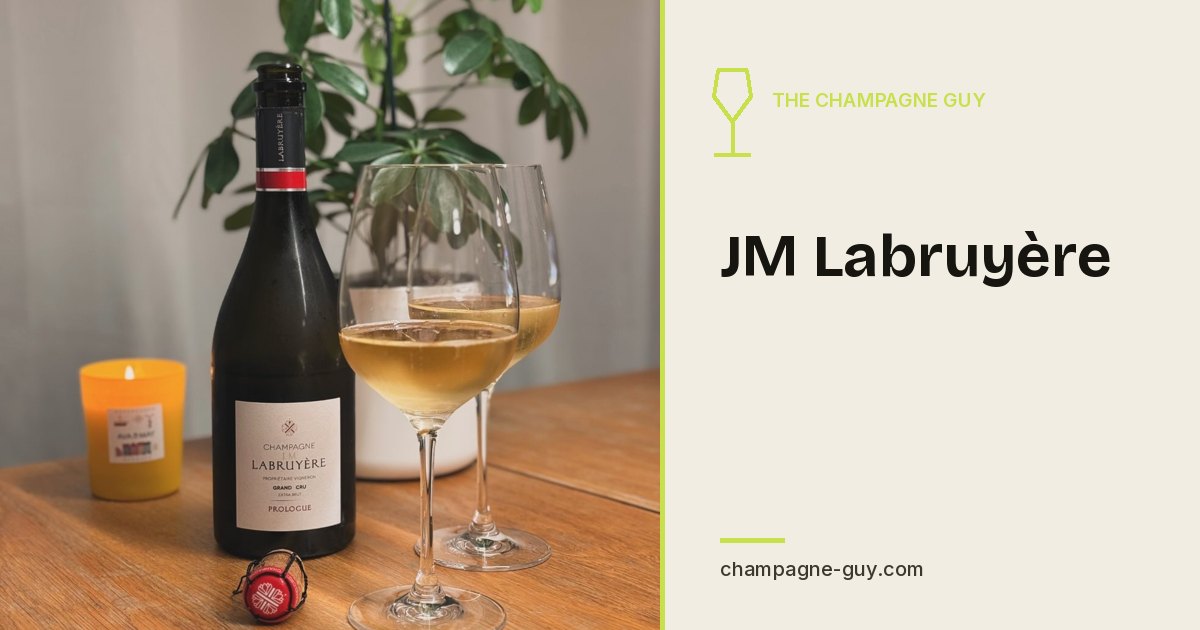
Champagne JM Labruyère: Burgundian Spirit in Verzenay
Champagne JM Labruyère is an RM from Verzenay in the Montagne de Reims, founded in 2012 by Edouard Labruyère. First commercial release in 2016. Edouard has led the house since its founding and is the 6th generation of the Burgundian winemaking family Labruyère, which was established in 1850 by Jean-Marie Labruyère in Beaujolais (Moulin-à-Vent).
Today the family owns not only the Champagne operation but also Domaine Jacques Prieur in Meursault (since 1988) and Château Rouget in Pomerol (since 1992). The champagne arm is the youngest branch, but the cellars in Verzenay date from 1820, and the first champagne bottle was filled there in 1863.
History
The roots of the Labruyère family lie in Burgundy: Jean-Marie Labruyère settled in Les Thorins in the 1850s, a vineyard site that officially became the Cru Moulin-à-Vent in 1924. Jean-Pierre Labruyère, Edouard's father, expanded the portfolio in 1988 with Domaine Jacques Prieur in Meursault and in 1992 became the first Burgundian to venture into Bordeaux with the purchase of Château Rouget in Pomerol.
Edouard took over leadership of the family domains in 2008 and began acquiring vineyards in Verzenay in 2012. Within two years he secured around 6 hectares of Grand Cru sites in Verzenay and Verzy. The cellars in Verzenay, vaulted and dating from 1820, had already produced champagne in 1863; Edouard was thus continuing a long, if interrupted, tradition.
Vincent Van Waesberghe was hired as technical director in 2012, with Nadine Gublin taking over oenology. In 2016 the first cuvée appeared under the J.M. Labruyère label, named after the family's founding ancestor.
Vignoble & Soil
The vignoble comprises around 6 hectares of Grand Cru in Verzenay and Verzy, acquired between 2012 and 2014. The grape variety distribution is approximately 70% Pinot Noir and 30% Chardonnay, a Pinot Noir-dominated structure that's typical for Verzenay.
Verzenay was already ranked among the top 3 Champagne crus in an unofficial classification in 1873. The village sits protected on the Montagne de Reims (286 meters elevation) and has long been known for Pinot Noir with character, structure, and aging potential. The climate-related parcel names, Les Rochelles, Les Champs Saint-Martin, Les Longues Raies, Les Champs Romés, Les Potences, mark the various sites within the Grand Cru terroir. Verzenay is part of the UNESCO World Heritage Site.
Viticulture & Sustainability
The maison works according to the principles of agriculture raisonnée, sustainable agriculture that combines Burgundian and Bordeaux techniques under the direction of Vincent Van Waesberghe. The goal is to preserve healthy terroirs for future generations and to showcase each parcel respectfully.
All 6 hectares are owned outright, allowing complete control over the vineyards. Harvest is done by hand with selective sorting directly in the vineyard. The maison describes their approach as viticulture haute-couture et durable, high-quality, sustainable handwork at every step.
Vinification
The vinification follows a Burgundian philosophy: Edouard harvests the grapes later to obtain perfectly balanced base wines, similar to Burgundy wine production. Each parcel and each grape variety is vinified separately. Only the best musts (cuvée) are used, slowly pressed.
All base wines undergo malolactic fermentation completely. Assemblage usually takes place in January, between current wines and reserve wines. The dosage liqueur is made from their own best wines.
The tirage is lightly dosed to achieve a fine perlage. Lees aging lasts at least 3 to 5 years for the non-vintage cuvées, 5 to 10 years for vintage champagnes, significantly longer than legal minimum requirements. The dosage is consistently very low (Extra Brut range), made possible by the maturity and balance of the base wines.
Edouard emphasizes expressing the different vintages and parcels, as is customary in Burgundy or Bordeaux, not like the classic champagne model of constant house-style assemblage.
The Cuvées in Detail
Prologue Extra Brut
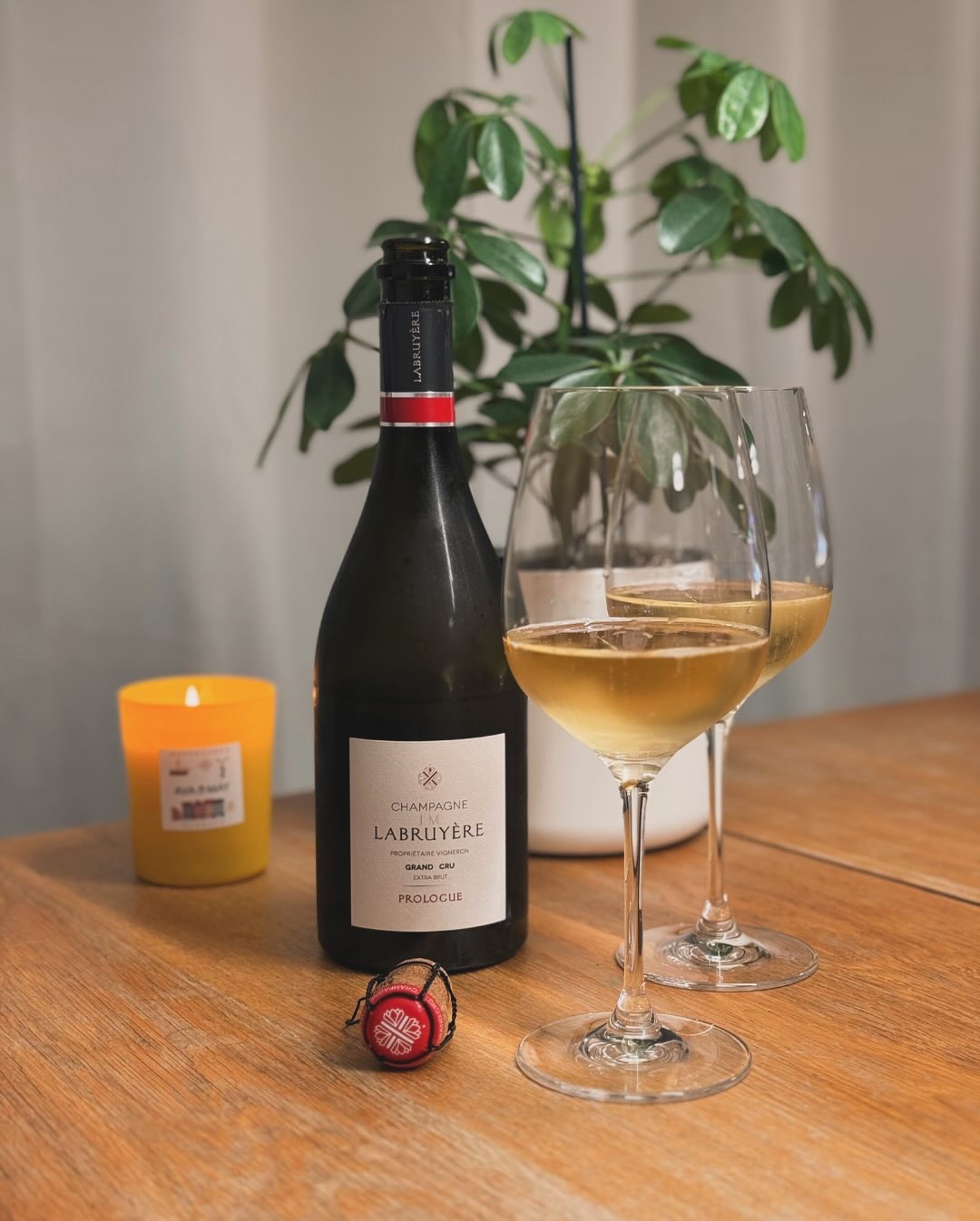
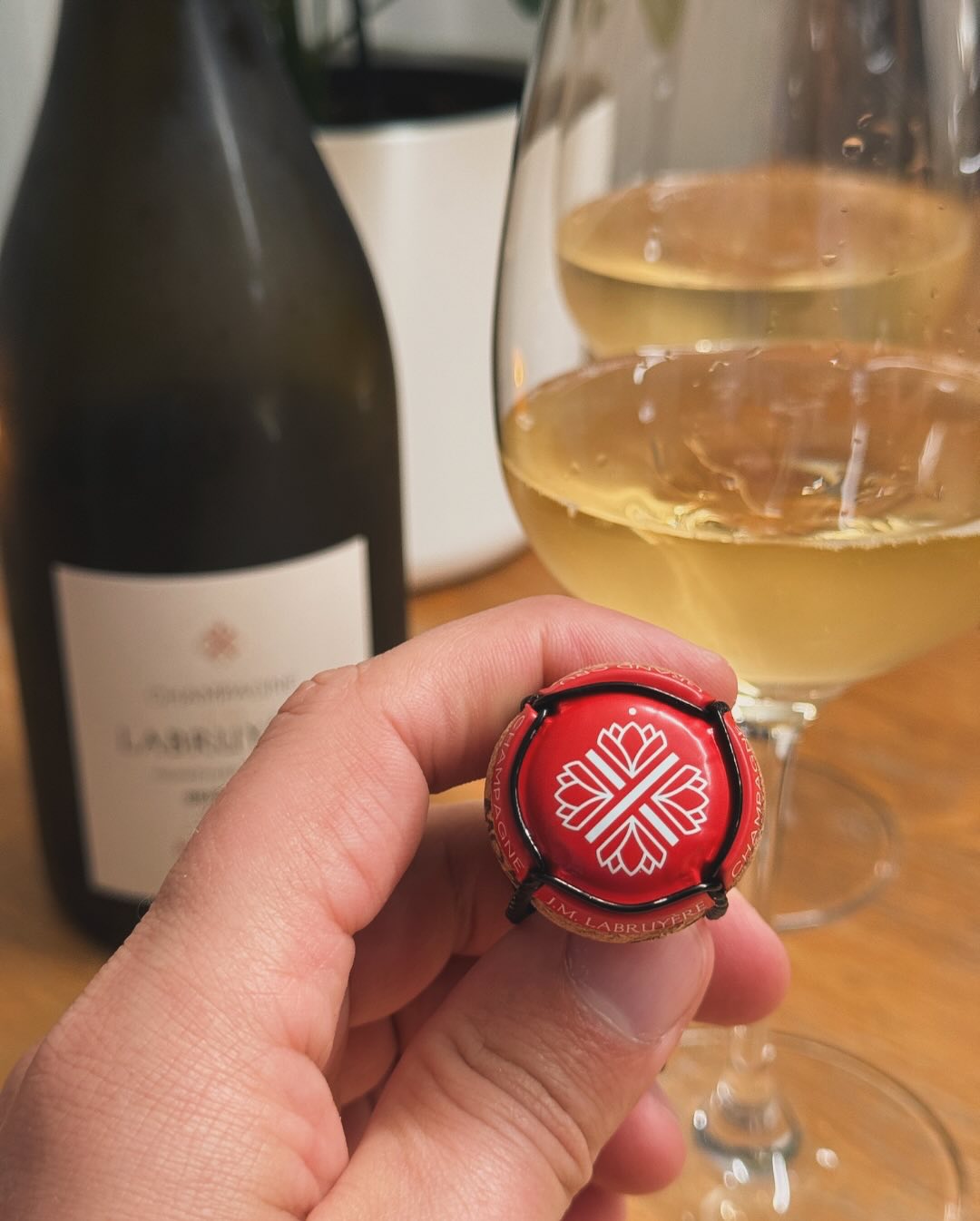
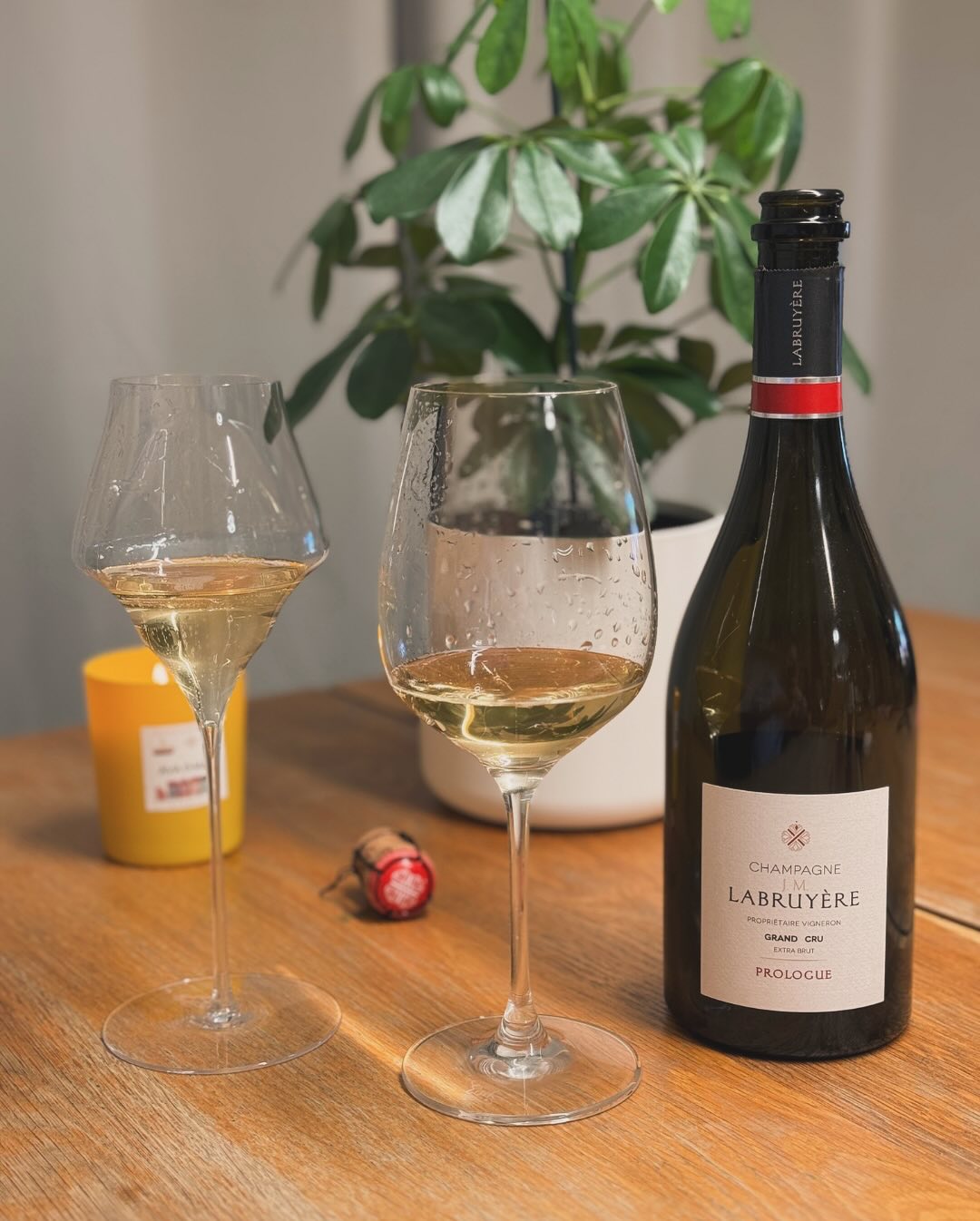
the_champagne.guy Manchmal hat man eine Erwartung an einen Champagner – und wird dann doch überrascht. Beim @champagne_jm_labruyere - Prologue Extra Brut war genau das der Fall. Ein Pinot Noir-lastiger Grand Cru Champagner, bei dem ich mit mehr Wärme und Tiefe gerechnet habe. Doch stattdessen präsentierte er sich mit einer Frische und Klarheit, die mich neugierig gemacht hat. Was diesen Champagner ausmacht: 🌄 Lange Hefelagerung – feine Perlage & komplexe Aromen. 💎 Extra Brut Dosage – betont Klarheit & Mineralität. 🍷 Grand Cru-Trauben aus Verzenay & Verzy – zwei der besten Pinot-Noir-Lagen der Champagne. 🌟 Goldene Reflexe, elegante Perlage. 👃 Grüne Äpfel, Zitrusfrüchte, Brioche & ein Hauch von Rauchigkeit. 🍾 Knackig, mineralisch, mit salziger Frische & langem Abgang. Spontane Erkenntnis beim Probieren: Nach dem ersten Glas hatte ich das Bedürfnis, den Champagner aus einem anderen Glas zu probieren. Zunächst im @eisch_glass, das die Pinot-Noir-Noten verstärkte und den Champagner schwerer wirken ließ. Doch irgendwie hatte ich das Gefühl, dass da noch mehr Frische steckt. Also habe ich ihn aus dem @josephinenhutte No. 4 probiert – und war verblüfft. 🥂 Eisch Glas: → Betont Pinot-Noir-Noten, macht den Champagner schwerer & komplexer. → Lässt ihn runder wirken, aber dämpft die Frische leicht. 🥂 Josephinen No. 4: → Bringt Frische & mineralische Noten deutlich stärker zur Geltung. → Die Perlage wirkt lebendiger, der Champagner präziser. Fazit: Ein Champagner, der Pinot Noir und Chardonnay in perfektem Gleichgewicht zeigt. Und die Wahl des Glases? Kann das ganze Erlebnis vollkommen verändern! 💬 Welche Gläser nutzt ihr für Champagner? Gibt es eine weitere Form, die ich testen sollte? @riedel_official @lehmannglass_de @stoelzlelausitz @luigibormioli @baccarat @grasslglass @roviniglas – bin gespannt, was ich noch ausprobieren muss! 🥂 #JMLabruyère @domaineslabruyere #PrologueExtraBrut #GrandCru #Verzenay #Verzy #ChampagneTerroir #ChampagnerLeben #TheChampagneGuy #GlassMatters
Auf Instagram weiterlesen →The house's classic cuvée. Prologue shows Verzenay's Pinot Noir dominance: crisp minerality with salty freshness, green apples, citrus fruits, brioche and a hint of smokiness. The finish is long and precise. 3 years lees aging.
70% Pinot Noir, 30% Chardonnay · Extra Brut · 36 months aging · Grand Cru Verzenay & Verzy
Anthologie Rosé
Rosé d'assemblage from Grand Cru grapes. Also 3 years lees aging. Further details on the assemblage are still pending.
Rosé d'assemblage · 36 months aging · Grand Cru Verzenay & Verzy
Page Blanche Blanc de Blancs
Pure Chardonnay from Grand Cru sites. There are both non-vintage and vintage editions (2016 mentioned). Minimum 3 years aging.
100% Chardonnay · Blanc de Blancs · 36 months aging · Grand Cru
Edition XIII
Vintage champagne from 2013. Part of the Millésime line with 5 to 10 years lees aging, an extended, Burgundian-inspired aging program.
Millésime 2013 · 60 months aging · Grand Cru
Paradoxe
Part of the Collection des Terroirs. Details on grape varieties, dosage and vinification are still pending.
Grand Cru
Apogée
Also part of the Collection des Terroirs. More information to follow.
Grand Cru
My Tastings
- Prologue Extra Brut · February 10, 2025
Facts
| Category | Detail |
|---|---|
| Official Name | Champagne JM Labruyère |
| Champagne Category | RM (Récoltant-Manipulant) |
| Founded | 2012 (first release 2016) |
| Founder | Edouard Labruyère |
| Current Leadership | Edouard Labruyère (6th generation) |
| Address | 1 place Carnot, 51360 Verzenay |
| Village | Verzenay |
| Region | Montagne de Reims |
| Cru Classification | Grand Cru |
| Vineyard Area | approx. 6 hectares |
| Villages | Verzenay, Verzy |
| Grape Varieties | approx. 70% Pinot Noir, 30% Chardonnay |
| Website | champagne-labruyere.com |
| @champagne_jm_labruyere | |
| Phone | +33 3 26 49 40 63 |
| info@champagne-labruyere.com |
Sources for this portrait: Maison website, personal tastings, CRM data and cross-checks. Fields without sufficient verification remain open.